posted on 18th December 2025




 follow us
We're watching something unusual unfold in the luxury watch market, and it has everything to do with your wallet and how clever you are with it.
Gold just crossed £3,200 per ounce. Silver hit record territory. The U.S. Federal Reserve cut rates by 25 basis points, and suddenly the maths behind what you wear on your wrist has fundamentally shifted.
The question isn't whether this matters. It's whether you're going to pay the full price for it.
Here's what most people overlook: luxury watches have always carried two price tags. The first is what you pay at the authorised dealer. The second is the fluctuating value of the precious metals inside the case.
That second price tag just got a lot heavier.
A typical 18-carat gold watch case contains roughly 100–150 grammes of gold. At current UK prices—around £50 per gramme for gold—the raw material value alone approaches £7,500 for a 150-gramme case. That's before you account for craftsmanship, movement, brand equity, or any other factor that traditionally drives luxury watch pricing.
The metal is no longer just a component. It's becoming the headline cost.
Central banks are buying gold aggressively. The dollar is weakening. Interest rates are dropping, which makes non-yielding assets like precious metals more attractive relative to bonds and savings accounts.
This creates a peculiar dynamic for luxury watch buyers—and a brilliant opportunity for those buying pre-owned.
You're no longer just purchasing a timepiece. You're acquiring a wearable store of value that happens to tell time. The watch on your wrist becomes part investment portfolio, part personal expression, and part inflation hedge. But here's the thing: you don't need to pay new retail prices to secure that value.
We've seen this before with vintage Rolex sports models, where steel scarcity and collector demand pushed prices into the stratosphere. But this is different. This is about the fundamental building blocks of the product itself appreciating independent of brand desirability. And when those building blocks are already inside a pre-owned watch, you're getting the same gold for a fraction of the boutique markup.
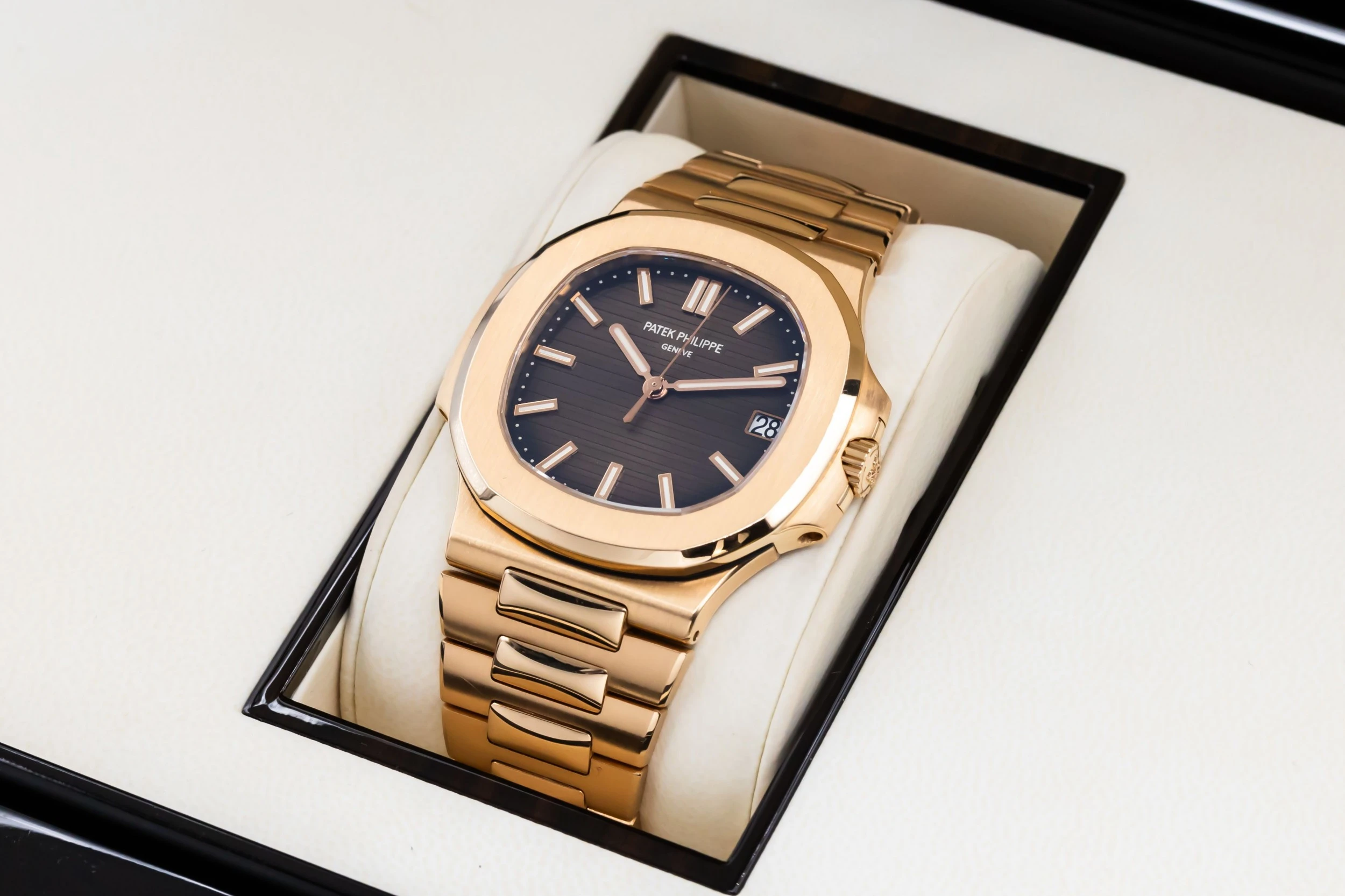
When a Patek Philippe Nautilus in white gold costs £80,000 at retail, how much of that price reflects the craftsmanship and how much reflects the £12,000–£15,000 worth of precious metal inside? The answer matters more today than it did six months ago. And when you can acquire that same watch pre-owned—fully authenticated, refurbished to showroom condition, and available from stock—for 20–30% less, the maths becomes rather compelling.
Watch manufacturers face an uncomfortable reality. Their pricing strategies were built during an era of relatively stable precious metal costs. Gold fluctuated, but within predictable bands.
Those bands are breaking. And guess who's absorbing the cost? New retail buyers.
We're already seeing manufacturers adjust their pricing multiple times per year. Some brands have raised prices by 8–12% annually, citing material costs alongside inflation and demand. But when gold jumps £200 per ounce in a matter of weeks, those annual adjustments start looking inadequate.
The pre-owned market, however, offers something boutiques cannot: immediate value without the new retail markup.When you purchase a pre-owned Rolex Day-Date in yellow gold, or an Audemars Piguet Royal Oak in rose gold, you're acquiring the same precious metal content, the same craftsmanship, and the same prestige—but you've sidestepped the 20–40% premium that evaporates the moment a watch leaves the authorised dealer.
This introduces a new calculation for buyers: Do you want the watch enough to pay both the brand premium and the inflated metal premium at retail? Or would you rather let someone else absorb that initial depreciation whilst you secure the same tangible asset at a better price? And if gold continues climbing towards £4,000 per ounce—a target some analysts are projecting—your pre-owned gold watch appreciates right alongside it.
We're cautious about calling luxury watches "investments." The data doesn't support that claim for most models when purchased new. Depreciation is real, liquidity is limited, and maintenance costs erode returns.
But pre-owned gold-case watches at current metal prices present a different proposition entirely.
You're buying an object with intrinsic material value that may appreciate independent of the watch market—but you're buying it at pre-owned pricing, which means you've already avoided the steepest part of the depreciation curve. If gold continues its climb, the metal in your watch provides a floor value that didn't exist at the same level two years ago. If the watch market softens, you're partially insulated by the commodity value. And you've paid considerably less to get there.
This isn't financial advice. It's an observation about how market forces create unintended opportunities for savvy buyers.
The pre-owned luxury watch you buy today carries different risk-reward characteristics than new retail purchases. The metal inside it has become a meaningful part of the value equation, not just a footnote in the spec sheet. And when that watch has been fully refurbished, authenticated, and is available from stock—whether it's a Rolex, Breitling, Patek Philippe, or Audemars Piguet—you're securing both the prestige and the precious metal at a price that actually makes sense.
The Federal Reserve's next moves will matter. If rates continue dropping and gold continues climbing, we'll see more pronounced effects across the luxury goods sector. Jewellery, watches, and high-end accessories that incorporate precious metals will all feel the pressure.
Brands may respond by shifting towards steel and titanium models, reserving gold for ultra-premium pieces. We may see more creative use of gold plating or lower-carat alloys to manage costs. Some manufacturers might embrace the metal premium as a feature, marketing their watches explicitly as tangible assets.
But here's what we know works right now: buying pre-owned.
When you purchase a pre-owned gold Rolex, a platinum Patek, or a rose gold AP from a reputable dealer, you're getting a fully refurbished timepiece that's been authenticated, serviced, and made available from stock—often at 20–40% below current retail. You're securing the same precious metal content that's now trading at record highs. You're wearing the same prestige. And you're doing it at a price that leaves room for that metal to appreciate further without you having overpaid at the starting line.
That's not a problem. It's an opportunity. And it's one that smart buyers are already taking advantage of.
The question isn't whether record gold prices will redefine luxury watch investments. They already have. The only question left is whether you'll pay full retail for that privilege—or whether you'll be smart enough to secure the same value pre-owned.
Visit us in store for great service and to see our amazing collection.
114 Ballards Lane, N3 2DN, London 020 8838 3655