posted on 17th December 2025




 follow us
We watched the luxury watch industry get a masterclass in vulnerability in 2025.
The announcement came during Watch and Wonders, the industry's most prestigious annual showcase. President Trump unveiled sweeping tariffs on Swiss watches. Not a gradual phase-in. Not a warning shot. An immediate disruption that forced brands to choose between absorbing millions in losses or raising prices on customers who'd already placed orders.
The industry chose survival over sentiment.
Watch brands started stockpiling inventory stateside like they were preparing for a siege. Rolex, Patek Philippe, Audemars Piguet—brands that built empires on controlled scarcity—suddenly rushing timepieces across borders to beat an August deadline.
Price tags climbed. A $50,000 watch became $58,000 overnight. Not because of improved craftsmanship or rare materials. Because of policy.
This violated one of luxury's sacred principles: pricing must feel intentional, never reactive.
For decades, luxury brands conditioned customers to accept price increases as reflections of artistry, heritage, and exclusivity. When a Patek Philippe raised prices by 8%, you accepted it as the cost of owning a piece of horological history.
But tariff-driven price hikes? That's just math. And math doesn't justify luxury.
The Swiss watch industry mobilized. Trade associations dispatched delegations to Washington. CEOs who normally competed fiercely suddenly found themselves in the same conference rooms, presenting unified arguments about supply chains, employment, and bilateral trade relationships.
They secured a partial victory in November. Tariffs dropped from their initial levels to 15%.
Brands adjusted prices downward. Not to original levels, but enough to claim they'd fought for their customers.
Here's what this moment revealed: even the most prestigious brands are learning to negotiate in real-time with forces they can't control. The traditional luxury playbook—maintain mystique, never explain, never adjust—crumbled when geopolitics entered the equation.
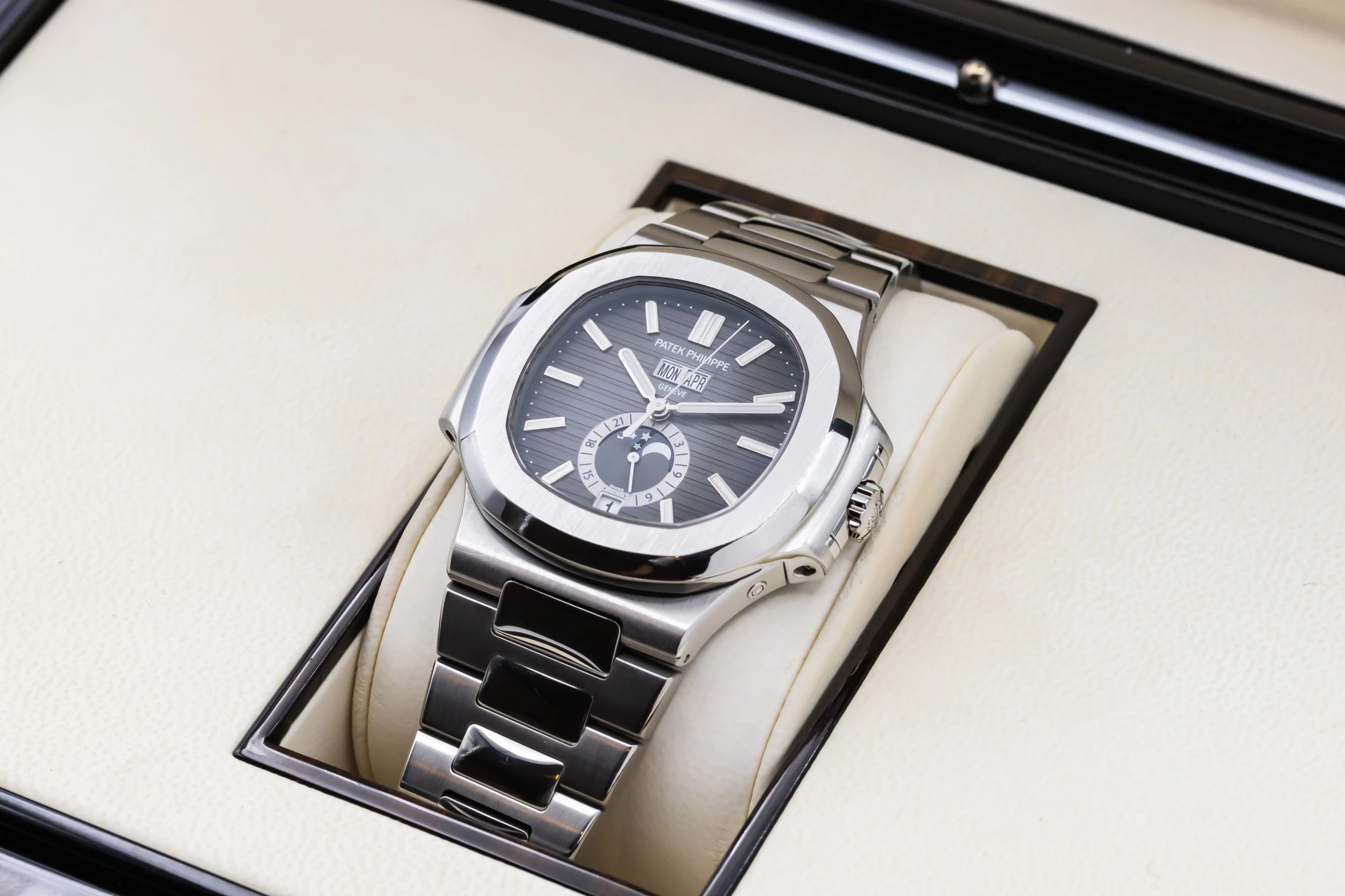
In the middle of this chaos, Patek Philippe released a steel version of its legendary 1518.
The 1518 is grail-level horology. Original models sell at auction for millions. Making one in steel instead of precious metal? That's like Ferrari announcing a $60,000 entry model.
It sold out immediately.
The message wasn't lost on the industry. When external pressures squeeze margins and shake customer confidence, accessibility becomes its own form of luxury.
We're watching a potential shift in how ultra-luxury brands think about their customer base. The old model assumed infinite demand at any price point among a small, stable group of collectors. The tariff disruption exposed how fragile that assumption is.
This wasn't just about watches or tariffs. It was about what happens when industries built on perception meet forces that don't care about brand heritage.
Luxury brands are now building geopolitical risk models into their strategic planning. That's a sentence that wouldn't have made sense five years ago. Oil companies did geopolitical modeling. Tech firms worried about trade wars. Luxury brands worried about craftsmanship and storytelling.
Not anymore.
The concentration risk became obvious. Brands that derived 40-50% of revenue from the U.S. market suddenly realized they'd built empires on a single foundation. Diversification isn't just about product lines anymore. It's about markets, supply chains, and political relationships.
We also learned something about luxury consumers. They're more pragmatic than brands assumed. When prices jumped due to tariffs, many buyers simply waited. They didn't accept the new prices as inevitable. They recognized external forces at work and adjusted their behavior accordingly.
That's a problem for brands that depend on desire overriding rational calculation.
The watch industry will adapt. It always does. But the adaptation reveals something uncomfortable: luxury brands are becoming more like every other business.
They're dealing with inventory management challenges. They're negotiating with governments. They're adjusting prices based on external economic factors rather than internal brand decisions.
The mystique that justified premium pricing is harder to maintain when you're publicly responding to tariff policies and supply chain disruptions.
Some brands will figure out how to navigate this new reality while preserving their positioning. They'll find ways to make agility look intentional rather than reactive. They'll frame market responsiveness as customer service rather than vulnerability.
Others will struggle to reconcile the image they've cultivated with the operational realities they now face.
The 2025 tariff disruption didn't destroy the luxury watch industry. But it did something potentially more significant: it made visible the mechanisms that luxury brands prefer to keep hidden.
And once you see how the watch is made, it's hard to see it the same way again.
Visit us in store for great service and to see our amazing collection.
114 Ballards Lane, N3 2DN, London 020 8838 3655