




When a woman walks into a store interested in a Rolex, there are usually two different conversations happening at the same time. There's the conversation she expects to have, focused on models, sizes, and prices. And there's the conversation she needs to have before making a choice she'll feel good about years later.
Over two decades of watching women choose Rolex watches, I've noticed that the difference between these two conversations often determines whether someone still loves their watch five years down the line, or quietly wishes they'd chosen differently.
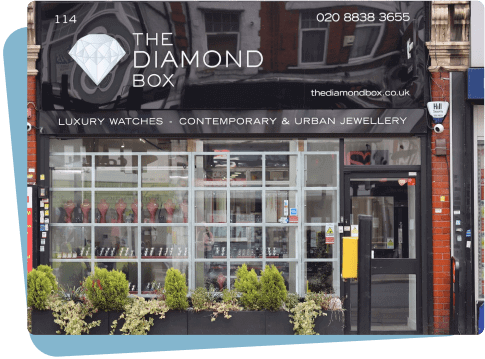
This isn't a product catalog. It's a guide to the questions worth asking yourself before you decide, built on patterns I've observed across thousands of customer conversations at The Diamond Box, a specialist Rolex dealer, rather than marketing materials alone.
The Gap Between Expectation and Reality
Most people entering a luxury watch boutique expect a traditional retail interaction. They're ready to discuss dial colors, bracelet styles, and whether they prefer gold or steel. The expected conversation is product-led and surface level: "Help me pick the watch I like." Price naturally comes up, but understanding Rolex watch prices matters less at this stage than understanding what you need the watch to do in your life.
Before you choose a Rolex, the real conversation needs to shift from product to personal context. A Rolex isn't only a watch. It's a long-term personal object marking something significant. Different motivations lead to very different models, and understanding your motivation matters more than you might think.
I've watched this play out countless times. Someone comes in asking about a specific model they saw online, and through conversation, we realize the watch won't serve what they're looking for. The model they wanted might be beautiful, but it doesn't align with how they'll wear it or what the purchase represents in their life.
Understanding What You're Actually Choosing
When you're looking at Rolex watches for women online, you're making visual choices, comparing dial colors, case sizes, and bracelet styles. When you try a watch on, something different happens. Your brain switches from evaluating objects to evaluating identity.
The question shifts from "How does this watch look?" to "How does this feel on me?"
This matters because a milestone purchase activates a different mental frame. You're not buying a watch. You're choosing something representing a promotion, a personal achievement, independence, or a major life moment. The physical presence on your wrist communicates significance, and your brain reads the weight.
The core elements worth understanding:
Movement and craftsmanship. All Rolex watches use automatic mechanical movements, but understanding what this means for daily wear helps set realistic expectations. You're choosing a mechanical instrument requiring occasional servicing, not a battery-powered accessory.
Materials and durability. The difference between steel, gold, and two-tone isn't only aesthetic. Steel works across casual and professional contexts. Gold makes a stronger statement. Two-tone splits the difference. Each choice shapes how the watch lives in your wardrobe. Working in the pre-owned Rolex market, we see how different materials age and which configurations maintain their appeal across decades of wear.
Features beyond time. Date displays, rotating bezels, and water resistance ratings all serve specific purposes. The question isn't which features are "best." It's which ones you'll use and appreciate over years of ownership.
The Sizing Question Nobody Talks About Honestly
Many people choose based on what looks elegant in photos, but comfort and proportion matter more long-term than initial aesthetics. Online photos hide scale because wrists vary, camera angles distort size, and judging how a watch will sit on your wrist is nearly impossible.
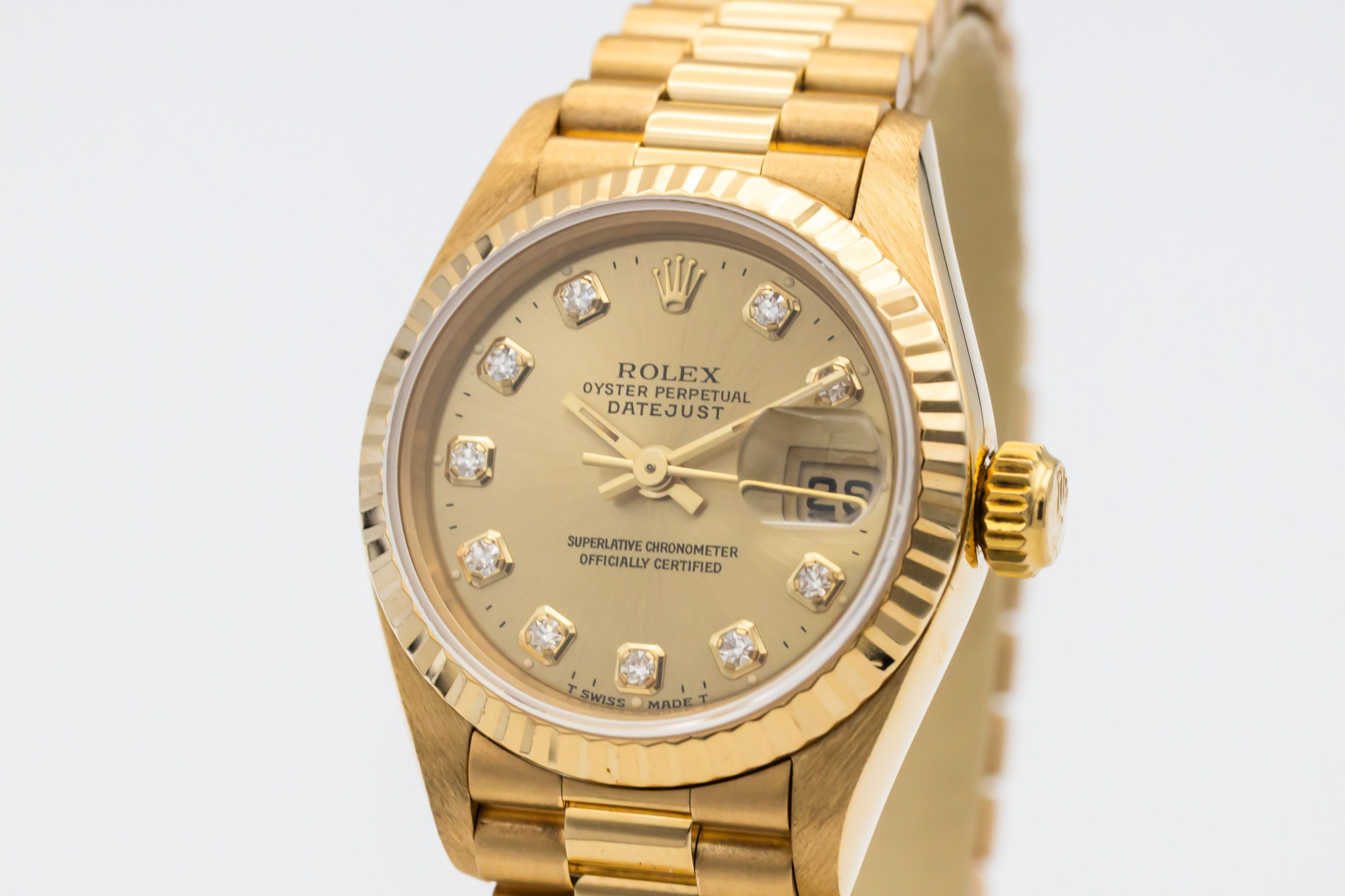
Here's what I've observed: women often come in asking for smaller watches because they worry about going too bold. Someone interested in a milestone purchase might request the Lady-Datejust at 28mm because it looks feminine and delicate online.
But when they try it on, two things often happen. It looks very jewelry-like, and it visually disappears on the wrist. Then they try a Datejust in 31mm or 36mm, and the reaction changes immediately. It feels more substantial, looks more professional, and has more presence.
The shift usually happens in one sentence: "I thought I wanted the smaller one, but this feels more like a milestone piece."
What's happening in the moment? She's realized the watch needs to match the weight of the moment she's marking. A watch feeling too small or delicate suddenly feels like "a nice watch." A watch with stronger presence feels like "a watch marking something."
Industry data supports this pattern. In 2015, Rolex discontinued the 26mm case size in favor of 28mm, suggesting a clear preference shift toward larger watches. And the 31mm Datejust, introduced in the 1950s as a middle ground for those who found 26mm too small but 36mm too large, stays relevant because sizing matters differently to different people.
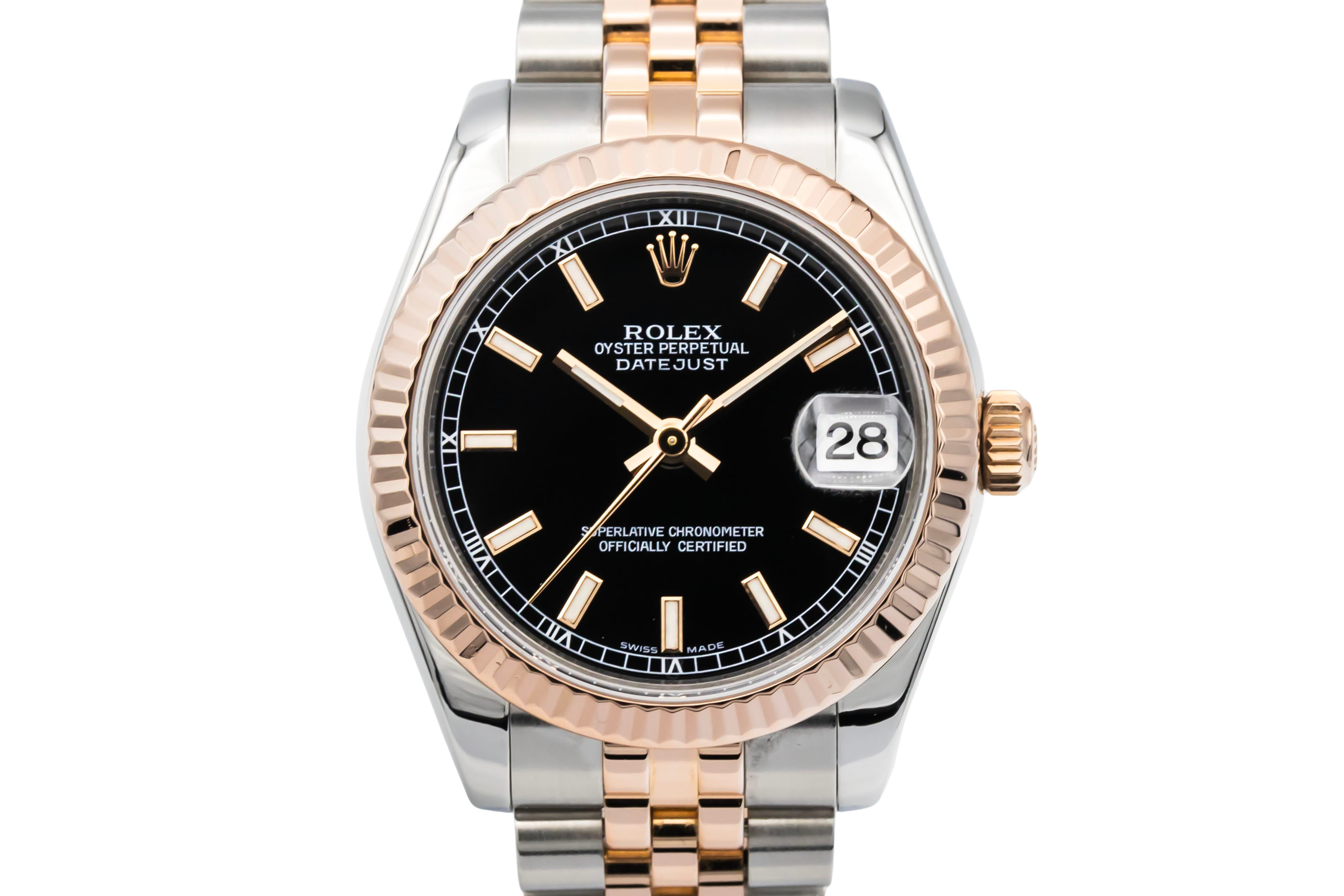
Many women who start looking at the Lady-Datejust ultimately choose the 31mm or 36mm Datejust because it aligns better with how they want to show up in the world. When considering the best Rolex for women, this isn't about bigger being better. It's about presence matching purpose.
How Watches Age With You
One of the most interesting patterns in luxury watch ownership is how someone's relationship with presence changes over time. The watch feeling right at the counter doesn't always stay feeling right, and understanding this pattern helps you make a more informed choice from the start.
The presence adjustment effect. Many people worry a watch with more presence might feel too large or too bold. At the counter, the thought is often "Is this too much for me?" Six months later, the feedback is often the opposite: "Now smaller watches feel tiny."
This happens because your brain recalibrates quickly to scale. Once you get used to the visual presence of a watch on your wrist, it becomes your new normal. The watch that felt slightly bold at first often ends up feeling perfectly balanced later.
Milestone watches age better emotionally. When a watch is tied to a meaningful life moment, people tend to grow more attached over time, not less. A milestone watch becomes a memory anchor, a confidence signal, and part of someone's professional identity.
Models like the Oyster Perpetual or Datejust often fall into this category because they're versatile enough to wear daily. A year later, owners often say things like "I wear it almost every day without thinking about it." A sign the choice was right.
The "too delicate" regret pattern. Interestingly, the more common regret is going too small or too decorative. When someone chooses a Rolex watch for women purely based on delicate appearance or what they think a women's watch should look like, six months later they sometimes realize it doesn't have enough presence or feels more like an accessory than a watch.
When people come back expressing this, they rarely say "I should have chosen a larger case size." Instead, the language revolves around presence and significance. They say things like "It kind of disappears on my wrist" or "It feels more like jewelry than a watch" or "I wish it had a little more presence."
What they're expressing isn't dissatisfaction with the watch itself. It's the watch doesn't fully reflect the importance of the event it marked.
The Versatility Question
There's an interesting gap between how people imagine versatility and how versatility works once they own the watch. At the counter, "versatility" usually means "it shouldn't stand out." After a year of ownership, it tends to mean something different.
When someone says they want a versatile watch, what they often mean is "I want something going with everything" and "I don't want people to notice it too much." So the initial instinct is often toward something small, delicate, and neutral. In the buyer's mind, versatility equals safety.
After living with a watch for months, people realize versatility works differently. The watches feeling most versatile tend to have balanced presence, noticeable enough to feel intentional but not overpowering. They have clean designs adapting to many contexts. And they use materials working with both casual and formal settings.
This is why models like the Datejust or Oyster Perpetual often become daily watches for many owners. They're not trying to disappear. They simply fit naturally in many environments. The Datejust was designed as a watch offering "comfort as well as legibility and daily time management," establishing itself as "a precious instrument for the modern, independent, active wearer."
Real versatility comes from emotional comfort. The biggest surprise people experience is versatility isn't only visual. It's psychological. A watch feeling aligned with someone's identity tends to feel appropriate almost everywhere. At work, at dinner, traveling, meeting clients, casual weekends.
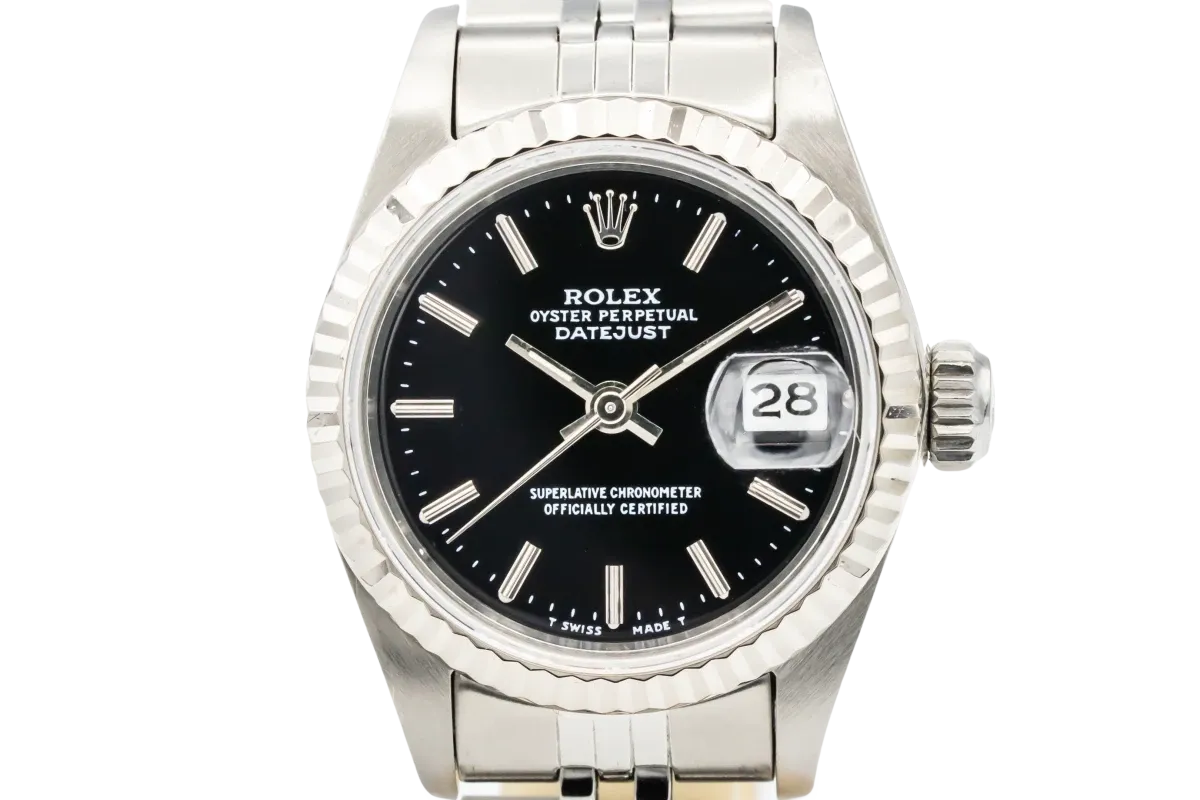
Rolex Lady-DateJust 26mm Stainless Steel Jubilee
Many people imagine they'll coordinate watches with outfits. Once they own a watch they love, something different happens. It becomes their default watch. They wear it with everything and stop thinking about matching it. The watch becomes part of their personal uniform rather than an accessory they rotate.
At the moment of purchase, versatility is imagined as "a watch working with everything." After a year of ownership, it often turns out to be "a watch I never feel the need to take off."
What "Investment" Actually Means
When someone uses the word "investment" in a watch conversation, it almost never means only financial return. In practice, it usually carries a mix of emotional, practical, and financial meanings. Understanding which one you mean matters, because long-term satisfaction usually comes from a different place than where the word "investment" first points.
Investment as justification. Very often, "investment" is a psychological permission slip. "If I'm going to spend this much, it should be an investment" means "I want this to be worth it" and "I don't want to feel like I made an impulsive purchase." The reputation of brands like Rolex makes this framing easy because people know they hold value better than most luxury goods. But the underlying goal is rarely resale profit. It's emotional comfort with the decision. For those concerned about affordability, exploring Rolex finance options makes a meaningful purchase more accessible without compromising the thoughtfulness of the choice.
Investment as long-term ownership. The second meaning is about durability and permanence. Instead of buying several temporary pieces, someone wants one watch lasting decades. You hear language like "I want something timeless" or "I'd rather buy one great watch than several average ones." In this sense, investment refers to craftsmanship and longevity. Classic designs appeal to many buyers because their designs have stayed relevant for generations.
Investment as self-worth. The third meaning is the most personal. Sometimes "investment" is shorthand for "I'm investing in myself." For many women, a luxury watch is one of the first major personal purchases they make purely for themselves, especially after a milestone like a promotion or reaching financial independence. The watch becomes a physical acknowledgment of personal achievement.
Over time, this interpretation of investment tends to create the deepest satisfaction.
Occasionally the word "investment" shifts toward market thinking, which models appreciate, which watches are hard to get, which ones have resale demand. In those cases the purchase becomes too analytical. The watch gets chosen based on perceived scarcity or price trajectory, but watches chosen this way often end up worn less frequently and emotionally distant from daily life. As a specialist in pre-owned Rolex watches, I see both sides of this: yes, certain models hold their value exceptionally well, but the watches people treasure rarely correlate with the ones they bought purely for market reasons.
When you talk to people a year or two after buying a watch, they rarely talk about its resale value. Instead they say things like "I wear it almost every day" or "It reminds me of when I made a partner" or "It became part of my routine." Those statements point to something deeper than financial return. They show the watch has become integrated into their identity and daily life.
Research shows forty percent of people buy only one watch in their lifetime, making it vital to choose thoughtfully rather than rushing the decision. The purchase represents a long-term commitment, not a speculative asset.
At the moment of purchase, "investment" often means "Will this hold its value?" Years later, satisfaction usually depends on a different question: "Did this become part of my life?"
Where You Buy Matters
Where you buy a watch often shapes the entire experience, sometimes even more than the watch itself. The difference between relationship-based guidance and transaction-focused retail isn't subtle once you know what to look for. It shows up in how the conversation unfolds, what questions get asked, and what the salesperson seems to be optimizing for.
How the conversation begins. In transaction-focused retail, the conversation usually starts with the product. "What model are you looking for? What size? What's your budget?" The salesperson is trying to identify the item quickly so they move toward a sale. The interaction is structured around inventory and availability.
In relationship-based guidance, the conversation often starts with you, not the watch. "What brought you in today? Is this your first luxury watch? Are you celebrating something?" These questions signal the goal is to understand context, not product selection alone.
How options are presented. In transaction retail, the salesperson tends to show exactly what you asked for. The underlying assumption is that you already know what you want, and their role is facilitating the purchase. In relationship guidance, the salesperson might show two or three unexpected options. The intention isn't to redirect you - it's to create contrast so you can discover what actually feels right.
What happens during quiet moments. This is one of the clearest signals. In transaction environments, silence often feels awkward. The salesperson fills it with specifications, pricing, availability, and waiting lists. The focus remains on facts and logistics. In relationship environments, silence is often left alone. If you're looking quietly at the watch on your wrist, the salesperson may simply step back and allow the moment. That pause is respected because the decision is happening internally, not verbally.
The role of pressure. In transaction retail, you may feel subtle cues about urgency, reminders about limited supply, or encouragement to decide quickly. None of this is necessarily aggressive, but the momentum pushes toward closing the sale. In relationship retail, the salesperson tends to communicate the opposite message: "Take your time. There's no rush. Try it on again."
The emphasis is on clarity of choice, not speed.
The easiest way to tell which environment you're in is to ask yourself one question: Do I feel like I'm choosing a watch, or discovering one? If the experience feels like selecting an item from a catalog, you're in a transaction environment. If it feels like someone is helping you understand what belongs on your wrist, you're in a relationship environment.
The irony is that both environments can sell the exact same watch. But the experience of choosing it - and how confident you feel about the decision afterward - can be completely different. At The Diamond Box, we've built our approach around the second model, believing that the right watch chosen thoughtfully serves you better than any watch chosen quickly.
The One Signal That Matters Most
If you're starting the process of choosing a Rolex, there's one internal signal that matters more than almost anything else. It's very simple: pay attention to whether your thinking is getting quieter or louder as you try watches.
That small shift tells you a lot about whether you're moving toward a choice you'll feel good about years later.
When the mind gets louder. When someone is drifting away from the right choice, their thoughts tend to multiply. They start thinking about whether this is the best value, whether they should compare a few more, whether they should read more about this model, and what if another version is better. Nothing is wrong with those thoughts - they're part of any major purchase - but if the mental noise keeps increasing, it often means the watch hasn't quite connected yet. The decision still feels external and analytical.
When the mind gets quieter. When someone tries the watch that truly fits them, something different often happens. Instead of more questions, there's a moment of calm attention. They look at the watch on their wrist and think something closer to "This feels right" or "I can see myself wearing this." There's less comparison happening. The brain stops searching.
This is the quiet moment when the watch stops being an option and starts feeling like something that belongs to you.
During the trying-on phase, your brain is in comparison mode - evaluating options, weighing features, analyzing choices. But when you suddenly go quiet, something else happens. You stop comparing and start imagining ownership. You're no longer looking at the watch - you're looking with it. Instead of "How does this watch look?" your brain asks "How does my life look with this on my wrist?"
In that pause, you may unconsciously picture walking into work wearing it, signing documents with it on, having coffee with friends, attending an event. The watch becomes a character in your future scenes. If the image feels natural, the decision suddenly becomes clear.
A luxury watch is something people often live with for decades. The watches that stay satisfying over time usually share one thing in common: they didn't feel like the result of a perfectly optimized decision. They felt like the result of a clear one.
During the process, ask yourself one question: "If I walked out wearing this today, would I keep thinking about other watches - or would the search feel finished?" If the search still feels open, keep exploring. If the search feels complete, that's often the strongest signal you're close to the right choice.
In the end, the watch that people love years later is rarely the one that won the most comparisons. It's the one that, at some point in the process, made them quietly think: "I don't need to keep looking."
If you're considering a Rolex and would like guidance that starts with understanding what you're actually looking for - not just which model you think you want - we're here to have that conversation. Visit us to explore how the right watch can become part of your story.