




TL;DR: Authenticating a Rolex in 2026 is harder than ever before. Super clones now replicate genuine watches so well that visual inspection alone fails in 80% of cases. Professional authentication requires removing the case back, verifying serial numbers, examining the movement under magnification, and checking components against documented specifications. Box and papers don't prove authenticity. The physical watch remains the only reliable proof.
Core Authentication Steps:
-
Weight and tactile feel provide an initial filter but aren't definitive
-
Movement examination reveals finishing characteristics counterfeits struggle to replicate
-
Serial number verification checks engraving quality, production year correspondence, and counterfeit databases
-
Dial printing under magnification shows precision that fakes routinely miss
-
Professional authentication takes time and requires proper equipment, not quick visual checks
At The Diamond Box, we've spent over twenty years handling Rolex watches, not as collectors or enthusiasts, but as dealers working directly with customers making consequential decisions. That experience has taught us something the market doesn't often acknowledge: authenticating a Rolex in 2026 is harder than it's ever been.
The sophistication of counterfeit watches has reached a point where visual inspection alone fails more often than most people realize. Super clones now replicate genuine Rolex watches so accurately that even when taken apart, distinguishing components requires expertise and tools most buyers don't have access to.
This isn't speculation. In 2024, one major resale platform rejected 29% of watches submitted, a 6% increase from the previous year. The authentication challenge isn't theoretical. It's affecting real transactions every day.
This guide walks through what we've learned from thousands of authentication decisions at our North London shop, focusing on what works when certainty matters.
Why Has Rolex Authentication Become More Complex?
The counterfeit watch industry operates at a scale most buyers don't realize. Current estimates suggest 30 to 50 millionfake Rolex watches enter circulation annually. To put this in context, Rolex manufactures roughly one million genuine watches per year.
The financial incentive driving this production is substantial. By 2025, the counterfeit luxury watch market reached an estimated value of £1.5 billion. That kind of revenue funds serious manufacturing capability.
Modern counterfeit operations use advanced technology including 3D printing and CNC machines with tolerance levels reaching 0.02mm, making side-by-side comparison difficult without magnification. The result: only 20% of fake Rolex watches are easily identifiable at first glance.
This creates a practical problem. If you're evaluating a watch based on what you see without tools, you're working with incomplete information in 80% of cases.
Key Point: The scale and sophistication of counterfeit production means visual inspection alone is no longer reliable for authentication.
What Are the Three Types of Rolex Counterfeits?
Through our work, we've observed that authentication challenges fall into three distinct categories. Each requires different evaluation approaches.
1. Complete Counterfeits
These are entirely fabricated watches built to resemble genuine Rolex models. Quality varies dramatically. Low-end counterfeits remain relatively easy to identify through weight, finishing, and movement observation. High-end super clones require technical inspection to detect.
The distinguishing characteristic: every component is counterfeit.
2. Franken-Watches
A Franken-watch combines genuine Rolex components with counterfeit parts to create a hybrid appearing more valuable than it is. Common example: taking a standard Submariner and fitting it with a fake green dial and bezel to sell as a rare "Hulk" at a substantial markup.
This represents a particularly difficult threat because the watch's core is genuine, allowing it to pass basic authentication tests while hiding its true nature until examined under magnification. We've seen cases where even experienced dealers initially missed these modifications.
3. Paperwork Fraud
The most dangerous assumption in the secondary market is that original box and papers guarantee authenticity. They don't.
Counterfeiters now produce high-quality warranty cards complete with working NFC chips and convincing UV holograms. These are paired with stolen serial numbers or "naked" watches (genuine watches sold without documentation) to create a false paper trail.
A warranty card is a piece of plastic. It offers no proof you're holding a genuine Rolex that left the factory in the configuration you're seeing. The physical watch, its movement, engravings, and tactile presence, remains the final arbiter.
Key Point: Counterfeits now range from complete fakes to hybrid watches combining genuine and fake parts, with documentation fraud creating false confidence in authenticity.
How Do Professionals Authenticate a Rolex?
At The Diamond Box, our authentication process follows a specific sequence, moving from broad assessment to detailed technical inspection. Here's what we check when examining watches from brands like Rolex, Patek Philippe, and Audemars Piguet.
Weight and Tactile Feel
Genuine Rolex watches have substantial weight due to their solid construction and quality materials. We start here because it's immediately noticeable. A watch feeling light or hollow raises immediate concern.
This isn't definitive, high-end counterfeits now replicate weight accurately, but it's a useful initial filter.
Movement Observation
The seconds hand on a genuine Rolex sweeps smoothly rather than ticking in discrete steps. We remove the case back to examine the movement directly. Rolex movements display specific finishing characteristics, component arrangement, and engravings that counterfeits struggle to replicate accurately.
Important detail: Rolex movements are never generic. Each caliber has documented specifications we verify.
Serial and Model Number Verification
Every genuine Rolex has a unique serial number engraved between the lugs at the 6 o'clock position (on older models) or on the rehaut (newer models). We verify three things:
-
The engraving quality matches Rolex standards
-
The serial number corresponds to the correct production year for the model
-
The serial number doesn't appear on known counterfeit databases
Counterfeiters often copy the same serial number onto multiple watches, something Rolex never does. If you encounter another Rolex with your exact serial number online or in a dealer network, one of you holds a counterfeit.
Cyclops Magnification
The date window magnification on genuine Rolex watches magnifies the date 2.5 times. Counterfeit cyclops lenses frequently provide insufficient magnification or display optical distortion around the edges.
This is a quick visual check, but it's not definitive on its own.
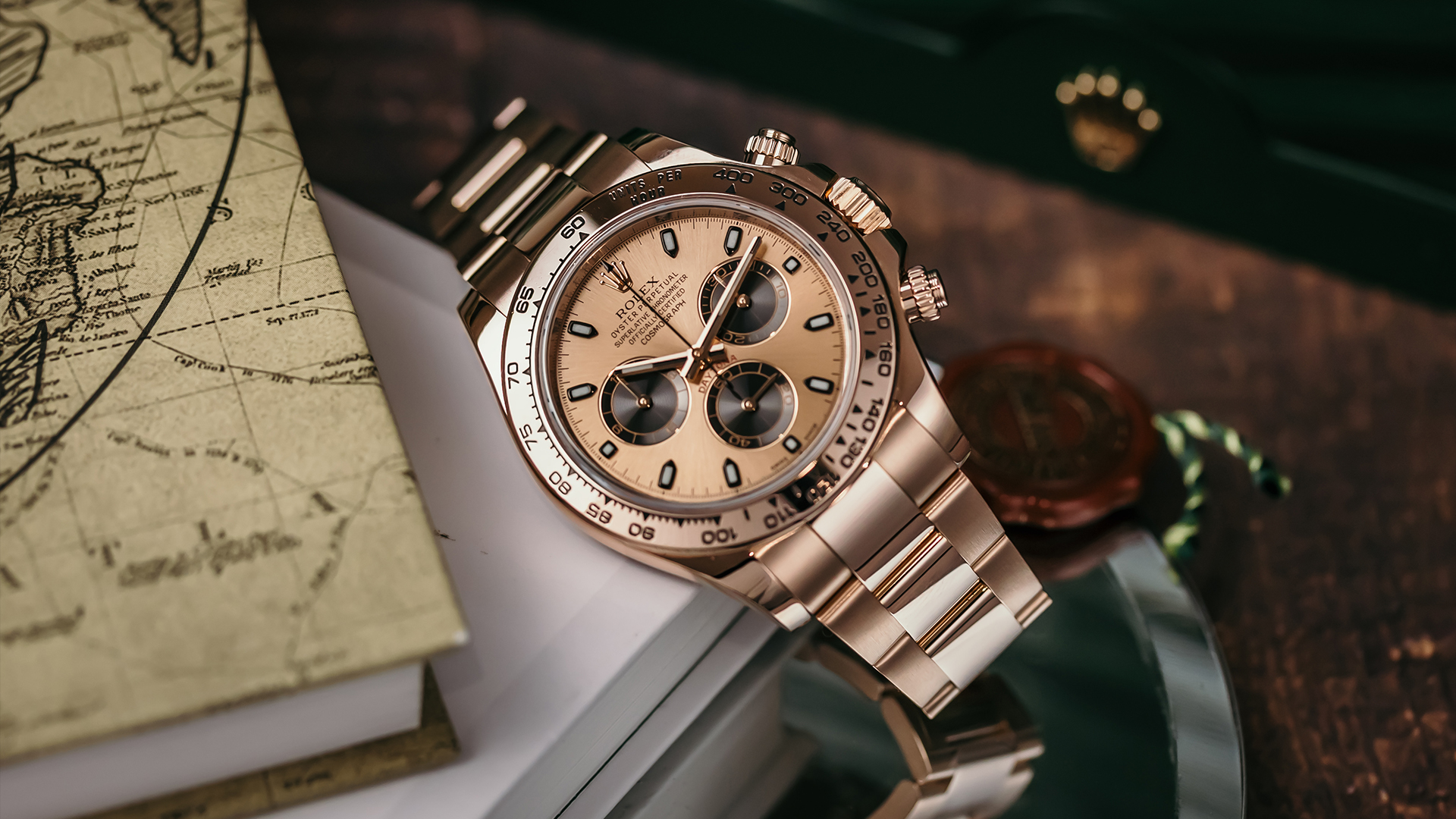
Dial and Printing Quality
We examine dial printing under magnification looking for:
-
Crisp, clean text with no bleeding or irregularity
-
Proper spacing and alignment
-
Correct font characteristics for the specific model and era
-
Applied hour markers properly aligned and finished
Rolex dial printing is exceptionally precise. Blurred text, uneven spacing, or misaligned markers indicate problems.
Crown and Case Back Details
The Rolex crown logo should be sharply defined with clean edges. On the case back, we verify any engravings match the expected format for the model. Most Rolex sports watches have smooth, unmarked case backs. Decorative engravings or exhibition windows are red flags.
Bracelet Construction and Clasp
Genuine Rolex bracelets have specific construction characteristics:
-
Solid links with no hollow feeling
-
Smooth, precise operation
-
Proper clasp mechanism with Rolex crown logo
-
Correct reference numbers engraved on clasp components
The bracelet should feel substantial and well-engineered, not flimsy or loose.
Key Point: Professional authentication follows a systematic sequence from weight and feel through movement examination, serial verification, and detailed inspection under magnification.
What Are the Risks When Buying a Rolex Privately?
Some estimates suggest 20% of watches on the private Rolex market are counterfeit. The challenge: a convincing fake priced slightly below market value looks like a good deal rather than a warning sign.
This is where velocity-driven transactions create elevated risk. When you're evaluating a watch from a private seller, you're often working with limited information, compressed timelines, and no recourse if problems emerge later.
We've seen this pattern repeatedly: a buyer finds what appears to be a fair price, feels pressure to act quickly before someone else claims it, and skips thorough authentication to avoid losing the opportunity. The watch arrives. Doubts surface. By then, the seller has disappeared or refuses returns.
The solution isn't to avoid private transactions entirely, legitimate opportunities exist. The solution is to slow down enough to verify what you're buying before commitment becomes irreversible. At The Diamond Box, we often work with customers who've found a watch privately and want independent verification before completing the purchase, or those considering part-exchange options who need accurate valuation and authentication as part of the process.
Key Point: Private market transactions carry elevated risk when buyers compress decision timelines and skip authentication to secure what appears to be a favorable price.
What Does Professional Authentication Involve?
When we authenticate a Rolex for a customer at The Diamond Box, the process takes time. We're not performing a quick visual check and issuing a verdict. We're conducting a systematic technical evaluation, all on site in our North London facility.
Professional authentication requires:
-
Removing the case back to examine the movement
-
Verifying serial numbers against production records
-
Checking component originality under magnification
-
Testing functionality and accuracy
-
Comparing specific details against documented specifications for that reference
This isn't something happening in five minutes at a meeting location. If someone offers instant authentication without tools or detailed inspection, they're guessing, not verifying.
Real authentication requires proper equipment, reference materials, and enough time to check what needs checking. Whether you're buying, selling, or part-exchanging a watch, this verification process protects your investment.
Key Point: Legitimate authentication is a time-intensive technical process requiring specialized equipment and reference materials, not a quick visual assessment.
When Should You Seek Professional Authentication?
You should consider professional authentication when:
-
Buying from a private seller you don't have an established relationship with
-
The price seems unusually favorable compared to market rates
-
The seller doesn't provide clear provenance or purchase history
-
You're buying a high-value model where the financial risk is substantial
-
The watch has been modified or serviced outside authorized channels
-
You're purchasing online without the ability to inspect in person first
The cost of authentication is modest compared to the cost of finding out you've purchased a counterfeit after the transaction is complete.
Key Point: Professional authentication becomes essential when buying from unfamiliar sellers, encountering favorable pricing, or making high-value purchases without clear provenance.
Do Box and Papers Prove a Rolex Is Genuine?
Box and papers add value to a genuine Rolex, but they don't prove authenticity. We've seen counterfeit documentation virtually indistinguishable from genuine Rolex paperwork without detailed examination.
The hierarchy of verification remains:
-
Physical watch inspection and technical authentication
-
Provenance and purchase history from verifiable sources
-
Documentation corresponding to the watch's serial number and specifications
If you're evaluating a watch based solely on its papers, you're trusting the least reliable element of the authentication process.
Key Point: Documentation adds value but doesn't prove authenticity. Physical watch inspection remains the primary verification method.
How Much Certainty Do You Need Before Buying?
Authentication complexity has increased to the point where buyers face genuine difficulty distinguishing high-quality counterfeits from genuine watches. This isn't a problem resolving through reading guides or studying photos online. The counterfeits you're trying to identify were built by people who studied the same information.
The practical question becomes: how much certainty do you need before committing to a purchase?
For some buyers, the risk tolerance is high. They're comfortable making decisions based on visual inspection and seller reputation. For others, the financial magnitude or emotional significance of the purchase requires higher certainty before proceeding.
Neither approach is wrong. They're different risk profiles applied to different situations.
What we've observed over two decades is that buyers who take time to verify what they're purchasing before committing tend to experience sustained satisfaction with their decisions. The buyers who compress the process to match transaction velocity often surface concerns later, sometimes months or years after the purchase, when resolution becomes difficult or impossible.
Does this match what feels right for your situation?
How The Diamond Box Supports Your Authentication Needs
Whether you're buying your first Rolex or adding to an established collection, authentication shouldn't feel like an obstacle. At The Diamond Box, we offer comprehensive verification services for preowned luxury watches, working with brands including Rolex, Patek Philippe, and Audemars Piguet.
Our North London shop handles everything on site. When you bring a watch in for authentication, we examine it using the same systematic process outlined in this guide. If you're considering a purchase from a private seller or online source, we'll verify authenticity before you commit. If you're selling or part-exchanging, we'll assess condition and originality as part of the valuation process.
For customers outside London, we ship internationally and provide the same detailed authentication for watches sent to us. The process takes time because we don't rush technical evaluation, but you receive clear documentation of what we've verified and what concerns, if any, we've identified.
We also service and repair preowned watches on site, which means we're opening case backs, examining movements, and verifying component originality regularly. This isn't occasional work. It's what we do every day, and that repetition builds the pattern recognition authentication requires.
Frequently Asked Questions About Rolex Authentication
How long does professional Rolex authentication take?
Professional authentication typically takes 30 to 60 minutes for a thorough inspection. This includes removing the case back, examining the movement under magnification, verifying serial numbers against production records, and checking component originality. Instant authentication without proper tools and time isn't reliable verification.
What's the difference between a super clone and a regular fake Rolex?
Super clones use advanced manufacturing technology (3D printing, CNC machines with 0.02mm tolerance) to replicate genuine Rolex watches with exceptional accuracy. Regular fakes have obvious quality differences in weight, finishing, and movement. Super clones require technical inspection and magnification to detect, while regular fakes are often identifiable through basic visual and tactile assessment.
Where is the serial number located on a Rolex?
On older Rolex models (pre-2005), the serial number is engraved between the lugs at the 6 o'clock position. You need to remove the bracelet to see it. On newer models (2005 onwards), the serial number is engraved on the rehaut (the inner bezel ring) at the 6 o'clock position and is visible without removing the bracelet.
Do all genuine Rolex watches have the sweeping seconds hand?
Yes, all genuine Rolex watches with seconds hands use automatic movements producing a smooth sweeping motion rather than discrete ticks. This happens because Rolex movements beat at 28,800 vibrations per hour (8 beats per second), creating the appearance of continuous motion. Quartz movements tick once per second, a clear indicator of a counterfeit Rolex.
What does a Franken-watch mean?
A Franken-watch combines genuine Rolex components with counterfeit parts to create a hybrid appearing more valuable than it is. Example: taking a genuine Submariner and installing fake green dial and bezel components to sell it as a rare "Hulk" model at a premium. These are particularly difficult to detect because the watch's core is genuine, passing basic tests while hiding modified components.
Are counterfeit warranty cards and papers common?
Yes, counterfeit documentation is increasingly sophisticated. Fake warranty cards now include working NFC chips and convincing UV holograms. These are often paired with stolen serial numbers or genuine watches sold without original documentation to create false paper trails. Box and papers add value but don't prove authenticity without physical watch verification.
How much does Rolex authentication cost?
Professional authentication services typically cost between £50 and £200, depending on the complexity of the inspection and the expertise of the authenticator. This cost is modest compared to the financial loss of purchasing a counterfeit watch, which for popular models ranges from £5,000 to over £30,000.
Where should I get a Rolex authenticated?
Established watch dealers with technical expertise and proper equipment provide reliable authentication. At The Diamond Box, we handle authentication, servicing, and repairs for preowned Rolex, Patek Philippe, Audemars Piguet, and other luxury brands, all on site at our North London shop. We also ship internationally for customers who need verification services but aren't local. Look for businesses with verifiable track records, physical locations, and the ability to conduct detailed technical inspections including movement examination. Avoid relying on quick visual assessments or online-only authentication services without physical inspection capability.
Key Takeaways
-
Authentication difficulty has increased substantially. Only 20% of fake Rolex watches are easily identifiable at first glance due to advanced manufacturing techniques.
-
Three counterfeit types exist: complete fakes, Franken-watches (genuine components mixed with fake parts), and paperwork fraud. Each requires different detection approaches.
-
Visual inspection alone is insufficient. Professional authentication requires removing the case back, examining the movement under magnification, and verifying serial numbers against production records.
-
Box and papers don't prove authenticity. Documentation adds value but counterfeit paperwork now includes working NFC chips and convincing holograms.
-
Private market transactions carry elevated risk. An estimated 20% of watches on the private market are counterfeit, with velocity-driven purchases creating the highest vulnerability.
-
Professional authentication takes time and costs between £50-£200. This investment is modest compared to the financial loss of purchasing a counterfeit watch worth thousands.
-
Decision velocity affects outcomes. Buyers who take time to verify purchases before committing experience sustained satisfaction, while those who compress timelines often surface concerns after resolution becomes difficult.
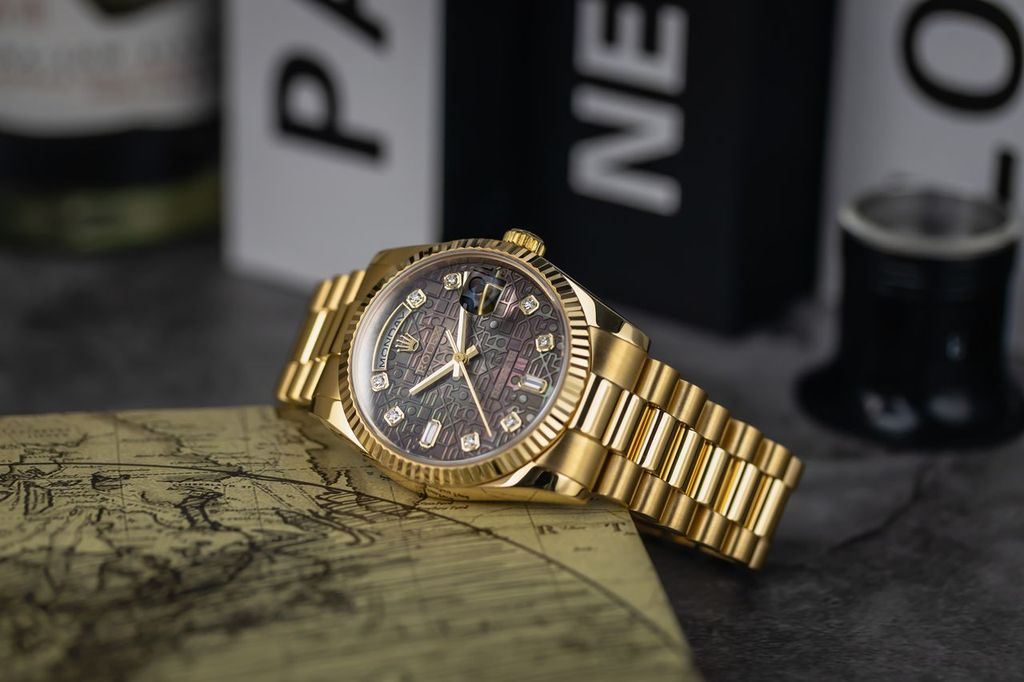
Rolex dial printing