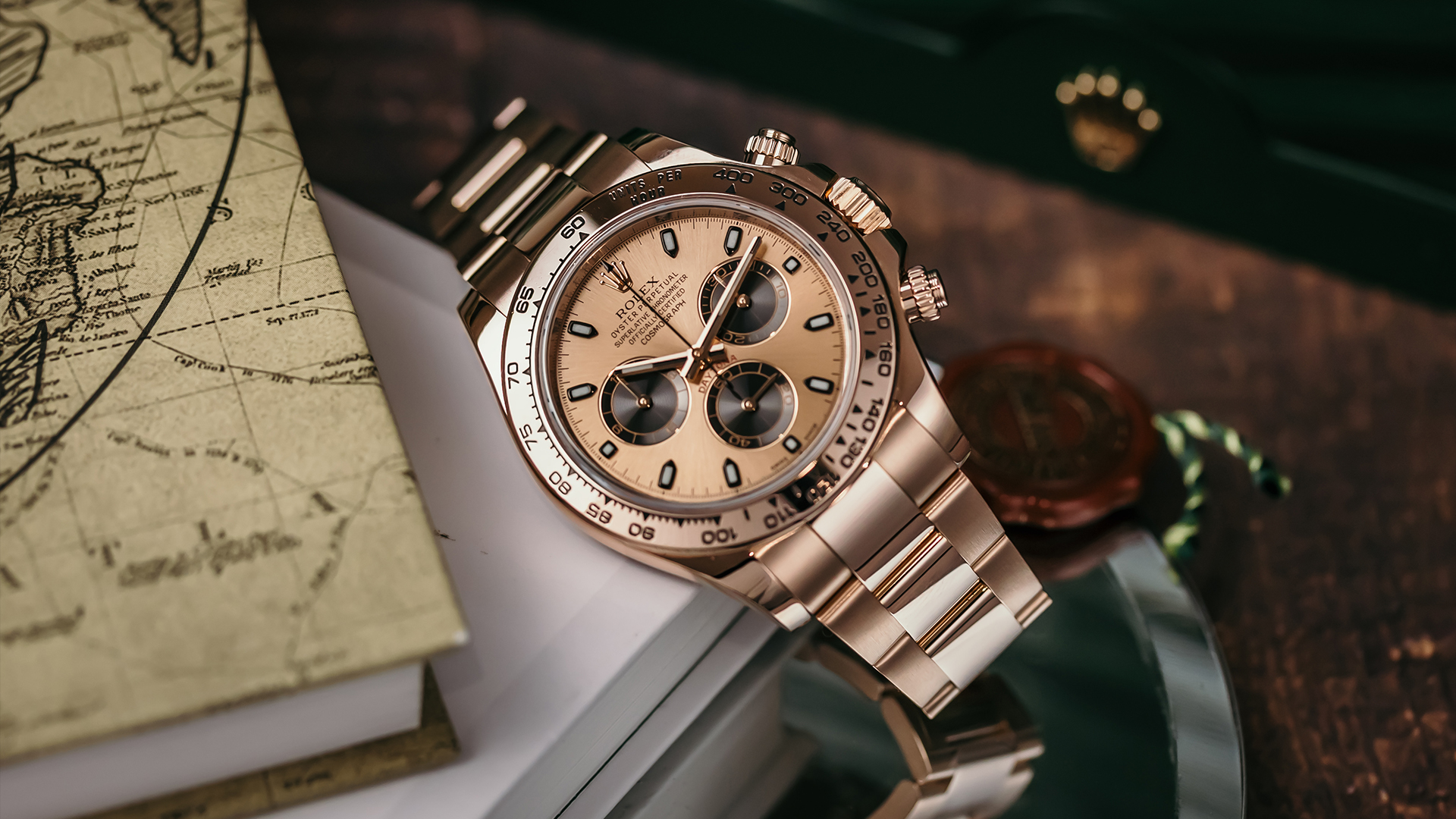





TL;DR: The Rolex market has shifted from speculation-driven to collector-driven. Secondary prices corrected 15% from their 2022 peak, but still trade 38-131% above retail. Wait times have improved for most models, though Daytonas remain scarce. Retail price increases continue to create new floors for pre-owned values. The speculative bubble has ended, but genuine demand persists.
What You Need to Know:
Secondary market prices dropped 15% from peak but remain well above retail for desirable models
Wait times fell significantly for Submariners and Explorers, less so for Daytonas
2026 retail increases (5% steel, 6-7% gold) lift pre-owned price floors
Long-term appreciation remains intact despite short-term corrections
Market has transitioned from investment-focused to wear-focused buyers
We've been watching the Rolex market for over two decades now. The conversation around pricing, availability, and whether the bubble has burst comes up almost daily in our shop.
Here's what we're seeing in 2026, not speculation but patterns we've observed across thousands of conversations and transactions.
Rolex raised UK prices by roughly 5% at the start of 2026. You'll see that headline number reported everywhere.
The real story sits underneath that average.
Stainless steel sports models like the Submariner, GMT-Master II, and Daytona increased around 5%. Gold and two-tone watches climbed 6-7%. That gap matters when you understand it reflects actual cost pressure, not arbitrary pricing decisions.
Gold prices gained roughly 27% year-over-year in 2024. Rolex responded by raising gold model prices about 11% in 2025 across the UK and Europe. The 2026 increases continue that pattern.
Rolex's 5% average increase sits well above UK inflation, which is expected around 2.5% in 2026. That spread tells you something about demand sustainability.
When a manufacturer prices above inflation year after year and maintains market position, you're looking at genuine demand rather than speculative froth.
What This Means: Retail pricing continues to reflect real demand and material costs, not bubble dynamics. The willingness of buyers to absorb above-inflation increases suggests the market has stabilised at a new, higher baseline.
From late 2020 through March 2022, secondary market prices exploded. The average Rolex hit £13,200, nearly double the price from 18 months earlier.
Then came the correction.
By December 2022, prices had dropped to £9,050. As of mid-2025, the market settled around £10,300. That's a 15% correction from peak for key models.
The Submariner Date 126610LN dropped from £14,200 to £10,350. The Daytona Steel 126500LN fell from £38,400 to £28,400.
Here's what the correction revealed: these models still trade 38% to 131% above retail.
That's not a bubble bursting. That's speculation leaving the market while fundamental demand remains intact.
We've seen this pattern before, in 2008 and 2015. Both corrections were followed by multi-year appreciation cycles. The flippers moved on. The people who genuinely wanted to wear these watches stayed in the market.
Key Insight: The correction removed speculative premium but left core value intact. Pre-owned models still command substantial premiums over retail, confirming sustained collector interest beyond investment speculation.
After years of hearing two to three years minimum, availability is quietly improving for certain models.
The wait of Rolex Submariner wait peaked at 105 days in 2023. By 2024, it dropped to 60 days. The GMT-Master II fell from 180 days in 2022 to around 90 days in 2024.
The biggest shift was with the Explorer, which saw wait times fall nearly 66%, from 90 days in 2022 to 31 days in 2024.
That tracks with what we mentioned earlier about secondary market corrections. When models that once sold for double retail started trading closer to MSRP, flippers naturally moved on. With speculative demand gone, watches became easier to get.
The Cosmograph Daytona remains different. You're still looking at one and a half to three years for most stainless steel and gold models. For limited production versions, up to five years.
Availability improved, but it improved selectively. That tells you where genuine collector interest remains concentrated.
Bottom Line: Wait times dropped significantly for entry and mid-tier sports models as speculative buyers left. Daytonas remain scarce, reflecting sustained demand from collectors who wear them.
This relationship is mechanical, not mysterious.
When Rolex raised retail prices roughly 7% in January 2026 (stainless steel up 5%, gold up 8-9%), secondary market floor prices rose in lockstep.
A pre-owned Submariner 124060 trading at £9,600 in December 2025 now trades around £10,000 to £10,350. Not from a demand spike, but from the new retail MSRP jumping from £7,300 to £7,700.
The authorised dealer price creates upward pressure on pre-owned values. Since availability at authorised dealers hasn't improved in parallel with higher prices, buying on the secondary market remains common.
This is why we tell customers: retail price increases tend to create a new floor for pre-owned values, particularly when supply constraints persist.
The Mechanism: Retail pricing sets the baseline. When retail goes up and supply stays tight, pre-owned floors rise proportionally. This creates predictable upward pressure independent of demand spikes.
Here's a pattern that surprised us when we first noticed it, but now makes complete sense.
Rolex, Patek Philippe, and Audemars Piguet together account for more than 50% of secondary market transactions by value. That's nearly pound;7.7 billion combined.
By Q2 2025, prices had fallen for 13 consecutive quarters across the broader watch market. Here's the striking part: excluding Rolex, Patek, and AP, the average watch now trades at negative 31% or worse relative to retail.
The overall secondary market grew at the same time. Sales of pre-owned watches rose around 10% year-on-year in 2024 to £20.6 billion. Projections suggest that figure will reach £33.6 billion by 2031.
The market is growing even as speculative premiums compress. That bifurcation shows you where genuine collector value concentrates, among very few manufacturers.
Market Reality: Value retention is highly concentrated. Three brands capture half the market by value, while most other luxury watches trade below retail. Growth continues within this selective group.
When you step back from quarterly volatility, a different pattern emerges.
Average Rolex prices increased over 550% from 2010 to 2025, from roughly £1,540 to £10,300.
The Datejust peaked at £7,620 in March 2022, representing a 763% increase from its 2010 starting point. After correction, current pricing sits around £6,530 as of May 2025. That's still 639% appreciation over the full 15-year period.
Models like the Daytona and GMT-Master II Pepsi appreciated roughly 12% annually over the past decade, even accounting for downturns.
We've watched this pattern play out in real time with customers who bought in 2010, 2015, 2020. Short-term corrections happen within longer-term appreciation cycles.
Does that mean every Rolex will appreciate? No. But it does suggest that for certain references with sustained collector interest, the long-term trajectory has been notably consistent.
Long View: Despite dramatic short-term swings, 15-year data shows consistent appreciation for core references. Corrections appear as temporary adjustments within sustained upward cycles.
Despite current corrections, the fundamental market dynamics remain solid.
The global luxury watch market was valued at £41.2 billion in 2024. Projections suggest it will reach £103.3 billion by 2032, a compound annual growth rate of 12.23%.
The US market specifically is expected to grow to £14.7 billion by 2032, driven by growing demand among affluent consumers and increasing perception of high-end watches as collectibles.
That macro perspective suggests current pricing represents positioning within a growth trajectory, not a permanent market condition.
Macro Context: Industry projections show sustained growth through 2032. Current corrections appear as adjustments within broader expansion, not the beginning of long-term decline.
The speculative bubble? Yes, that's over.
The period from 2020 to 2022 when people bought Rolex watches purely as financial instruments, when flippers dominated allocation, when secondary premiums hit 200% to 300%, that environment has passed.
But the underlying market for people who genuinely want to own and wear these watches? That remains strong.
We're seeing it in our shop every week. Customers are more informed now. They understand the market better. They're less rushed, more considered in their decisions.
They're still buying.
Availability has improved for certain models. Premiums have compressed to more sustainable levels. But demand for the core sports references, the ones with genuine collector interest, continues.
What's changed is the nature of that demand. It shifted from speculative to genuine, from urgency-driven to considered, from investment-focused to appreciation-focused.
That's a healthier market, one built on people who want to wear these watches, not flip them.
If you're considering a Rolex purchase this year, you're entering a different market than existed in 2021 to 2022.
Premiums are lower. Availability is better for many models. The pressure to buy now or miss out forever has eased considerably.
That doesn't mean prices will fall dramatically from here. The mechanical relationship between retail increases and secondary market floors, combined with sustained collector demand for core references, suggests we're seeing a new equilibrium rather than the start of a collapse.
Our advice: take your time. Understand what you're buying and why. Focus on models you genuinely want to wear, not what you think will appreciate fastest.
The speculative moment has passed. What remains is a market for people who value these watches for what they are, well-made timepieces with enduring design and proven longevity.
Does that sound like the right approach for you?
Are Rolex watches still a good investment in 2026?
We've noticed that thinking of Rolex as an investment tends to lead to disappointment. Certain references with sustained collector interest have appreciated over time, but past performance doesn't guarantee future returns. The healthiest approach we've seen is buying what you genuinely want to wear, with any appreciation being secondary to enjoyment.
Why are some Rolex models still so hard to find?
Production hasn't caught up with demand for certain references, particularly the Daytona. Rolex maintains manufacturing standards that limit how quickly they expand output. Models with shorter wait times typically saw speculative demand drop off, revealing more balanced supply and demand.
Will secondary market prices keep falling?
We've observed that prices tend to stabilise after corrections rather than continuing downward indefinitely. The mechanical relationship between retail pricing and pre-owned floors creates support levels. Models trading near retail tend to hold there, while those with sustained collector interest maintain premiums.
Should I wait for prices to drop more before buying?
That depends on what you're trying to accomplish. If you want to wear the watch, current market conditions offer better availability and more reasonable premiums than 2021 to 2022. If you're trying to time the market for financial gain, you're entering uncertain territory. We've seen people wait years for perfect timing and miss opportunities they later regretted.
How do I know if I'm paying a fair price on the secondary market?
Fair is relative to current market conditions, not historical pricing. A model trading at 40% above retail might seem high compared to 2019, but reasonable compared to 2022. We suggest looking at recent transaction data, not asking prices, and comparing across multiple sources. Working with established dealers who stand behind their sales tends to provide more confidence than private transactions.
Which Rolex models hold value best?
Over the years, we've noticed that core sports references with consistent collector interest tend to hold value most reliably. The Submariner, GMT-Master II, and Daytona have shown sustained demand across market cycles. Limited production variants and discontinued references with strong followings also tend to maintain value, though predicting which current models will become future classics remains difficult.
Is it better to buy new from an authorised dealer or pre-owned?
Each path has trade-offs. Authorised dealers offer warranty coverage and the satisfaction of being the first owner, but you face wait times and limited reference selection. The pre-owned market provides immediate availability and access to discontinued models, but at premium pricing. Your decision often comes down to how long you're willing to wait and whether you want a specific reference that's hard to get at retail.
What's driving continued price increases if the bubble burst?
Material costs, particularly gold, have risen significantly. Manufacturing in Switzerland carries high labour costs. Rolex's ability to raise prices above inflation suggests demand remains solid enough to absorb increases. The bubble that burst was speculative premium on secondary markets, not fundamental pricing power at retail.
The speculative bubble from 2020 to 2022 has ended, but underlying collector demand persists for core references.
Secondary prices corrected 15% from peak but still trade 38% to 131% above retail for desirable models.
Wait times improved significantly for Submariners and Explorers while Daytonas remain scarce.
Retail price increases create mechanical upward pressure on pre-owned price floors when supply stays constrained.
Long-term data shows consistent appreciation for key references despite short-term volatility.
Value retention is concentrated among three brands (Rolex, Patek Philippe, Audemars Piguet), while most luxury watches trade below retail.
The market has transitioned from investment speculation to genuine collector interest, creating a healthier foundation for sustained demand.
Visit us in store for great service and to see our amazing collection.
114 Ballards Lane, N3 2DN, London 020 8838 3655