




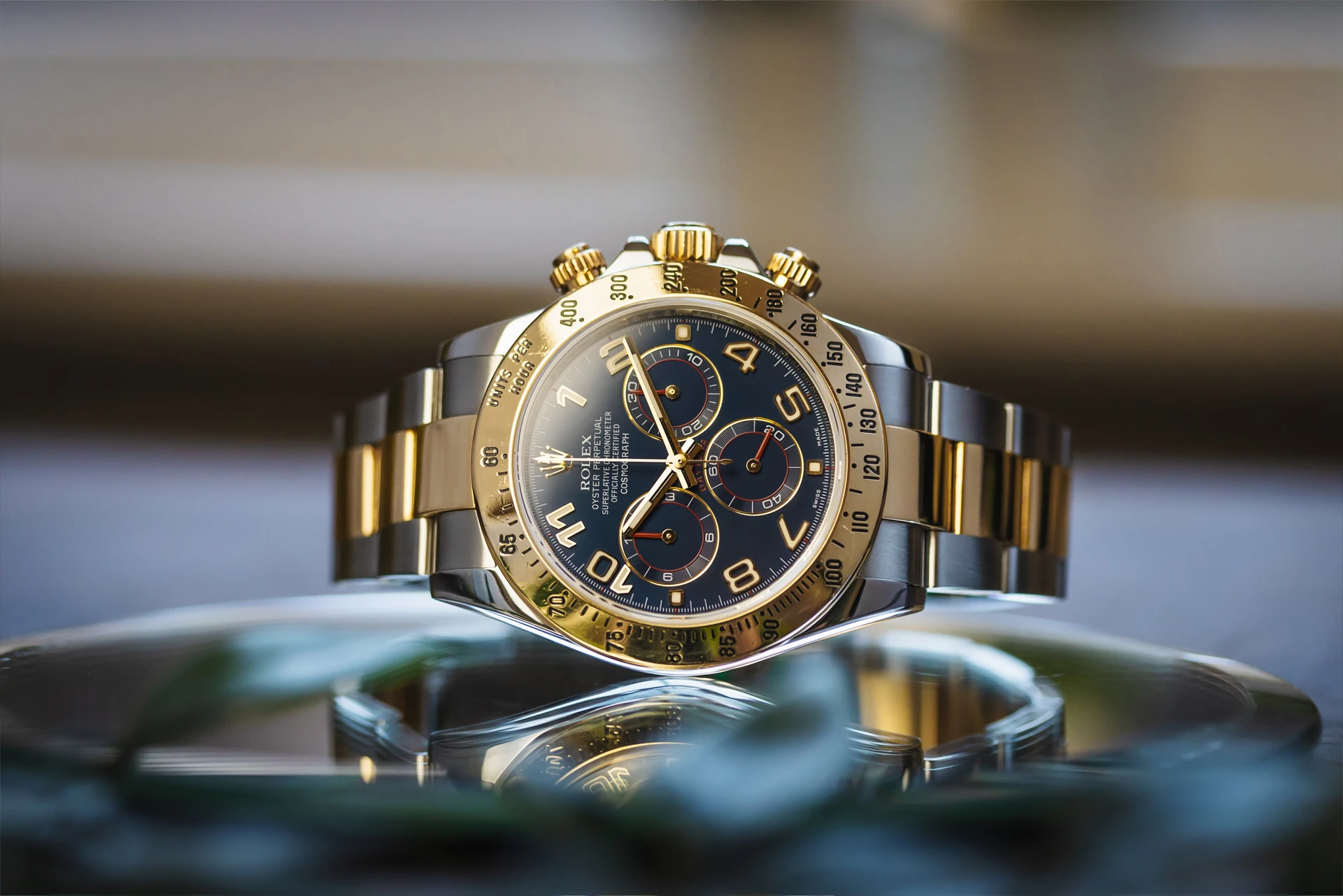
If you are considering getting a Rolex Daytona it is worth reading the story behind this incredible watch, designed for true masters of Speed.
The name Daytona, comes from the city in Florida, which at the beginning of last century, started attracting motorsport enthusiasts for its wide beach of smooth, compacted sand, ideal for land speed record attempts.
Rolex Daytona is without a doubt one of the most famous and coveted luxury watches out there. However, it wasn’t always this way. Early versions of the Daytona were slow-selling models for Rolex and it took a major redesign in the 1980s and a celebrity connection (Paul Newman) to help this model along, to change the chronograph’s course to stake its claim at the top.
Let’s take a closer look at the evolution of the Rolex Daytona from its origins to today.
The Manual-Wind Rolex Daytona: 1963 – 1988
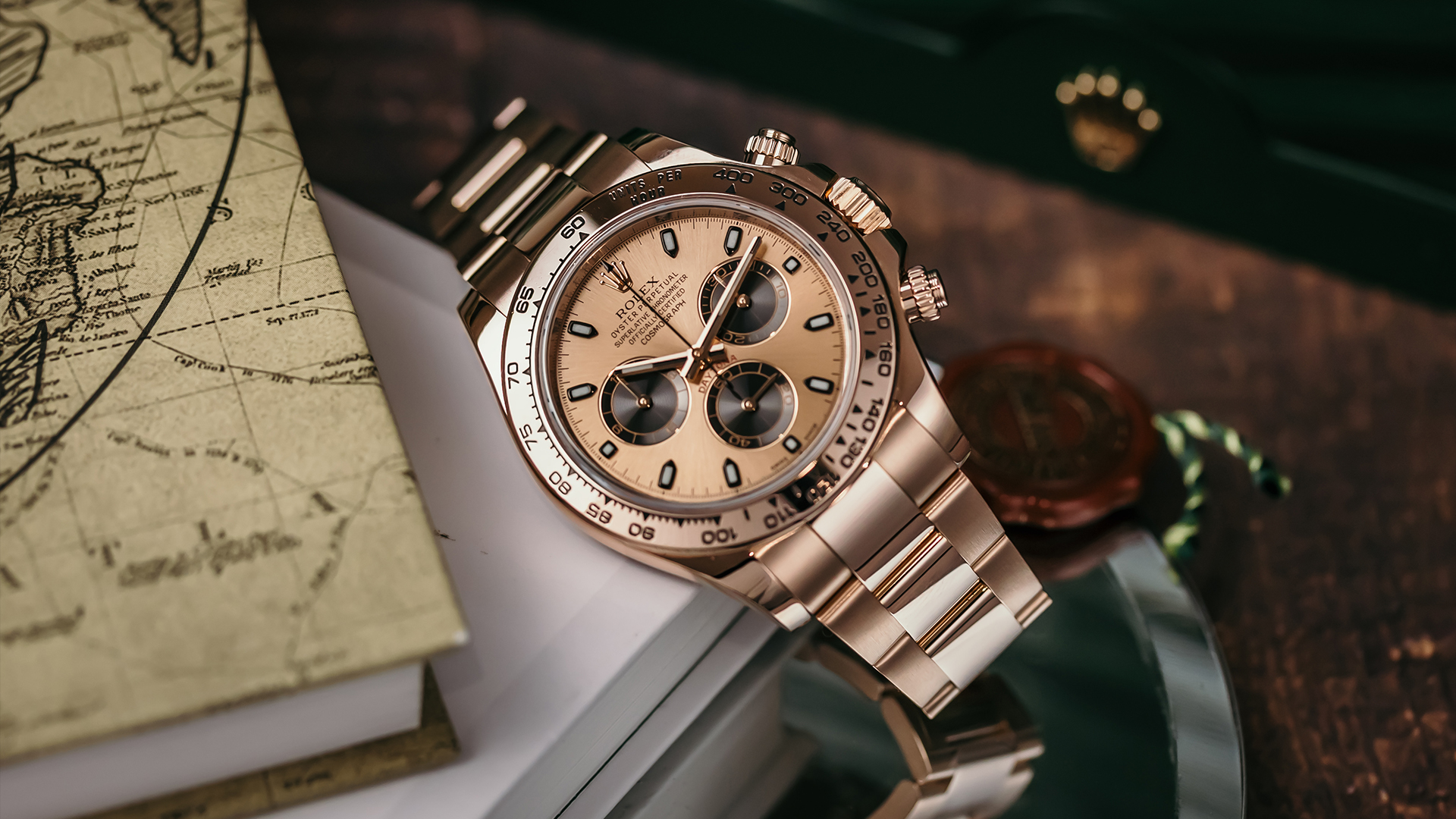
The story of the Daytona watch begins in 1963 with the launch of a new chronograph model called the Cosmograph. The name Daytona did not exist in the Rolex lexicon just yet—that would occur about a year later when Rolex wanted to align the Cosmograph with the Daytona Speedway in Florida to emphasize the chronograph’s link to motorsports. Today, the Rolex Cosmograph Daytona is simply known as the Daytona.
The Automatic Zenith Daytona: 1988 – 2000
In today's market these vintage Daytona chronographs are highly valuable, but back in the 1980’s these models were considered old-fashioned by consumers. This was mainly due to the smaller case sizes, manual-would movements and retro dials. In an attempt to combat this Rolex revamped the entire collection and launched a brand new Daytona in 1988 with larger case sizes, new material options, automatic movements and refreshed dials. This generation of the five-digit Daytona, manufactured from 1988 until 2000, is often referred to as the Zenith Daytona because of its movement. Rolex heavily modified the Zenith El-Primero automatic chronograph caliber and renamed it the Rolex Caliber 4030.

The In-House Automatic Rolex Daytona: 2000 – Present
In 2000, Rolex announced yet another generation of the Daytona, this time furnished with an in-house chronograph movement called Caliber 4130 and labeled with six-digit references.
In terms of design, Rolex kept most of the Daytona style intact, except for modifying the dial where the running seconds indicator (previously at 9 o’clock) switched places with the 12-hour counter (previously at 6 o’clock) and the top two registers moved up slightly.
In 2011, Rolex made a significant design update to the Daytona with the introduction of the Cerachrom ceramic bezel—first on the Everose Daytona then eventually rolled out to other editions. In 2016, the highly anticipated stainless steel and ceramic Daytona 116500LN made its debut and almost four years later, it is still one of the hardest watches to find due to its immense popularity. In 2017, Rolex began furnishing gold Daytona references with the Oysterflex bracelet, replacing leather strap options with this sportier rubber strap option. In true Rolex fashion, super rare bejeweled Daytona watches are released every few years boasting ultra-lavish bezels and dials.

So, this is the story of Rolex Daytona! One of the watch world’s greatest comeback stories, the Rolex Daytona evolved from a slow starter to the clear leader amongst top-tier chronographs.
Which model would be your dream Rolex Daytona?