



TL;DR: Carat weight measures only how much a diamond weighs, not its quality or beauty. Two diamonds with identical carat weights have different prices because of cut quality, clarity grade, and colour grade. Understanding these factors helps you choose what matters most to you within your budget.
Two one-carat diamonds sit in front of you. One costs £5,200. The other costs £10,800. Same weight. Different value. The reason comes down to three factors beyond size: how well the diamond was cut, how clear it is, and how colourless it appears. When you understand these elements, you stop comparing numbers and start evaluating what you actually see.
Carat is a unit of weight. One carat equals 200 milligrams.
Weight tells you how much the diamond weighs, not how it looks or performs optically. You're working with one data point when three others determine what you see when you look at the stone.
Over years of working with customers, we've noticed something: the diamonds people choose aren't always the heaviest ones. They're the ones where all the factors align with what they value most.
Key point: Carat measures weight only. Cut, clarity, and colour determine how a diamond looks and what you pay for it.
Beyond carat weight, three factors drive diamond pricing: cut, clarity, and colour. Most people understand weight easily because you measure it. The other three take more time to grasp, but they shape both appearance and cost.
Cut refers to how well a diamond's facets interact with light. This isn't about shape (round, oval, princess). Cut is about proportions, angles, and precision.
A well-cut diamond returns light to your eye in a way that creates brilliance and fire. A poorly cut diamond looks dull, even if it's large and clear.
Here's the challenge: more than 90% of polished diamonds get cut to maximize weight instead of optical performance. Cutters upstream prioritize profit by retaining weight, since heavier diamonds sell for more.
Many diamonds prioritise size over appearance. A "Super Ideal" cut diamond commands a 10-15% price premium over an average-cut diamond with identical colour, clarity, and carat weight. The visual difference is significant.
When two one-carat diamonds have different prices, cut quality is often part of the reason.
Key point: Cut quality determines how a diamond handles light. Better cut equals higher price, even at the same carat weight.
Clarity measures internal characteristics (inclusions) and surface characteristics (blemishes). Diamonds form under intense heat and pressure. Most have some internal marking.
The clarity scale runs from Flawless (no inclusions visible under 10x magnification) down to Included (inclusions visible without magnification).
Price shifts dramatically based on clarity: two diamonds of the same carat weight have price differences exceeding 100%based solely on clarity grade.
A one-carat diamond with F colour and SI2 clarity retails around £5,200. The same diamond with VVS1 clarity costs approximately £10,800. Five clarity grades separate them, but the price doubles.
Many clarity differences are invisible without magnification. An SI1 diamond and a VVS2 diamond look identical to your eye, but the price gap between them is substantial.
Your priorities matter here. Some people want the security of knowing their diamond is nearly flawless under magnification, even if they don't see the difference. Others prefer to allocate budget toward size or cut quality instead.
Key point: Clarity grade doubles or halves diamond prices at the same carat weight, even when differences aren't visible without magnification.
The colour scale for colourless diamonds runs from D (completely colourless) to Z (light yellow or brown). Most diamonds fall in the near-colourless range.
Price difference between colour grades ranges from 8% to more than 25%, yet many distinctions are difficult to detect without training or direct comparison. A G colour diamond and a D colour diamond look nearly identical when viewed individually.
D-grade diamonds are exceptionally rare, which drives their premium pricing. As you move down the color scale, diamonds become more common and prices decrease.
Colour sensitivity varies from person to person. Some people notice the warmth in a J colour diamond immediately. Others don't distinguish between an E and an H without a reference stone.
The metal you choose for your setting affects colour perception. Warmer metals like yellow or rose gold make slight colour in a diamond less noticeable. Platinum or white gold provides more contrast.
Key point: Colour grades create price differences of 8-25% between diamonds of the same weight, though many distinctions are hard to see.
When you look at two one-carat diamonds with different prices, you're seeing the combined effect of cut, clarity, and colour working together.
A one-carat diamond with excellent cut, D colour, and VVS1 clarity sits at the top of the quality spectrum. Rarity drives the price higher.
A one-carat diamond with good cut, J colour, and SI2 clarity is far more common. Still a legitimate diamond, just different choices about where to prioritise quality and budget.
Neither choice is wrong. They serve different needs and preferences.
Understanding what you get for the price difference and whether the difference matters to you is what counts.
Key point: Diamond prices reflect the combined rarity of cut, clarity, and colour grades. Higher quality in all three creates exponentially higher prices.
Diamond prices increase exponentially, not linearly, with carat weight.
A two-carat diamond costs significantly more than twice the price of a one-carat diamond of similar quality. This happens because larger rough diamonds are exponentially rarer in nature.
Price jumps are dramatic at "magic sizes" like 0.50, 1.00, and 2.00 carats. The difference between a 0.95-carat diamond and a 1.00-carat diamond is barely visible, but the price gap reaches 10-20%.
This creates an opportunity if you're flexible. A 0.90-carat diamond offers 10-20% better value than a 1.0-carat diamond of the same quality, and the size difference is nearly impossible to detect once set.
We've seen people save substantial amounts by choosing diamonds below popular threshold sizes without any noticeable visual compromise.
Key point: Diamonds just below popular sizes (0.90 vs 1.00 carat) offer 10-20% better value with no visible size difference.
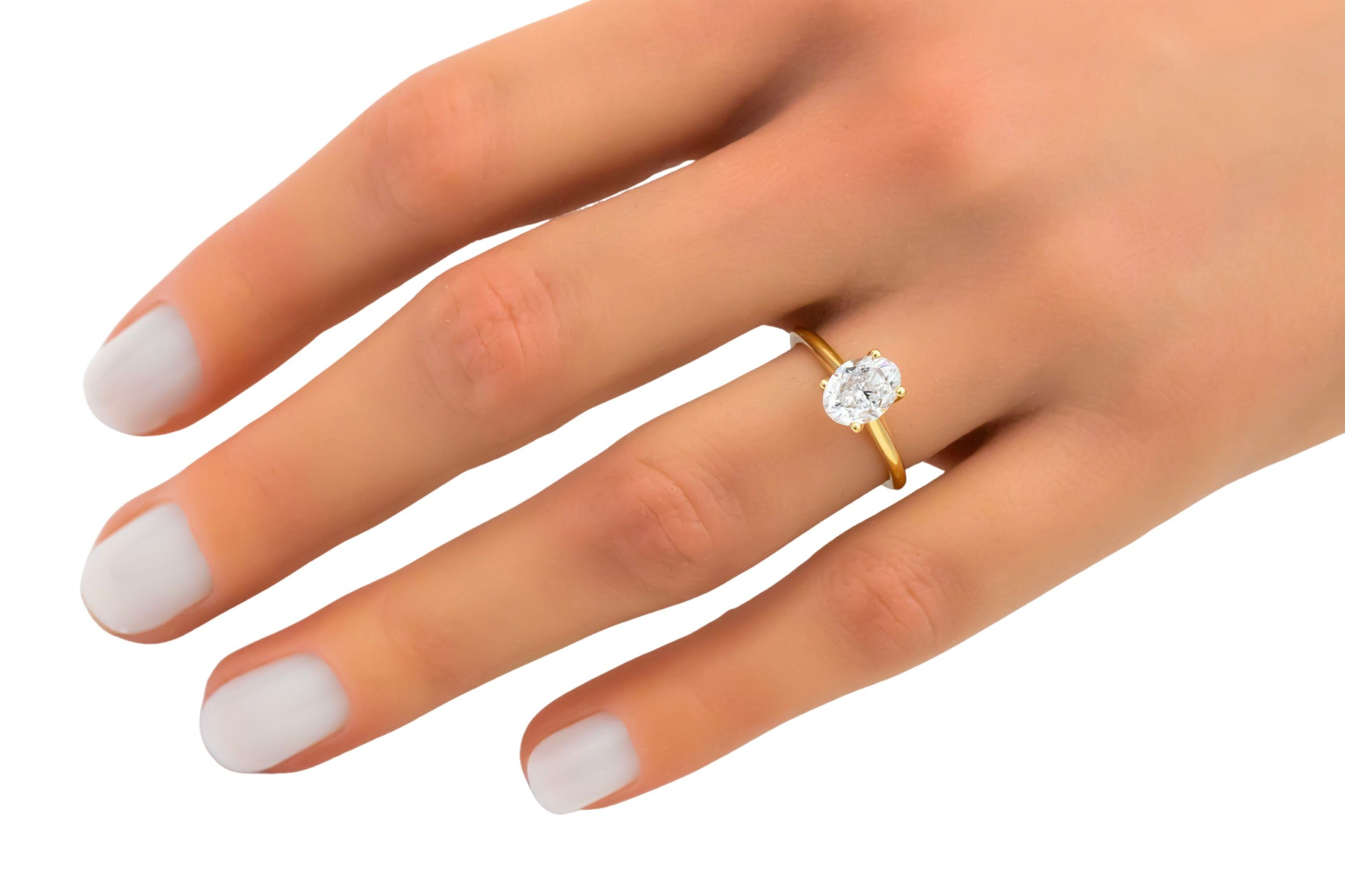
Round diamonds carry price premiums of 10-43% over fancy-shaped diamonds like oval, cushion, or emerald cuts. This happens because round cuts produce the most waste during cutting.
A round brilliant cut removes more of the rough diamond to achieve its proportions. Fancy shapes preserve more of the original rough, making them more efficient to cut and less expensive per carat.
Elongated shapes like oval or marquise appear larger than rounds of the same carat weight. You get more visible surface area for your budget.
This doesn't mean rounds are overpriced or fancy shapes are better value. Shape is another variable affecting price, and understanding it gives you more options.
Key point: Round diamonds cost 10-43% more than fancy shapes at the same carat weight because they waste more rough material during cutting.
When you compare diamonds, carat weight gives you a starting point. The real value assessment happens when you look at all four factors together.
Two one-carat diamonds get priced differently because they represent different combinations of rarity, quality, and visual performance. The more rare the combination, the higher the price.
Your job isn't to find the "best" diamond by some objective standard. Find the combination of factors that matters most to you within your budget.
Some people prioritise size above all else. They want the largest diamond possible and are willing to compromise on colour or clarity.
Others prioritise cut quality because they value brilliance and light performance. They'll accept a smaller carat weight to get a better-cut stone.
Still others want the security of high clarity and colour grades, even if the differences aren't visible without magnification.
All of these approaches are valid. Understanding what you're choosing and why is what matters.
Key point: No single "best" diamond exists. The right diamond matches your priorities within your budget.
When you're looking at diamonds with the same carat weight but different prices, these questions help:
What's driving the price difference? Ask specifically about cut grade, clarity grade, and color grade.
Do you see the difference? Look at the diamonds side by side if possible. Some differences are obvious. Others exist only on paper.
What matters most to you? If you don't see a clarity difference but you see a cut difference, allocate your budget toward what you notice.
Where are you willing to compromise? Every diamond purchase involves trade-offs. Understanding your priorities helps you make those trade-offs consciously.
People feel most confident in their decisions when they understand what they're getting and why it costs what it costs. The goal isn't to find the cheapest or most expensive diamond. Find the right combination of factors for you.
Key point: Ask what drives the price difference, whether you see it, and where you're willing to compromise based on your priorities.
Why do two diamonds with the same carat weight have different prices?
Price differences come from variations in cut quality, clarity grade, and colour grade. Two diamonds weighing the same have different values because these three factors determine rarity and visual performance.
Which matters more: carat weight or cut quality?
Cut quality determines how a diamond looks, while carat determines how much it weighs. A well-cut smaller diamond often looks better than a poorly cut larger one. Your priorities determine which matters more to you.
Does higher clarity always mean a better-looking diamond?
Not necessarily. Many clarity differences are invisible without magnification. An SI1 diamond and a VVS2 diamond often look identical to your eye, though the VVS2 costs significantly more.
How much does colour grade affect diamond price?
Colour grades create price differences of 8-25% between diamonds of the same weight. D-grade (colourless) diamonds cost the most because they're rarest. Moving down to G or H colour saves money with minimal visible difference.
What are "magic sizes" and how do they affect pricing?
Magic sizes are popular carat weights like 0.50, 1.00, and 2.00. Prices jump 10-20% at these thresholds. A 0.95-carat diamond costs significantly less than a 1.00-carat diamond with no visible size difference.
Why do round diamonds cost more than other shapes?
Round brilliant cuts waste more rough material during cutting. Fancy shapes like oval or cushion preserve more rough, making them 10-43% less expensive per carat than rounds.
Should I prioritise size or quality?
This depends on what you value. Some people prefer a larger diamond with lower clarity or colour grades. Others choose smaller size with better cut quality for more brilliance. Neither choice is wrong.
How do I know if a clarity difference matters?
Look at diamonds side by side. If you don't see a difference between two clarity grades without magnification, the higher grade might not be worth the price premium to you.
Carat weight measures only how much a diamond weighs, not how it looks or performs optically.
Cut quality, clarity grade, and colour grade determine both appearance and price at any given carat weight.
Two diamonds with identical carat weights have price differences of 50-100% or more based on these three quality factors.
Many clarity and colour differences are invisible without magnification, yet they create substantial price gaps.
Diamonds just below popular sizes (0.90 vs 1.00 carat) offer 10-20% better value with no visible size difference.
Round diamonds cost 10-43% more than fancy shapes at the same carat weight.
The right diamond matches your priorities within your budget, not some objective standard of "best."
Visit us in store for great service and to see our amazing collection.
114 Ballards Lane, N3 2DN, London 020 8838 3655