




Buying a Rolex: What Twenty Years in of Selling Rolex In London Has Taught Us
TL;DR: Rolex produces remarkable watches. The collections are well documented. What those guides can't give you is what we've built over two decades of real conversations about which watch suits which life, what the market actually feels like to navigate, and what happens to a Rolex long after it leaves a cabinet. That's what this is.
-
The Rolex market creates genuine pressure to decide quickly, and that pressure is usually worth resisting
-
The Datejust is the watch we most often recommend as a first Rolex, for good reasons that hold up over time
-
The Oyster Perpetual is frequently underestimated because it's called accessible. It deserves a second look
-
Sports models like the Daytona are best approached through a trusted pre-owned dealer who has done the provenance work
-
Aftercare matters as much as the original purchase, sometimes more
Why This Market Rewards Patience More Than Most
Rolex is the world's largest watch brand by turnover. Its coronet is recognised almost everywhere. And despite producing over a million pieces each year, demand consistently outpaces supply, which means waiting lists, a robust secondary market, and a peculiar kind of pressure that follows anyone trying to buy a desirable reference. New watches on certain models can trade for multiples of their retail price on release. The Submariner, the GMT-Master II, the Cosmograph Daytona — these sit on grail lists for a reason, and the market around them reflects that.
What we've observed across years of conversations is that this environment tends to compress decision-making. Guides like Esquire UK's recent round-up cover the basics clearly, but a deeper dive into the supply, demand and longevitiy of Rolex can make the difference between a good buy and a regretted one. In our experience, that compression is where most of the regret originates. The watches worth owning are generally still findable when you've given the decision proper room. And if a specific reference isn't in our cabinet, sourcing it carefully is a significant part of what we do.
A Rolex purchase has a way of becoming part of a family's story over time. That's worth keeping in mind when the market is telling you to hurry.
Key Point: The pressure to decide quickly is real, but it's almost never coming from the watch itself. Slowing down tends to produce better outcomes.
The Datejust: The Watch We Recommend Most Often, and Why
The Datejust was introduced in 1945 and remains, in our view, the most versatile watch Rolex makes. It's elegant enough for a formal occasion and robust enough for daily wear. The signature combination of the Jubilee bracelet and fluted bezel is one of the most recognisable looks in watchmaking, though smooth bezels and Oyster bracelets are available for anyone who prefers something quieter on the wrist. The movement running the current references, the Rolex calibre 3235, is thoroughly proven and well-regarded.
The reason we suggest it most often to someone buying their first Rolex is less about the specifications and more about what we've observed over time. The Datejust is the watch that comes back to us most regularly: for a service before a wedding, to be sized for a daughter, to be polished before it's passed on to someone who doesn't yet know they're receiving it. It grows with its owner in a way that fewer watches manage. People who buy it rarely return with regret about the choice, even years later.
Here's how the three Datejust-family pieces we currently hold compare, to help you picture which direction might suit you:
-
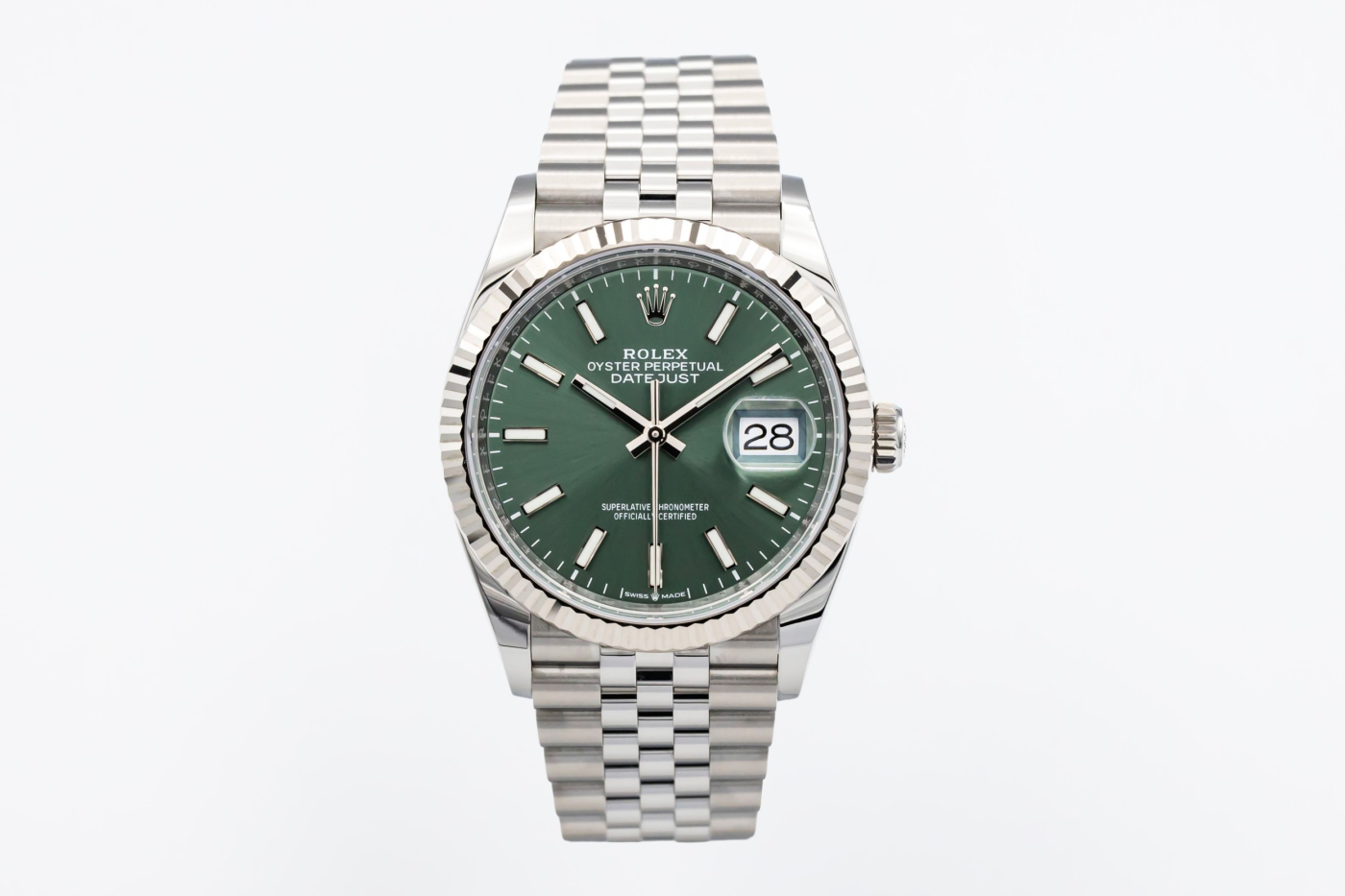
Rolex Datejust 36mm Stainless Steel Jubilee, ref. 126234 (2023) — the current benchmark reference. Clean, versatile, works as well with a suit as it does on the weekend. The one to try first if you're new to the collection.
-
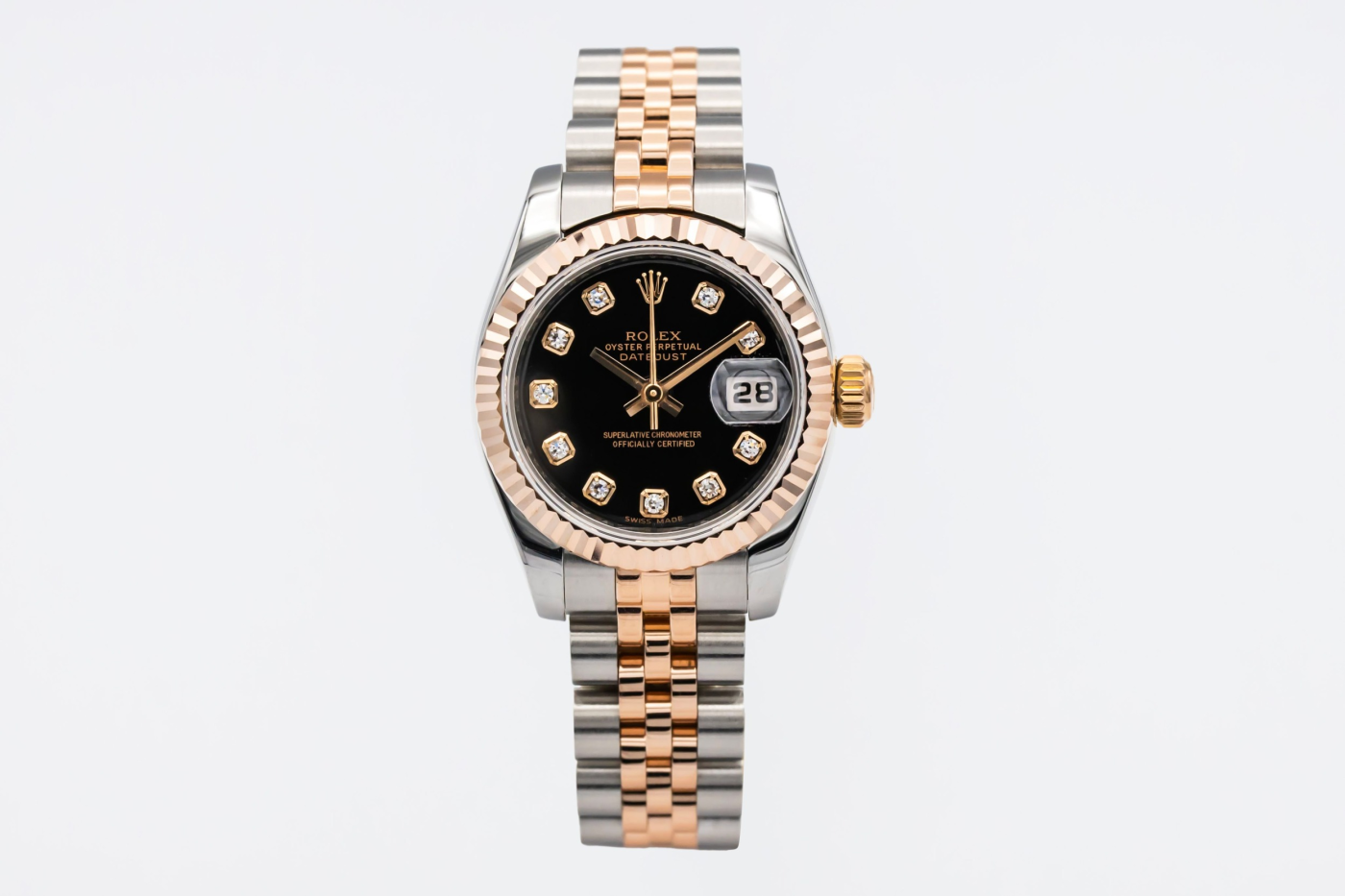
Rolex Lady-Datejust 26mm Steel and 18ct Rose Gold Jubilee, ref. 179171 (2010)— the same design language in a smaller, two-tone piece. The rose gold adds warmth without making it overtly dressy. A considered choice for someone who wants personality without statement.
-
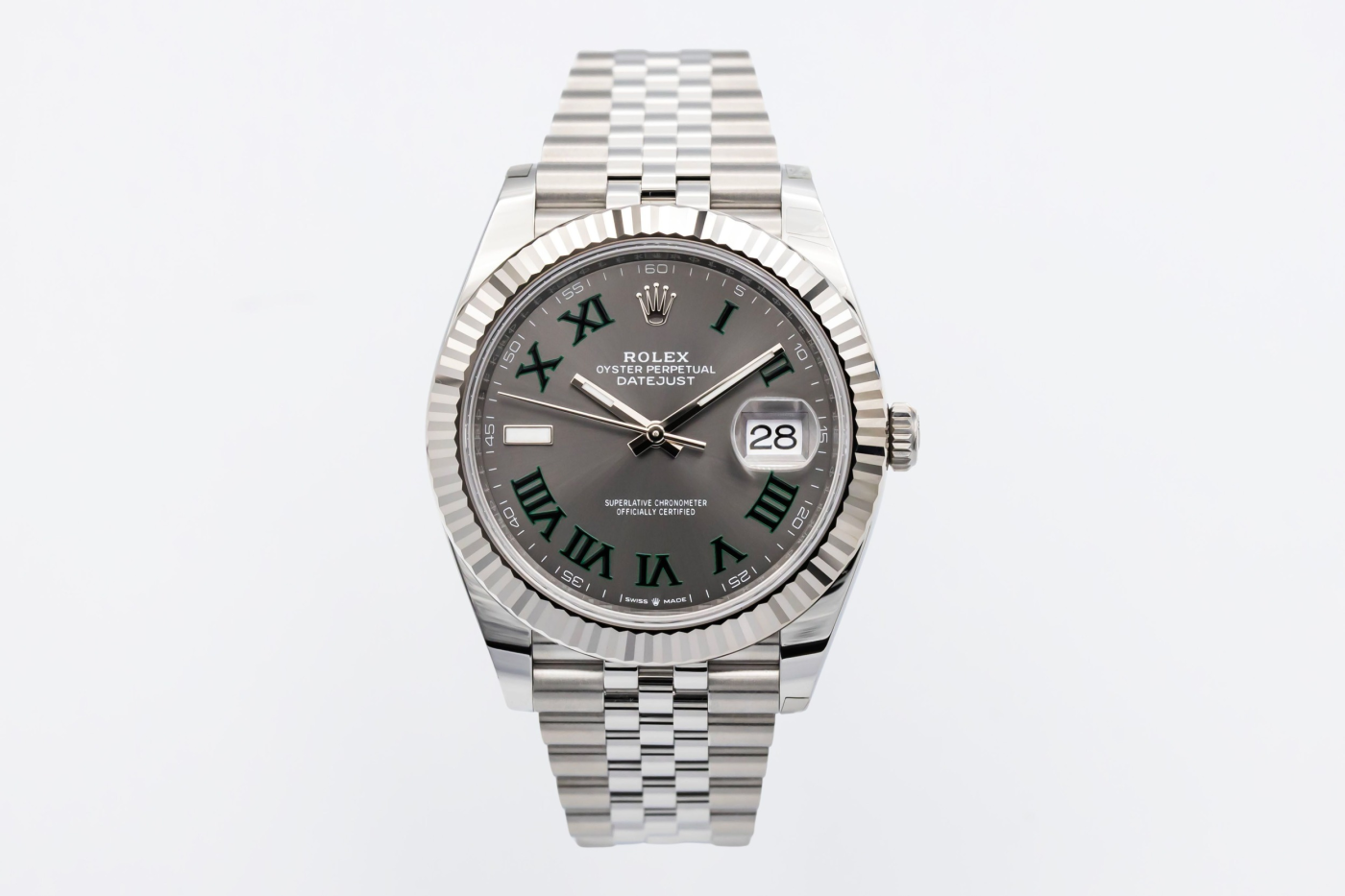
Rolex Datejust 41mm 'Wimbledon' Stainless Steel Jubilee, ref. 126334 (2026, Unworn) — the Wimbledon dial is one of the more distinctive references in the Datejust family. The dark green, textured dial against the steel Jubilee bracelet has a quietness to it that photographs don't fully do justice. A considered choice for someone who wants something with a little more character without straying from the core collection.
Key Point: The Datejust has lasted eighty years because it fits more lives than almost any other reference Rolex produces. That longevity is the point.
The Oyster Perpetual: Don't Let the Word "Accessible" Put You Off
The Oyster Perpetual is where the brand's foundational engineering sits in its clearest form. Three innovations underpin the whole collection: the chronometer-certified movement, established in 1910; the waterproof Oyster case, introduced in 1926; and the automatic Perpetual winding mechanism, which followed in 1931. Time only, no complications, built in Oystersteel, offered across five sizes from 28mm to 41mm and in a rotating selection of dial colours. Some become permanent fixtures; others are quietly discontinued after a season or two.
The word "accessible" gets attached to this collection because it sits at the lower end of the Rolex price range. What that framing occasionally obscures is the quality of what you're actually getting. The build is the same as anything else bearing the crown. The movement is identical to what powers the Datejust. And the discontinued dial colours, in particular, have a way of becoming quietly desirable over time in a way that's easy to miss when they're current.
-
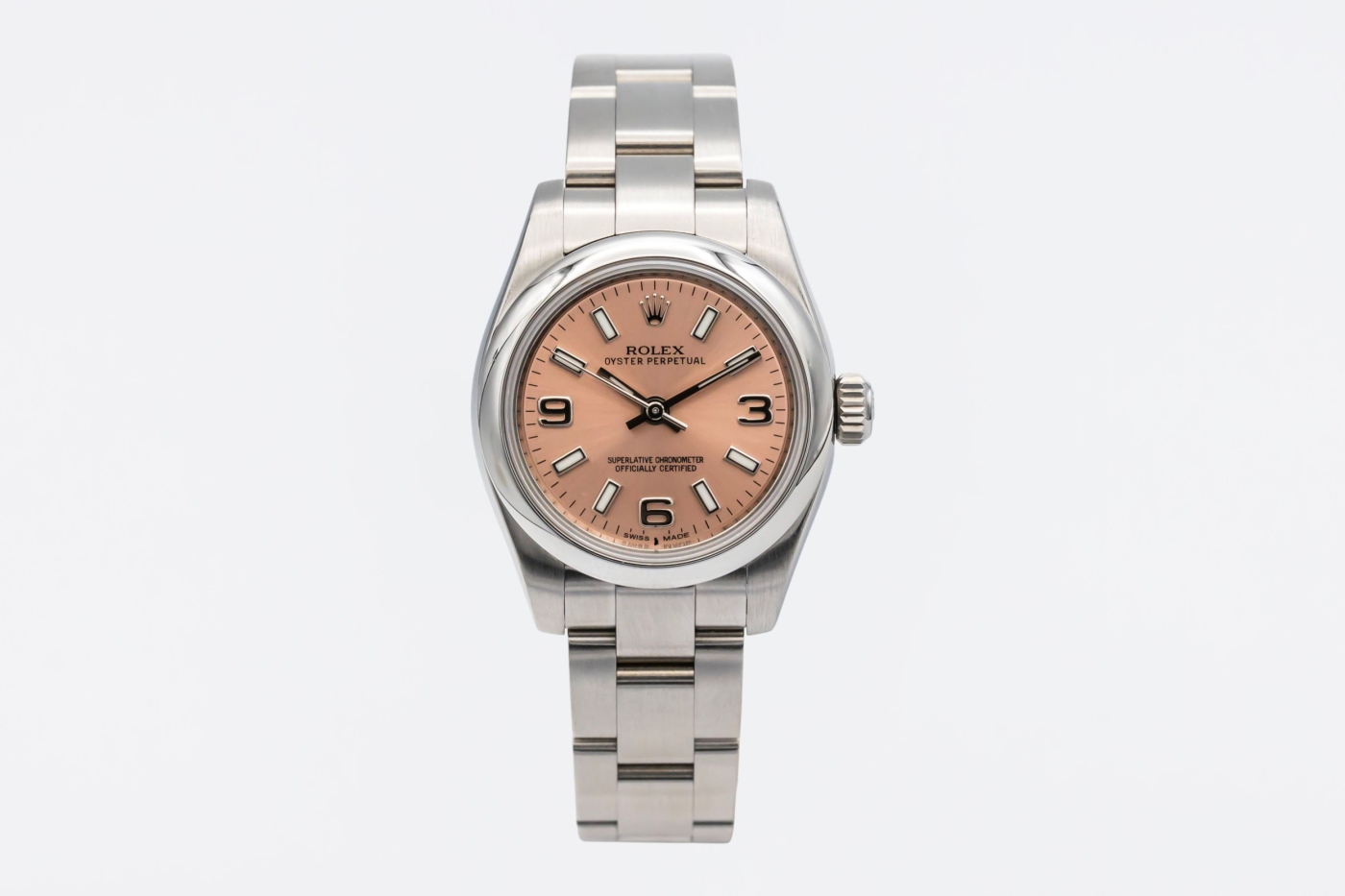
Rolex Lady-Oyster Perpetual 26, pink dial, ref. 176200 (2014) — a discontinued dial colour with real personality. Wears with genuine elegance on a smaller wrist. A good example of how the Oyster Perpetual range quietly rewards those who look closely.
Key Point: The Oyster Perpetual is Rolex at its most honest. The price is lower; the watch is not lesser.
The Sports Models: Desirable, Genuinely Hard to Buy, and Worth Doing Properly
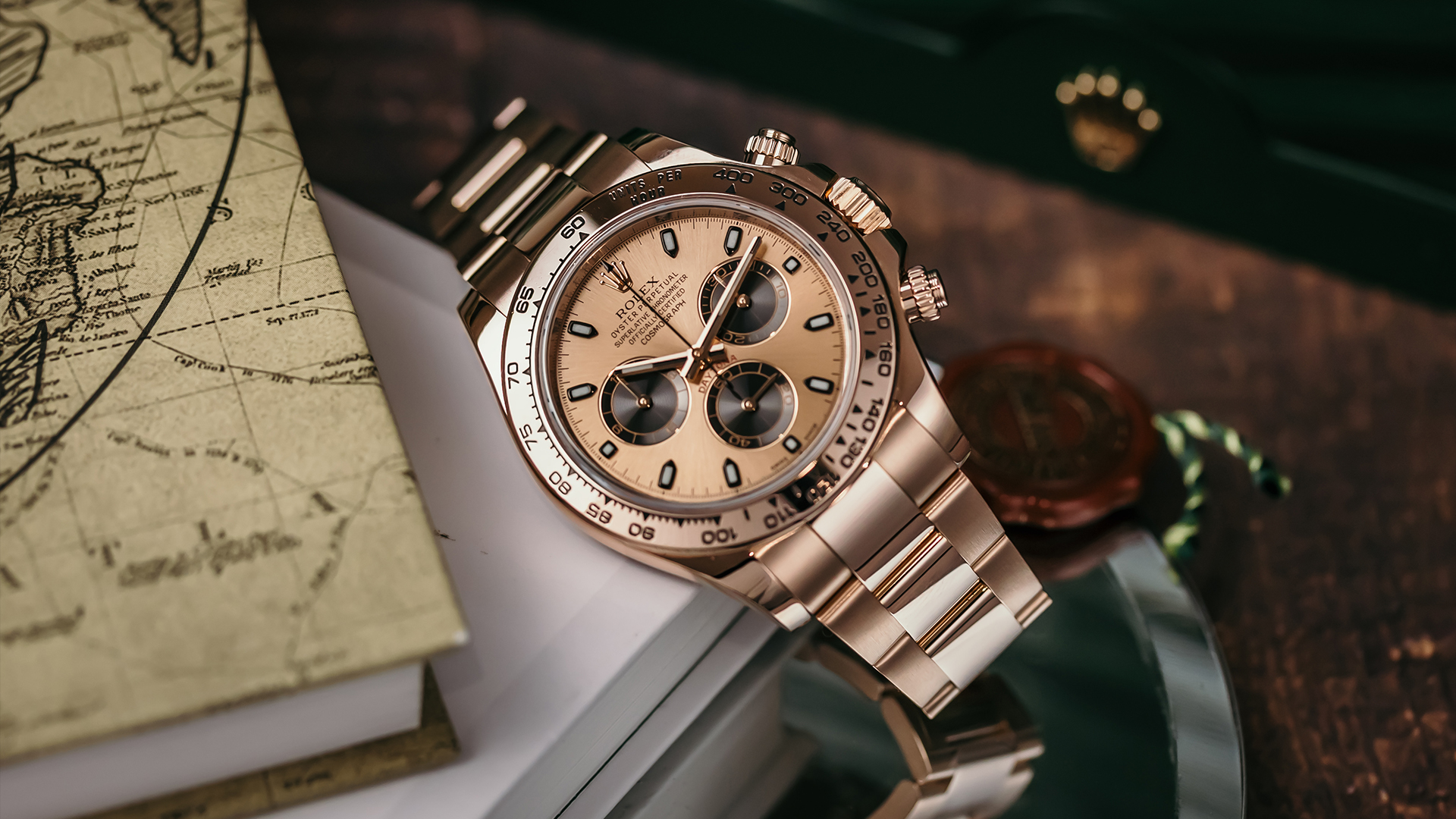
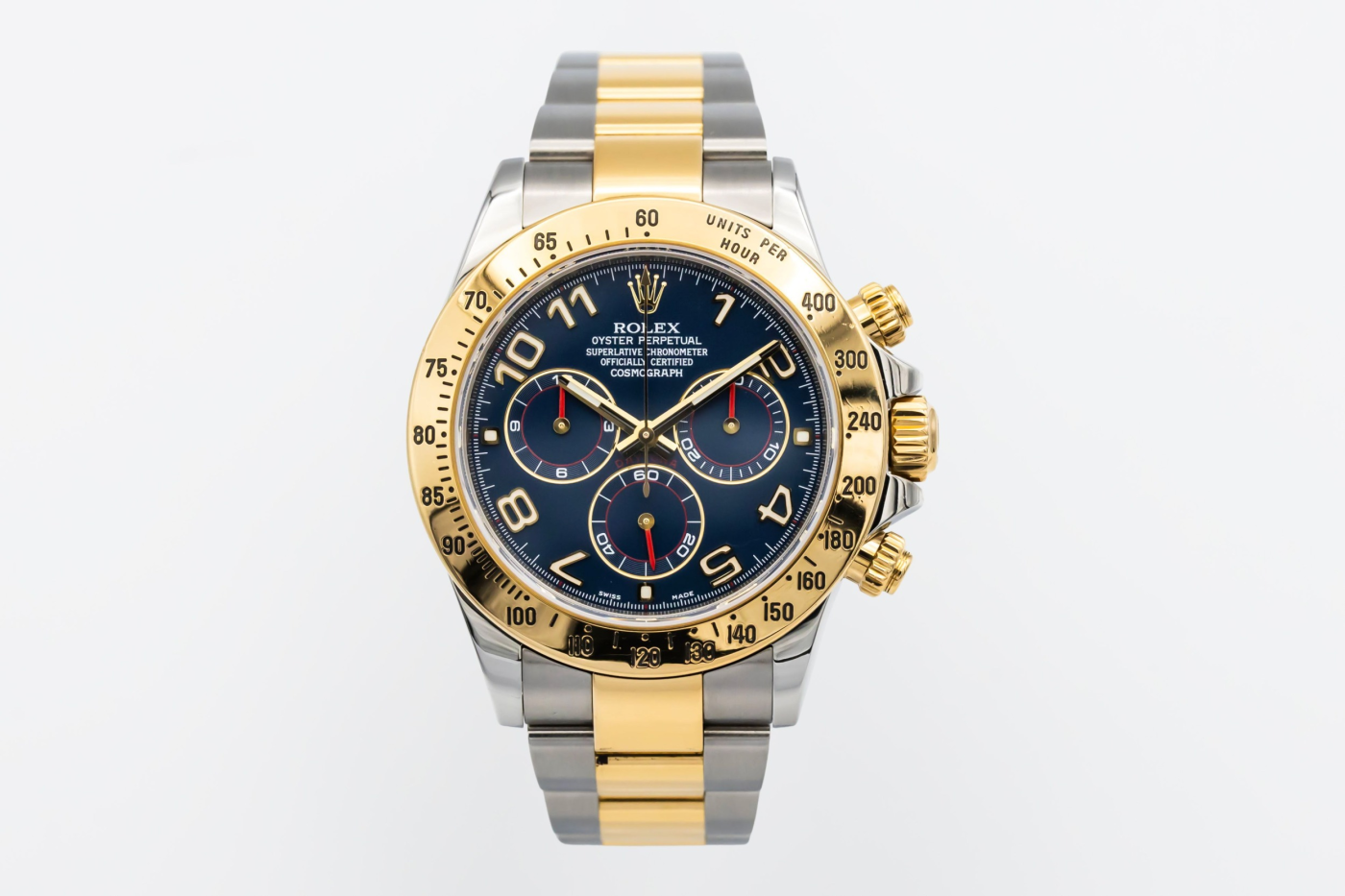
The Cosmograph Daytona is the watch people ask us about more than any other. The conversation usually starts the same way: someone has been on an authorised dealer waiting list for a year or more, they've found one available on the secondary market, and they want to know whether to move on it. The waiting lists are real, and for the Daytona specifically, they stretch out for years. The secondary market is genuinely active and useful. But the quality of that secondary market varies considerably, and the work of verifying a piece's history is where the real judgment sits.
We currently hold the following, which we're happy to walk you through in person:
-
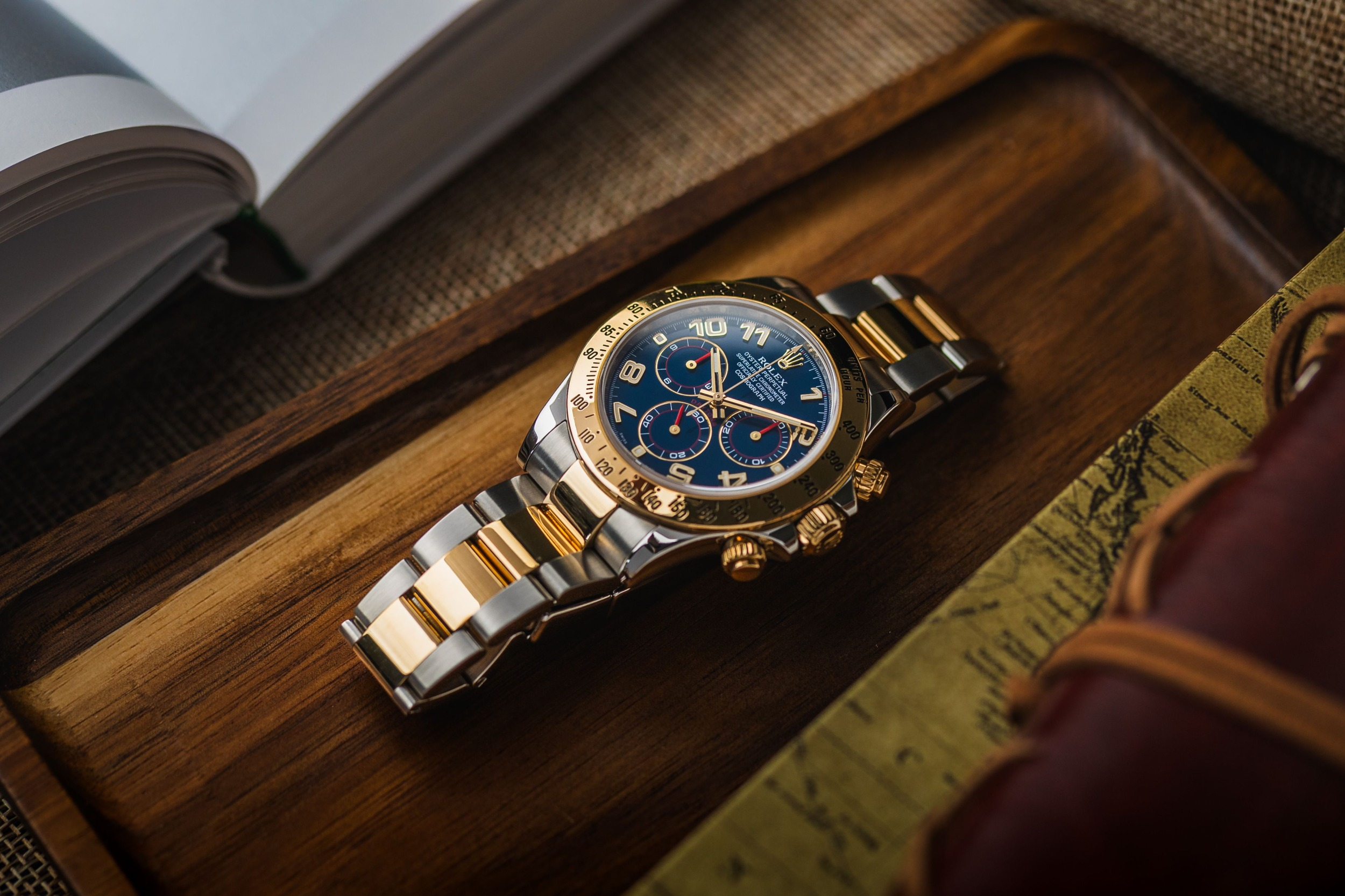
Rolex Cosmograph Daytona 40mm Steel and 18ct Yellow Gold Oyster, ref. 116523, £17,950 — the two-tone Daytona tends to look different on the wrist than it does in photographs. The warmth of the gold against the steel does something that images don't quite capture. Servicing history checked, papers verified, provenance understood.
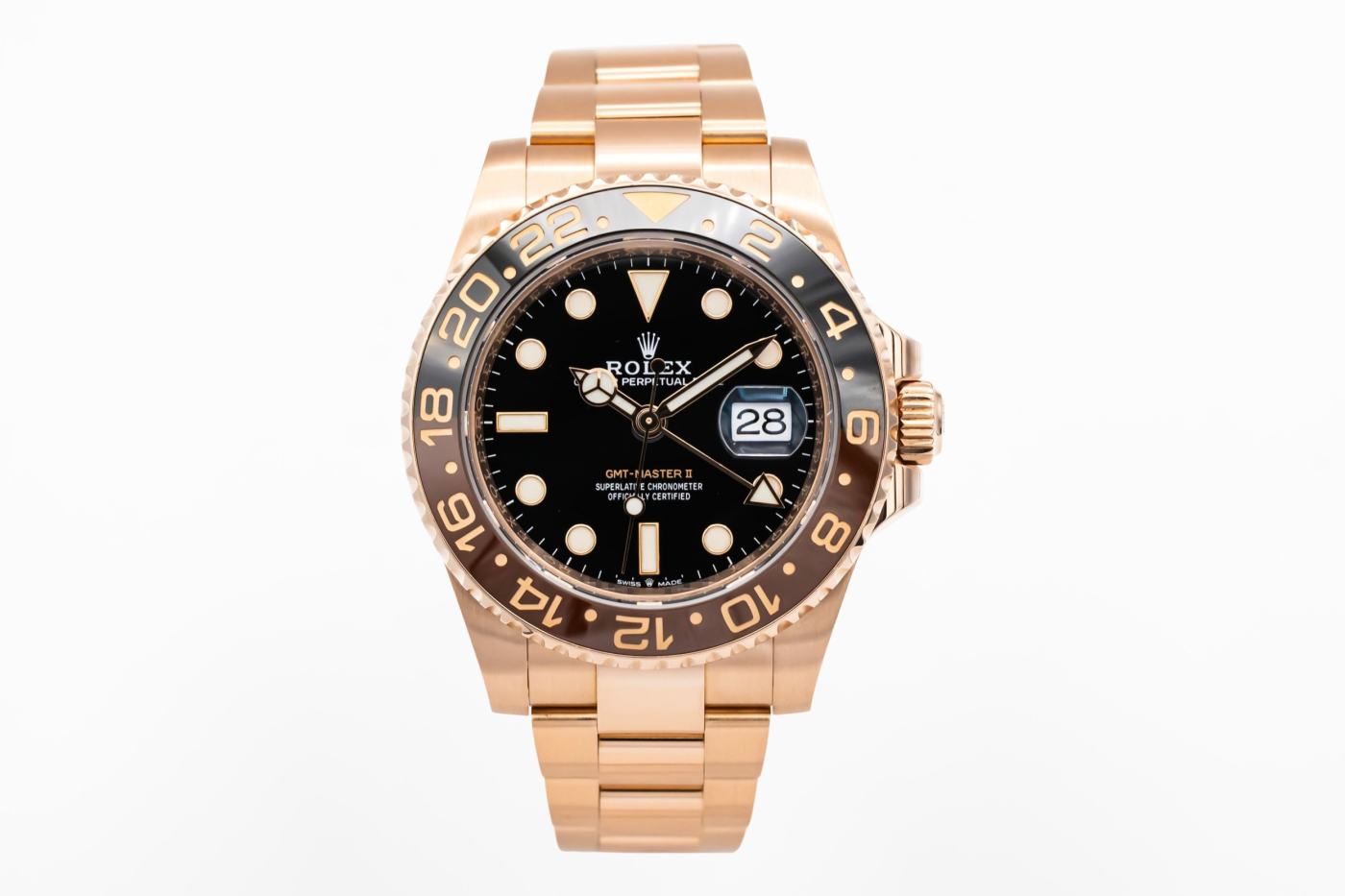
The Submariner and GMT-Master II sit in similar territory: deeply desirable, constrained supply at retail, a healthy pre-owned market. The dressier Cellini, by contrast, tends to be underestimated. It's a genuine dress watch with real charm, and for someone who finds the sports models slightly overwhelming as a starting point, it offers the full quality of the brand in a quieter register. We offer sourcing for any reference we don't currently hold, and if a specific model has caught your attention, we'd rather find it properly than point you toward whatever happens to be immediately available.
Key Point: Pre-owned sports models are a legitimate and often rewarding route, but only when the provenance work has genuinely been done.
What Guides Don't Cover: The Long View
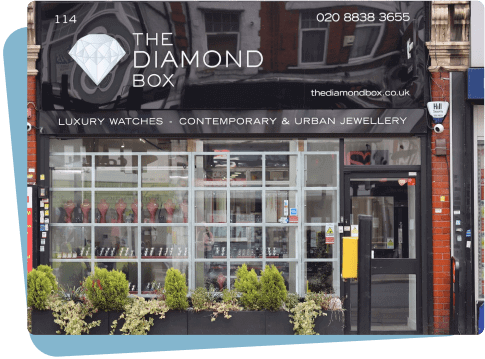
We've been in North London for over twenty years. In that time, we've had thousands of conversations about Rolex watches: before people buy, when they're trying to decide, and long afterwards when they bring a piece back for a service or come in to talk about what to do next. That long arc of relationship is where a lot of the most useful knowledge lives, and it's the thing a written guide, however thorough, can't fully replicate.
A few things we've noticed over that time. The watch that fits your actual life tends to outlast the watch that fits the moment's excitement. Aftercare — proper servicing at sensible intervals, honest repairs, careful storage — protects value more reliably than the circumstances of the original purchase. And the decisions people feel genuinely settled about, years down the line, are almost always the ones that had enough room to breathe at the time.
There's a reason we sometimes suggest someone waits, or tries a different size, or reconsiders a reference they were certain about. That kind of advice occasionally costs us a sale in the short term. It's also the reason people come back to us across decades, and bring their families with them. We'd rather be right for you in the long run than convenient for you right now.
Key Point: The most useful knowledge about a Rolex purchase is often the knowledge that only comes after the purchase, and that's what twenty years of aftercare conversations gives you.
Three Ways to Approach Your Own Decision
If you're thinking about a Rolex and working out where to start, here are the routes we'd gently lay out, each suited to a different kind of buyer and a different kind of occasion.
1. Start with something you'll actually wear. A Datejust or Oyster Perpetual gives you the full depth of the Rolex experience without requiring you to chase a waiting list. These are watches built for real life, and they reward daily wear. Our 126234 and our pink-dial Lady-Oyster Perpetual are both in the showroom to try on.
2. Choose for the occasion. If the watch is marking something significant, a milestone, a gift, something you want to remember receiving, the Day-Date Presidential or the two-tone Daytona carries that weight well. These are watches people remember.
3. Source the reference you've already decided on. If you know what you want and it isn't in our current collection, tell us. We'll find it with the history verified and the condition right, rather than suggest you settle for the nearest available alternative.
Whichever of those fits, the same principle applies. The decision is worth giving proper time to. The watch will still matter in six months, and clarity at the point of purchase is the thing that tends to make the difference years later.
Key Point: Three different starting points, one underlying approach. Give the decision room, and the right watch tends to become clear.
A Note on Aftercare
This is the part of Rolex ownership that gets the least coverage, and in our view it deserves more. Rolex recommends a full service approximately every ten years, though usage and conditions can shift that either way. A movement that's properly serviced at sensible intervals runs better, lasts longer, and holds its value more reliably than one that's been neglected. Regular care keeps a watch looking like the piece it was bought to be.
At The Diamond Box, servicing and repairs are central to what we do, not a secondary offering. We've cared for watches we originally sold, and watches that came to us from elsewhere. The relationship with a watch doesn't end at purchase, and neither does ours with the people who own them.
Key Point: A Rolex maintained properly is a fundamentally different object, years later, from one that wasn't. Aftercare is where value is either protected or lost.
Frequently Asked Questions
Is the Rolex Datejust a good first Rolex?
In our experience, yes. It's versatile enough to wear daily, robust enough to handle real life, and it holds its appeal across decades. It's the watch we most often suggest to someone buying their first Rolex.
Why are Rolex watches so hard to buy new?
Rolex produces over a million watches a year, but demand consistently outpaces that output. Certain references, particularly the Submariner, Daytona, and GMT-Master II, have waiting lists at authorised dealers that stretch out for years. The secondary market exists in part to fill that gap.
Is it worth buying a pre-owned Rolex?
For many references, yes, particularly if the authorised dealer waiting list is prohibitive. What matters is verifying the piece's history: servicing records, papers, and condition. A well-documented pre-owned Rolex can be a sound purchase and, in some cases, a more interesting one than a new equivalent.
What is the difference between the Jubilee and Oyster bracelet on a Datejust?
The Jubilee bracelet is the more classic Datejust look, with five-piece links that sit dressier on the wrist. The Oyster bracelet uses a three-link construction that reads as slightly more casual and sporty. Both are well-made; it comes down to the feeling you want on your wrist day to day.
What does Oystersteel mean?
Oystersteel is Rolex's proprietary grade of 904L stainless steel, which offers better corrosion resistance and a higher finish quality than the 316L steel used by most watch manufacturers. It's harder to machine, which is part of why Rolex controls this process entirely in-house.
How often does a Rolex need servicing?
Rolex recommends a full service approximately every ten years, though this can vary depending on usage and conditions. Regular servicing protects the movement, preserves the bracelet and case finish, and maintains the value of the piece over time. Aftercare is something we take seriously at The Diamond Box, and it matters as much as the original purchase.
Can The Diamond Box source a specific Rolex reference?
Yes. If you've seen a reference that isn't in our current collection, sourcing is a core part of what we do. We find the piece with the right history and condition, rather than the nearest available option. It takes a little longer, but the outcome tends to feel more considered.
Is the Rolex Cellini worth considering?
The Cellini is a less-discussed part of the Rolex range, and we think it deserves more attention than it typically gets. It's a dress watch with real charm, and for someone who finds the sports models slightly overwhelming as a starting point, it offers genuine Rolex quality in a quieter register.
Key Takeaways
-
Rolex demand reliably outpaces supply, which creates real pressure to decide quickly. That pressure is worth resisting
-
The Datejust is the most forgiving entry point: versatile, durable, and it tends to grow with its owner across different stages of life
-
The Oyster Perpetual distils Rolex to its foundations: three core innovations, no complications, wide size and colour range. It deserves more credit than its price point implies
-
Sports models like the Daytona are most reliably found through a trusted pre-owned dealer who has done the provenance work thoroughly
-
Aftercare, including servicing, repairs, and careful storage, protects value more reliably than the original purchase price or circumstances
-
The secondary market rewards buyers who take their time, because a well-kept pre-owned piece with its history intact is genuinely desirable
-
A Rolex bought well and cared for properly tends to become a family object rather than a transaction, and that shift happens quietly over years
The Diamond Box
Visit us in store for great service and to see our amazing collection.
114 Ballards Lane, N3 2DN, London, United Kingdom, N3 2DN 020 8838 3655