




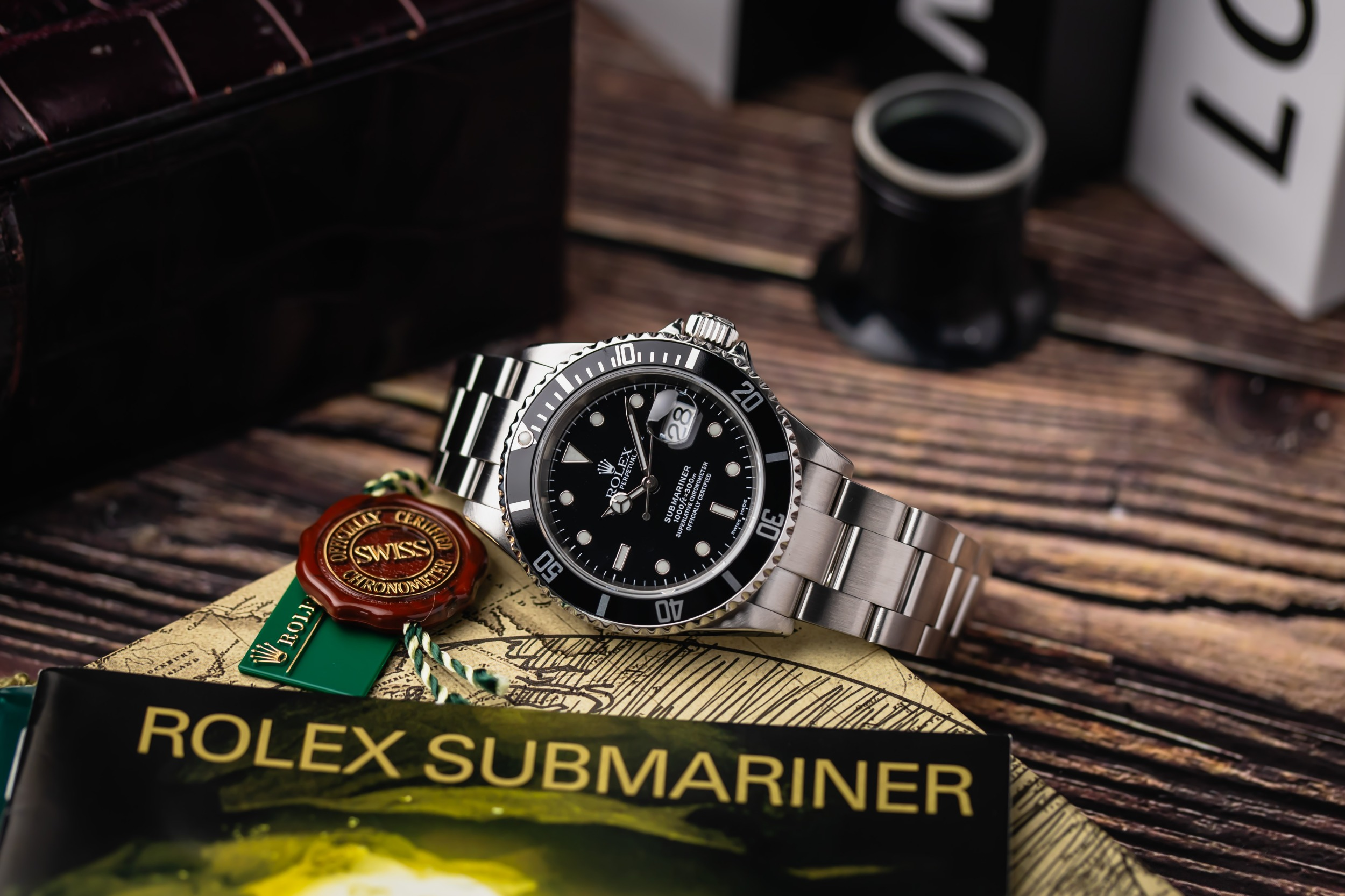
When someone picks up a steel Rolex Submariner and then handles the gold version for the first time, the reaction is almost always the same, and it reveals something fundamental about Rolex weight in a way that specification sheets never capture.
Surprise.
The gold Submariner weighs around 220–225 grams. The steel version sits at roughly 140–142 grams. That's an 80–85 gram difference, roughly the weight of four AA batteries added to your wrist. This fundamental contrast illustrates why understanding how much a Rolex weighs goes beyond simple numbers.
But a small percentage never quite adjust. And that's where the question of weight stops being about specifications and starts being about how you actually live with the watch.
Understanding Rolex Weight: The Material Density Hierarchy Nobody Explains Properly
Gold has a density of approximately 19.3 g/cm³. Platinum sits at 21.45 g/cm³. Steel, depending on the grade, hovers around 8 g/cm³. These aren't just numbers on a spec sheet. They translate directly into how a watch feels on your wrist after eight hours at a desk, or during a long walk through an airport, or when you're trying to sleep with it on because you forgot to take it off.
What most people don't realise is that Rolex uses 904L stainless steel, a grade more commonly found in aerospace and chemical processing than in watchmaking. It's softer than the 316L steel used by most other manufacturers, but it's more resistant to corrosion.
The density difference between 904L and 316L is negligible. Any heavier feel in a Rolex comes from case mass and bracelet construction, not the alloy itself. Gold, by contrast, is fundamentally different. It's soft. It's dense. And over time, that softness affects how the bracelet ages.
Platinum takes this further. It's approximately 34% heavier than 18ct gold. When you pick up a platinum Daytona for the first time after wearing steel or gold, the weight doesn't just feel different. It feels anchored. Some people love that. Others find it exhausting.
Rolex Weight Chart: Comparing Popular Models At A Glance
Here's a Rolex weight chart covering the models people ask about most, showing the approximate Rolex watch weight in grams with the original bracelet fitted:
| Model | Material | Approx. Weight (grams) |
|---|---|---|
| Datejust 36 | Steel | 100–125g |
| Datejust 41 | Steel | 136–143g |
| Oyster Perpetual 36 | Steel | ~100g |
| Oyster Perpetual 41 | Steel | ~137g |
| Submariner | Steel | 153–160g |
| GMT-Master II | Steel | 150–155g |
| Daytona | Steel | ~141g |
| Day-Date 40 | Platinum / Gold | 200–225g |
Rolex doesn't publish official weights, so figures above are approximate and can vary by a few grams depending on bracelet length and how many links are fitted. Use it as a starting point, then come in and try the exact reference on your wrist.
How Much Does a Rolex Submariner Weigh?
A steel Rolex Submariner weighs approximately 153–160 grams on its Oyster bracelet, depending on the reference and how many links are fitted — noticeably more than the Daytona's roughly 141 grams, even though the Daytona looks similar in size. If you're looking at models like the Submariner 41mm ref. 126610LN or a steel Daytona ref. 116520, these weight differences become immediately apparent on the wrist.
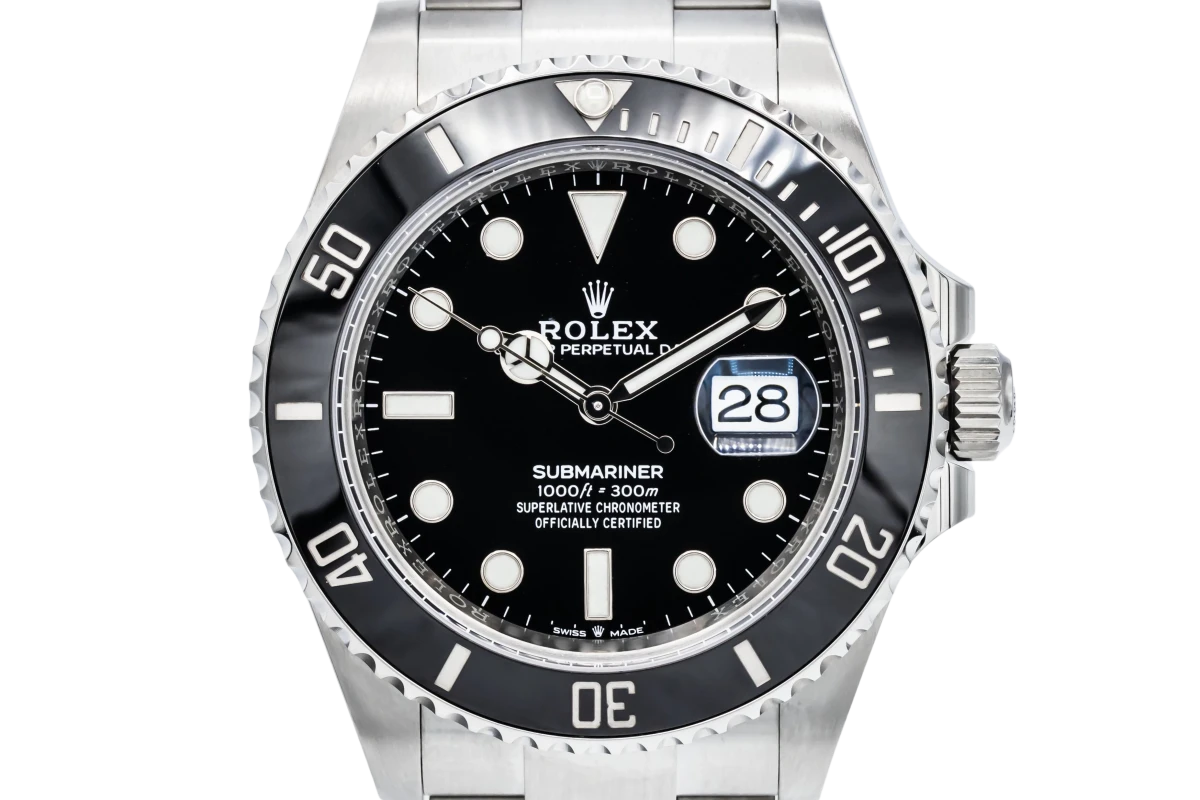
That's a 15–17 gram difference between the two models. On paper, it sounds minor. On the wrist, it's immediately noticeable especially over extended wear. Comparing a Rolex weight chart for different models reveals these differences, but experiencing them firsthand tells a different story.
The Daytona's case is more compact, with a thinner profile. It sits closer to the wrist. The Submariner's case is thicker and broader, largely due to the rotating bezel. That extra thickness adds weight, but it also distributes it more evenly across a larger surface area.
The result? The Daytona can feel slightly top-heavy despite being lighter. The Submariner feels more balanced, even though it weighs more. This is where Rolex weight chart data only tells you half the story. Total weight matters, but weight distribution - how that weight is balanced between case, bracelet, and movement - matters considerably more when understanding how a Rolex actually feels on the wrist.
How Much Does a Real Rolex Weigh: Using Weight as an Authentication Indicator
When someone brings in a watch claiming it's genuine but something feels off, weight is often the first tell. A genuine steel Submariner should weigh approximately 155 grams with its original bracelet. When examining Rolex Submariner weight specifications, if a piece feels unusually light, it's likely using cheaper metals. If it feels oddly heavy, it might have added weights to mimic authenticity. But the more revealing signal is balance.
I once examined a Submariner that looked perfect visually. The case, dial, and bezel were spot-on. The weight seemed close to spec, around 140 grams. But when I held it, the case felt heavier than the bracelet. The bracelet links felt thin and hollow. The watch felt top-heavy, like it could tip forward on the wrist.
That imbalance was the giveaway. Rolex designs the case and bracelet to feel cohesive. When the bracelet feels flimsy compared to the case, it's usually because it's made from cheaper, lighter materials, or it's hollow rather than solid. How much does a real Rolex weigh isn't just about the number. It's about how that weight is distributed across the entire piece. When you're examining Rolex watches in UK collections, this balanced weight distribution becomes immediately apparent when comparing authentic pieces side by side.
Hollow Links Versus Solid Links
Hollow links feel lighter. They sound tinny when you move the watch. They flex slightly under pressure. Solid links feel substantial. They have a muted, rich sound when adjusted. They don't bend. The difference goes beyond authenticity. It affects durability, comfort, and how the bracelet ages.
Hollow links are more prone to damage. They wear faster at the joints. They can feel loose or rattly after a few years of daily wear. Solid links hold their shape. They age more gracefully. They feel more secure on the wrist because their weight is evenly distributed.
For someone who's never handled both, the easiest comparison is this: holding a hollow bracelet feels like holding an empty metal tube. Holding a solid bracelet feels like holding a single block of metal. That heft isn't just luxury signalling. It's structural integrity. Working with a reputable Rolex Dealer in London means being able to handle and compare these differences firsthand, ensuring you understand exactly what you're buying before you commit.
Understanding Rolex Daytona Weight: The Chronograph Pushers and Additional Complications
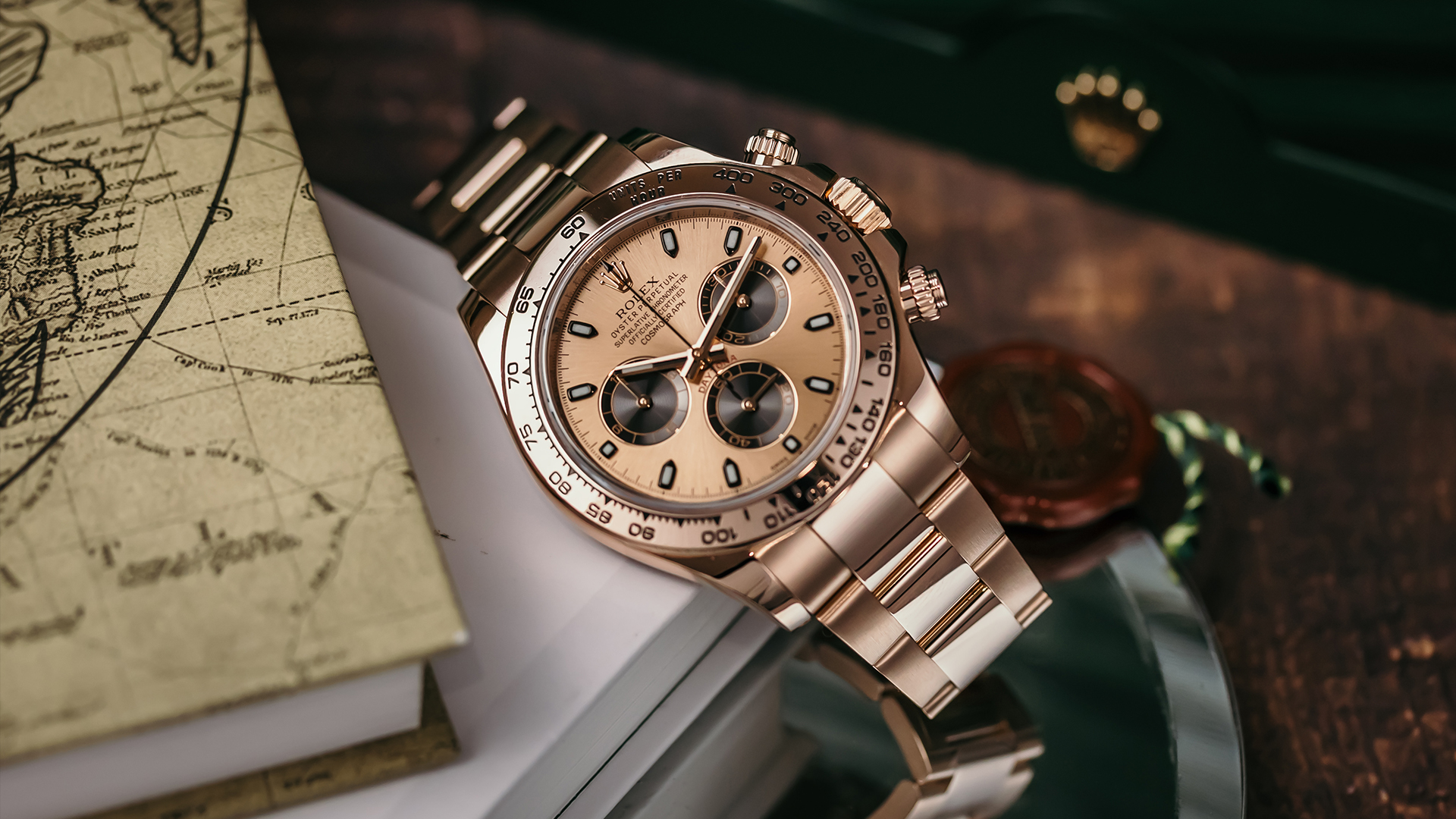
The Daytona (whether you're looking at a stainless steel model or an 18ct rose gold version) is powered by the Rolex Caliber 4130, a self-winding chronograph movement with a vertical clutch. The chronograph complication requires additional gears, springs, and components, all of which add mass.
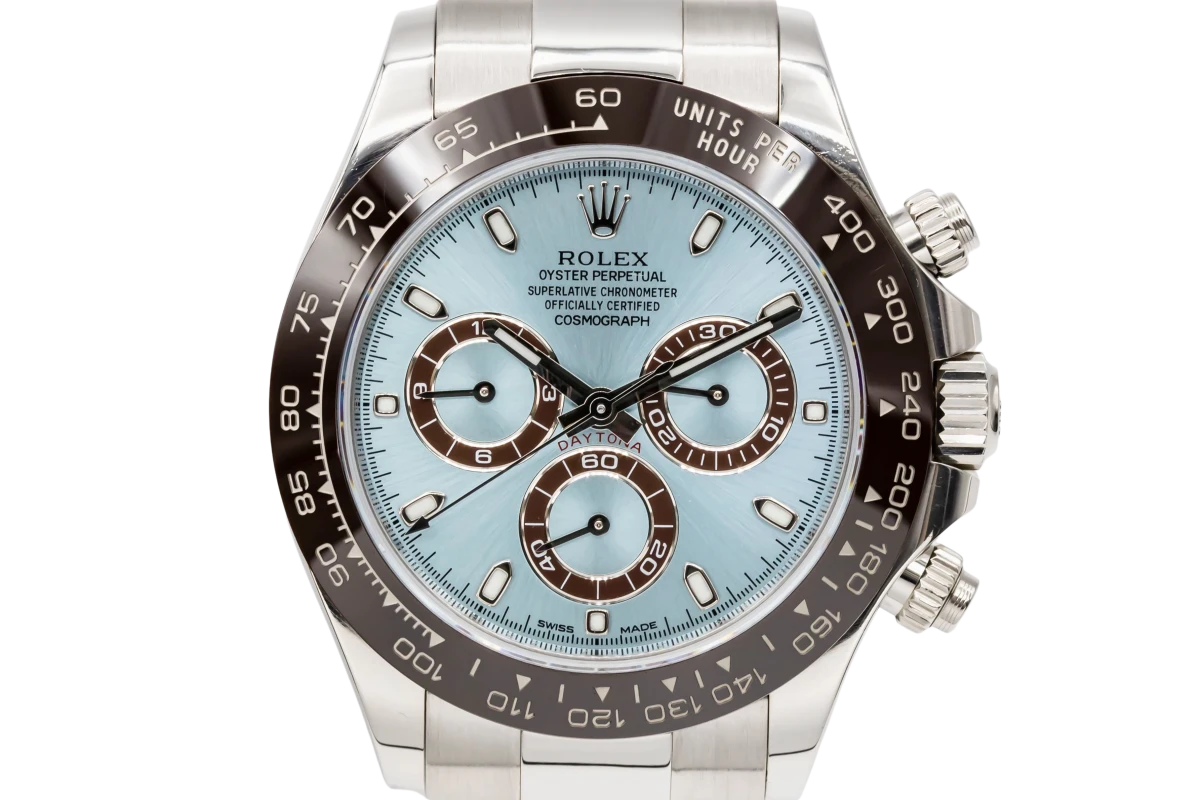
The pushers themselves add roughly 1–2 grams each. That sounds negligible, but the physical presence of the pushers changes how the watch sits on the wrist. For people with smaller wrists (under 6.5 inches), the pushers can dig in when the wrist is flexed. Typing for hours at a desk. Lifting. Resting your hand on a surface.
It's not always a deal-breaker. Some people adjust the bracelet and forget about it. Others find themselves rotating between the Daytona and a simpler model depending on their day. For larger wrists (over 7.5 inches), the issue is less about pressure and more about positioning. If the watch sits too low on the wrist, near the bone, the pushers can still cause discomfort during prolonged wear.
The other factor is clothing. When the Daytona's pushers come into contact with a shirt cuff or jacket sleeve, the friction transfers pressure back to the wrist. If you wear dress shirts with tight cuffs regularly, this becomes more noticeable over time.
Platinum Rolex Weight: Why the Daytona and Day-Date Change Everything
When someone picks up a platinum Daytona ref. 116506 after wearing steel or gold, the reaction goes beyond "it's heavier." The same holds true for pieces like the platinum Day-Date 40mm ref. 228206 with its distinctive ice blue dial, a signature of Rolex platinum watches.
Platinum feels anchored. It feels permanent. It feels like you're wearing a piece of history.
But that weight doesn't always fit with daily wear. I've seen clients buy a platinum Daytona with the intention of wearing it every day. After six months, they realise the weight is more cumbersome than they anticipated, especially during activities like driving, typing, or travelling.
One client bought a platinum Daytona for a trip to Europe. After a few days of walking, sightseeing, and physical activity, they switched to a steel model for comfort. The platinum piece became reserved for formal dinners and special occasions. These models remain among the hardest Rolex watches to buy but desirability doesn't always equal daily wearability.
Another client purchased platinum as an investment piece. After a year, they sold it, not because they didn't appreciate its value, but because they weren't connecting with the physicality of wearing it. The weight didn't fit their lifestyle. Platinum requires specialist tools and polishing compounds. It's more expensive to manufacture. It's rarer. But rarity doesn't always translate into daily wearability.
Rolex Datejust, GMT-Master II and Oyster Perpetual Weight
The Datejust, Rolex's best-selling classic, tells a similar story to the sports models: size drives weight more than most people expect. A steel Datejust 36 on the Oyster bracelet weighs somewhere around 100 to 125 grams, while the larger Datejust 41 sits closer to 136 to 143 grams — a jump that's immediately noticeable if you've only ever tried the smaller case. The Oyster Perpetual, Rolex's entry point into the range, follows almost the same pattern: about 100 grams at 36mm, rising to roughly 137 grams at 41mm.
The GMT-Master II tells a different story. Even in steel, it sits at around 150 to 155 grams on the Oyster bracelet — close to the Submariner's weight and noticeably heavier than the Datejust. If you're deciding between a GMT-Master II and a Submariner on weight alone, the two feel close enough on the wrist that the decision usually comes down to which complication you'll actually use. Get in touch with our team if you'd like to try both side by side or source a specific Rolex model for you.
Rolex Submariner Weight and Bracelet Stretch Over Time
The term "bracelet stretch" is actually a misnomer. Stainless steel doesn't stretch under normal use. What people call stretch is actually wear at the joints: the pin holes enlarge, the pins wear down slightly, and the bracelet develops play.
Gold bracelets, however, behave differently. Gold is softer than steel. The pin holes enlarge faster. The pins bend more easily. The bracelet develops slack more quickly.
On a steel Submariner (such as the two-tone ref. 126613LN or an all-steel model), you might notice slight loosening around the clasp after several years of daily wear. On a gold Daytona or Day-Date, you might notice a looser fit after 2–3 years.
The weight of the watch accelerates this process. A heavier watch exerts more force on the bracelet with every wrist movement: lifting, gripping, twisting. Over time, that force compounds.
Steel bracelets tend to show wear first at the clasp. Gold bracelets show wear at both the clasp and the centre links.
This isn't just about aesthetics. A bracelet that's developed too much play can affect how the watch sits on the wrist, which in turn affects comfort and even how the movement performs over time.
If your bracelet is showing signs of wear or stretch, get in touch about servicing your Rolex.
What Weight Tells You About Long-Term Rolex Ownership
After handling thousands of Rolexes across all these weight variations, the one thing I wish every potential buyer understood is this:
Weight affects long-term comfort and wearability more than the initial impression of heft when you first pick up the watch.
At first, heavier models like the gold or platinum Daytona feel luxurious. Lighter steel models feel more casual. But weight compounds over time.
It affects how comfortable the watch feels during long-term wear, whether you're wearing it for hours at a desk, during physical activity, or across an entire day.
Platinum watches can feel like a solid piece of history on your wrist. But that weight doesn't always fit with daily wear. For those used to lighter watches, it's easy to underestimate how much a precious metal Rolex can weigh — whether it's a platinum Daytona or gold Day-Date — and how that feels after extended use.
Even with steel watches, people often don't consider the long-term effects of bracelet stretch or how the watch will feel on the wrist after a year or two of constant wear. A Submariner might feel great on the first few days. After months of daily wear, the weight of the case combined with bracelet stretch might change the fit or feel.
I've seen countless buyers fall in love with a heavy, luxurious model, only to find that the initial joy fades as they realise the weight is either too much for their wrist or becomes uncomfortable during daily wear.
Conversely, some buyers underestimate the subtle luxury of a lighter watch, assuming it lacks prestige or substance — only to later find that it's actually more suited to their lifestyle. Comfortable for long days. Versatile for various occasions. Easier to wear consistently.
How Weight Affects Movement Performance: The Hidden Factor
There's one more aspect of weight that only becomes apparent after years of hands-on experience: how weight affects the long-term integrity of the movement.
The rotor in automatic Rolex watches relies on wrist movement to wind the watch. The heavier the watch, the more mass the rotor has to.
In watches made from heavier materials (gold, platinum), the rotor's increased mass can lead to greater inertia. Over time, this can cause additional wear on the movement components, particularly the bearing system in the rotor.
It's not something you notice immediately. But after years of use, you might find that a heavier watch doesn't hold its winding as efficiently. You might notice slight deviations in timekeeping.
Rolex movements are designed to handle this. The Caliber 4130 in the Daytona, for example, is built for durability. But the extra weight does have an impact on wear and tear — and this becomes clearer once the watch has been worn for many years.
Gold and platinum models might require slightly more regular servicing compared to their steel counterparts. Not because they're less well-made, but because the additional weight creates more stress on the internal components over time.
If your watch is due some attention, get in touch about servicing your Rolex.
Finding the Right Rolex Weight for Your Lifestyle
Weight isn't just about luxury. It's about comfort and practicality over time. If you're considering a Rolex, understanding weight is just one aspect of finding the right piece.
If you're considering a Rolex, think about how you'll actually wear it. Not just how it feels in the shop, but how it will feel after eight hours at work. After a long flight. After months of daily wear. The number on the scales matters less than understanding how that weight affects your daily experience.
Does the weight feel substantial in a way that reassures you? Or does it feel like something you'll need to adjust to? There's no right answer. Some people love the anchored feel of a platinum Daytona. Others prefer the lighter, more versatile feel of a steel Submariner.
What matters is understanding that weight affects more than just the initial impression. It shapes how you experience the watch over time - and that's worth considering before you make your decision.
Not sure which weight is right for you? Come in and try a few side by side, source a specific Rolex model for you, or sell your Rolex if you're ready for something different.
Frequently Asked Questions
How Much Does a Rolex Submariner Weigh?
A steel Rolex Submariner weighs approximately 153 to 160 grams with its original Oyster bracelet fitted, depending on the reference and how many links are worn. The gold version weighs considerably more, typically 220 to 225 grams, because of gold's higher density.
What Is on the Rolex Weight Chart?
Our Rolex weight chart above compares approximate weights across the Datejust, Oyster Perpetual, Submariner, GMT-Master II, Daytona and Day-Date, all in grams with the original bracelet fitted. Weights vary by a few grams depending on case size, bracelet length and metal.
Are Rolex Watches Heavy?
Rolex watches are heavier than most fashion watches but not unusually heavy compared to other Swiss luxury sports watches. A steel sports model typically weighs 140 to 160 grams, which most wearers stop noticing after a few months of daily wear.
How Much Should a Rolex Weigh?
There's no single "correct" weight for a Rolex — it depends on the model, case size and metal. As a rough guide, expect 100 to 140 grams for a steel Datejust or Oyster Perpetual, 140 to 160 grams for a steel sports model, and 200 grams or more for gold or platinum pieces.
How Much Does a Rolex Datejust Weigh?
A steel Rolex Datejust 36 weighs approximately 100 to 125 grams on the Oyster bracelet, while the larger Datejust 41 weighs approximately 136 to 143 grams. Two-tone and gold versions weigh more, depending on how much precious metal is used in the case and bracelet.
How Much Does a Rolex Day-Date or Oyster Perpetual Weigh?
A Rolex Day-Date weighs approximately 200 to 225 grams, since it's made only in gold or platinum. A steel Oyster Perpetual is far lighter, at roughly 100 grams for the 36mm case and around 137 grams for the 41mm.
Does a Rolex's Weight Tell You If It's Real?
Weight alone isn't a reliable way to spot a fake, but it is a useful early signal. A genuine steel Submariner should feel substantial and evenly balanced between the case and bracelet — if a watch feels unusually light, hollow, or top-heavy for its model, it's worth getting it checked by a specialist.
Have a question we haven't covered here? Visit our full FAQ page for more.