




TL;DR: Rolex Rolesor combines Oystersteel with solid 18ct gold (Yellow, White, or Everose). Pre-owned prices range from £8,000 to £19,000. Rolesor offers genuine precious metal ownership at a lower cost than solid gold, with better durability than plated two-tone watches. The gold components are structural, not surface treatment, which means they age better and hold value more consistently over decades.
Rolesor uses superior 904L Oystersteel and in-house cast gold, not generic materials
Three variations: Yellow (bold, traditional), White (subtle, refined), Everose (warm, modern)
Prices sit between steel and solid gold models, offering accessible precious metal entry
Holds 70 to 85 percent of retail value in pre-owned markets
Vintage models from the 1980s and 1990s have shown strong appreciation over time
Rolesor is Rolex's trademarked name for watches combining Oystersteel with solid gold. The term blends "Rolex" and "or" (French for gold).
Rolex trademarked the name in 1933, making it one of the earliest material innovations the brand committed to long-term. Rolesor has remained a core part of the Oyster Perpetual collection for nearly a century.
What sets Rolesor apart from other two-tone watches comes down to the specific materials Rolex uses and how they integrate them across the case, bezel, and bracelet.
Oystersteel (Rolex's name for 904L stainless steel) offers corrosion resistance well beyond the 316L steel most watchmakers use. It holds a mirror-like polish longer, resists scratches better, and stands up to saltwater and acids without degrading. Rolex became the first watchmaker to use 904L steel in 1985.
The gold used in Rolesor watches comes from Rolex's own foundry, established in the early 2000s. This gives Rolex complete control over alloy composition and quality.
The result balances the strength and everyday wearability of steel with the warmth and material value of solid gold.
Rolesor appears in three variations: Yellow Rolesor, White Rolesor, and Everose Rolesor. Each uses the same Oystersteel base but pairs it with a different gold alloy.
If you're considering a Rolesor watch, our guide on authenticating a Rolex walks through the key details to check before purchase.
Key point: Rolesor combines superior 904L Oystersteel with in-house cast 18ct gold. This differs from generic two-tone watches, which use standard steel and often plated gold. The materials are integrated as structural components, not surface treatments.
| Rolesor Type | Materials | Common Collections | Visual Style |
| Yellow Rolesor | Oystersteel + Yellow Gold | Datejust, Submariner | Classic, warm contrast |
| White Rolesor | Oystersteel + White Gold | Datejust, GMT-Master II | Modern, understated |
| Everose Rolesor | Oystersteel + Everose Gold | Datejust, Sky-Dellwer | Warm, contemporary luxury |
Rolex produces Rolesor in three distinct combinations. Each pairs Oystersteel with a specific gold alloy.
Case size: Rolesor appears across multiple case sizes. The Datejust comes in 31mm, 36mm, and 41mm. The Submariner uses a 41mm case. Your wrist size and wearing preference determine which feels right.
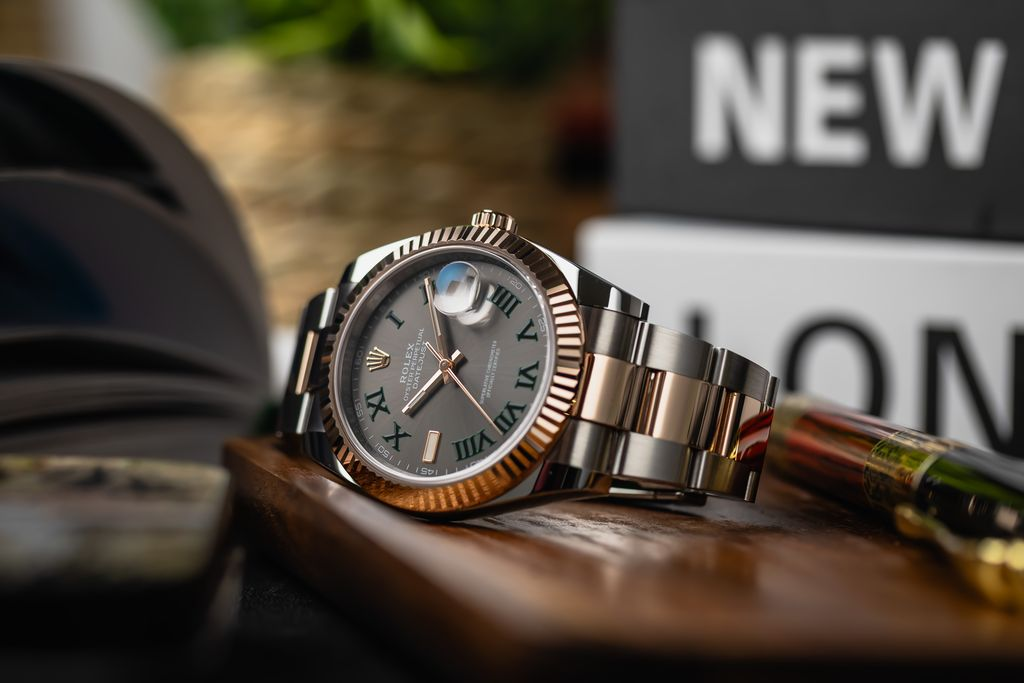
Bezel material and finish: Yellow and Everose Rolesor often feature fluted bezels in matching gold, which catch light distinctively. White Rolesor bezels are less visually obvious but still use solid 18ct white gold. Understanding the Rolex bezel variations affects both aesthetics and how the watch reads at a glance.
Bracelet type: The Oyster bracelet offers a sportier, more robust feel. The Jubilee bracelet (originally designed for the Datejust) provides a dressier, more refined look. Oysterflex, a rubber strap with a metal blade inside, appears on some Everose models and suits active wear.
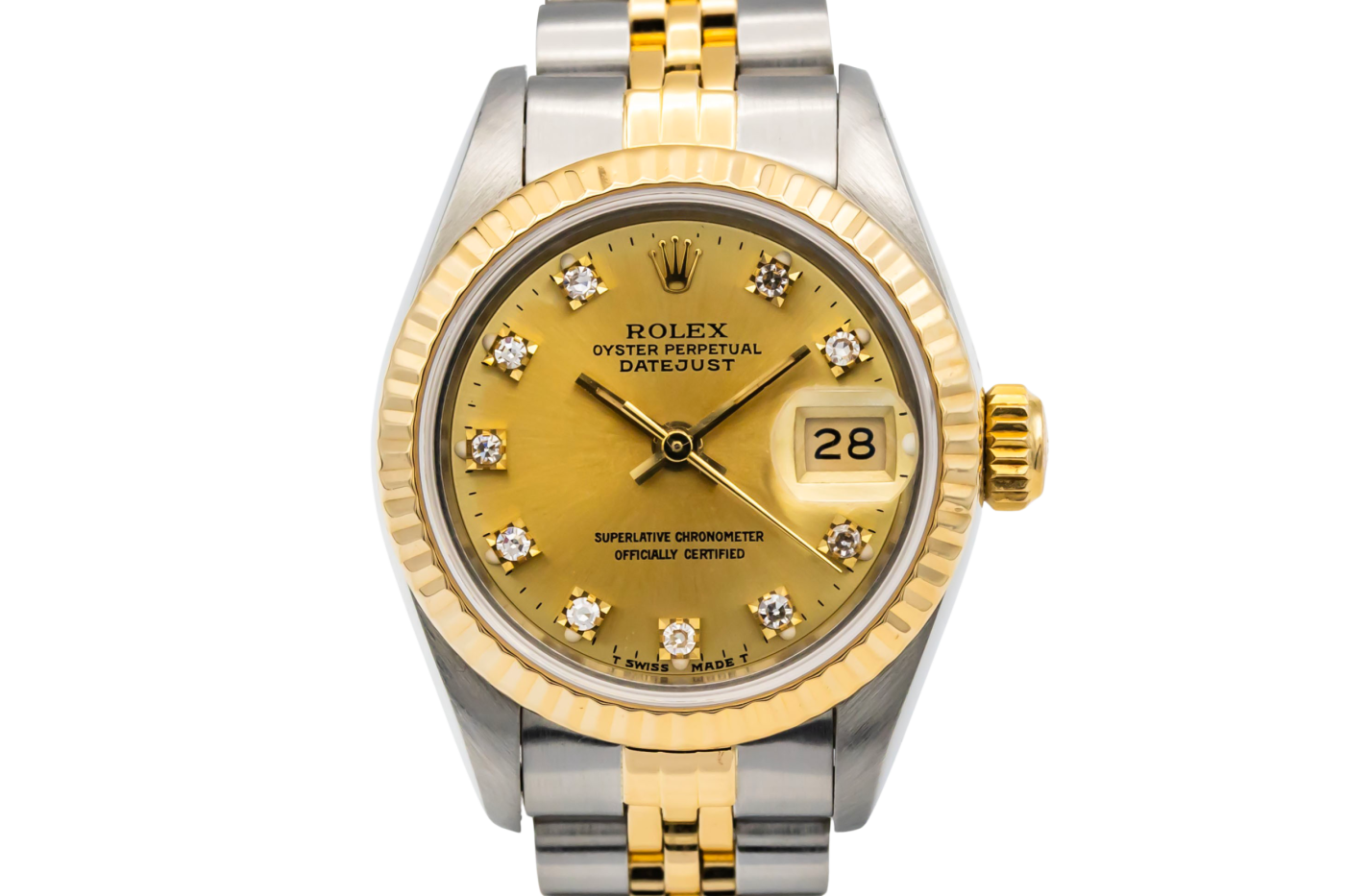
Yellow Rolesor Rolex models create the most visible contrast between steel and gold. The classic two-tone look appears warm, traditional, and immediately recognisable.
White Rolesor offers a subtler appearance. The white gold blends more closely with the steel, creating a refined, understated aesthetic for formal and professional settings.
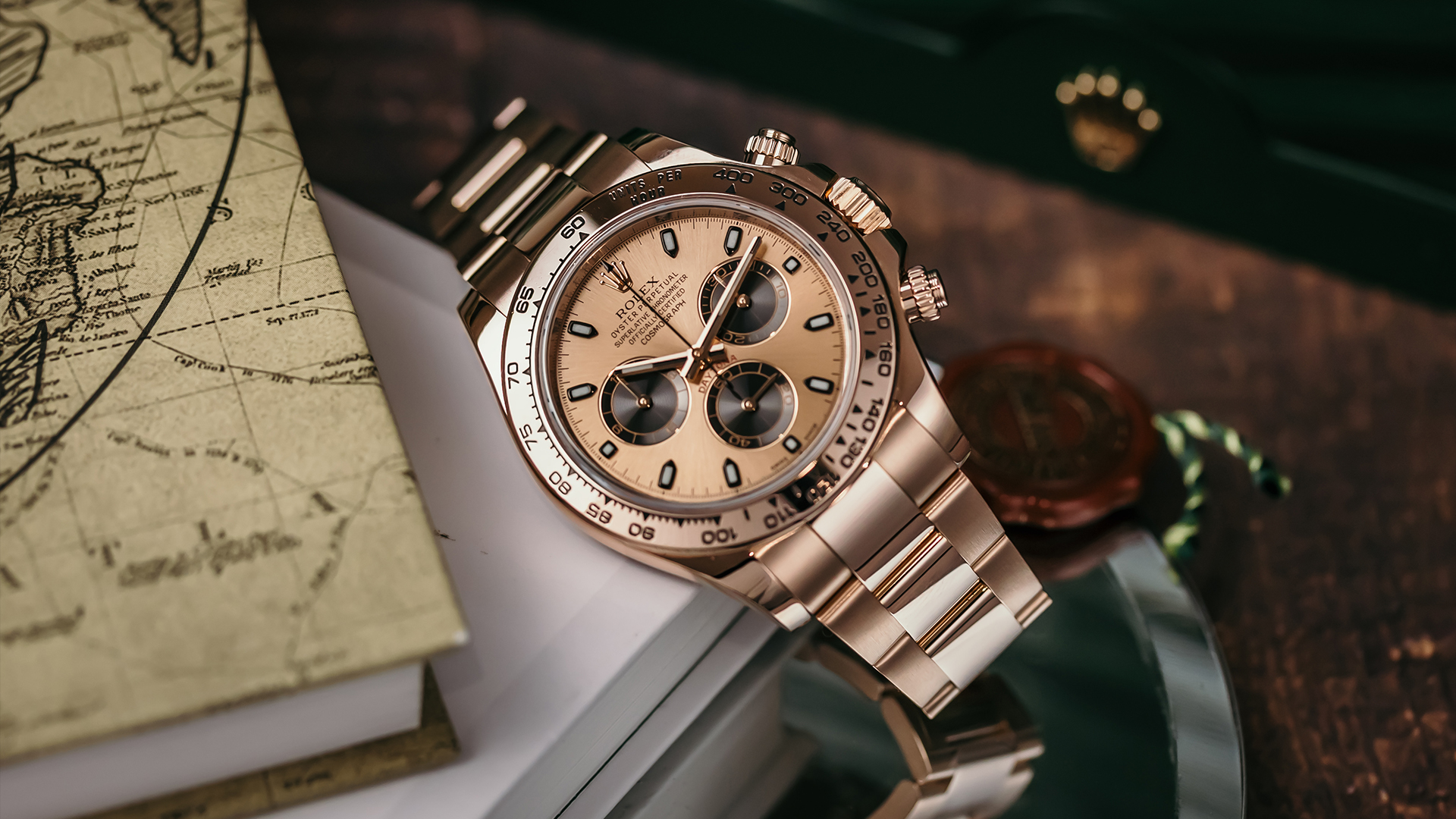
Everose Rolesor sits between the two. The rose gold provides warmth without the high visibility of yellow gold. Because of the platinum-stabilised alloy Rolex uses, the colour stays consistent over decades.
Each combination suits different styles and contexts. The choice comes down to how you prefer the watch to read visually and where you'll wear it most.
Key point: Yellow Rolesor creates bold contrast, White Rolesor offers subtle elegance, and Everose Rolesor balances warmth with versatility. Technical differences include case size (31mm to 41mm), bezel finish (fluted or smooth), and bracelet type (Oyster, Jubilee, or Oysterflex).
Most two-tone watches use standard stainless steel and generic gold alloys sourced from external suppliers. Rolex takes a different approach.
The difference starts with materials. Oystersteel (the 904L alloy Rolex uses) contains more chromium, nickel, and molybdenum than the 316L steel found in most watches. This makes it highly resistant to rust, saltwater, and acids. It holds a polished finish longer and resists scratches better than softer steels.
When you wear a watch daily over years, this matters. Standard steel dulls and scratches more easily. Oystersteel maintains its appearance with less intervention.
The gold side of the equation proves equally deliberate. Rolex operates its own foundry in Geneva, casting and forging all gold alloys in-house. Most luxury watchmakers buy pre-made gold from third-party suppliers.
Rolex controls the entire process (composition, casting, forging, and finishing). For Everose gold, this control allows them to stabilise the alloy with platinum. This prevents the colour shift that affects standard rose gold over time. Rolex states that Everose will never lose its red colour, backed by platinum content that prevents copper oxidation.
Standard rose gold develops a patina as copper reacts with oxygen. Everose does not. This comes from material science, not marketing language.
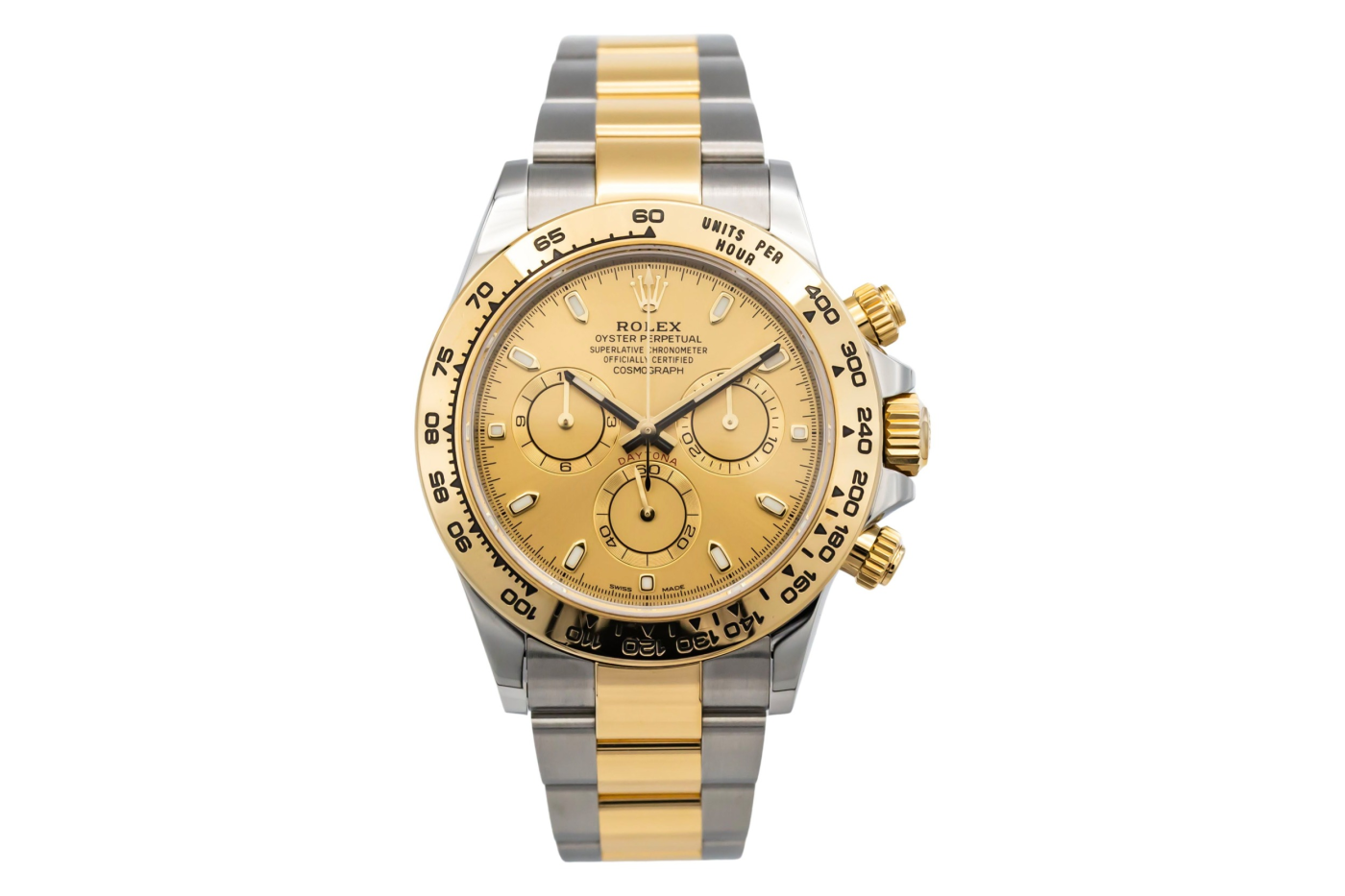
Generic two-tone watches often plate gold over base metal or use thinner gold components to reduce cost. Rolex uses solid 18ct gold for bezels, crowns, and bracelet centre links. The gold serves as a structural component, not a surface treatment.
This affects durability. Plated gold wears through with use, exposing base metal underneath. Solid gold develops surface scratches but remains intact and you're able to refinish it without losing integrity.
We've serviced Rolesor watches from the 1980s and 1990s showing strong gold colour and structural soundness. Plated two-tone pieces from the same era tell a different story.
Rolesor first appeared on the Oyster Perpetual Datejust in 1948 (fifteen years after Rolex trademarked the name). The Datejust became the model most associated with Rolesor, particularly with the fluted bezel and Jubilee bracelet combination.
The Submariner followed later, offering Rolesor as a way to add precious metal to a tool watch without sacrificing the robustness steel provides. Both metals serve a function: steel for durability, gold for material value and visual warmth.
The contrast between Rolesor and generic two-tone designs comes down to this: Rolex treats both materials as equals in quality and integration. Other manufacturers often treat gold as decoration applied to a steel watch. The difference shows in how the watches age and hold value over decades.
If you're wondering how your Rolesor watch holds its value compared to solid gold or steel models, its important to get an accurate valuation and expert advice. Some of the best places to sell a Rolex will be able to cover information about what affects resale value and where your watch sits within the market.
Key point: Rolex uses superior 904L Oystersteel and solid 18ct gold from their own foundry. The gold components are structural, not plated. Everose gold includes platinum to prevent colour fade. This approach creates watches that age better and maintain value longer than generic two-tone alternatives.
Rolesor sits between steel and solid gold in price, both at retail and in the pre-owned market.
The exact cost depends on the model, condition, year of production, and market demand at the time you're buying or selling. The relationship between steel, Rolesor, and gold stays consistent.
Here's a snapshot based on current pre-owned listings and trends we've observed:
| Resoler Type | Materials | Example Models on The Diamond Box | Approx. Pre-Owned Price Range | Notes |
| Yellow Rolesor | Oystersteel + Yellow Gold | Datejust, Submariner | £7,500 – £10,000 (Datejust), £11,000 – £15,000 (Submariner) | Classic warm contrast, versatile for formal and casual wear |
| White Rolesor | Oystersteel + White Gold | Datejust, GMT- Master II | £7,800 – £10,500 (Datejust), £12,000 – £16,500 (GMT-Master II) | Modern, understated look, popular with contemporary collectorsModern, understated look, popular with contemporary collectors |
| Everose Rolesor | Oystersteel + Everose Gold | Datejust, Sky- Dweller | £8,000 – £11,000 (Datejust), £12,500 – £17,000 (Sky-Dweller) | Warm, luxurious tone; Rolex proprietary gold alloy, resists fading |
*Prices are based on pre-owned listings and trends observed across the market. For exact current listings of Rolex watches in the UK, see our curated selection at The Diamond Box.
Note: Prices vary by year, condition, box and papers, service history, and market demand. A well-maintained Rolesor Submariner from 2020 with full documentation commands a different price than a 2010 model without papers.
Steel sports models (particularly the Submariner, GMT-Master II, and Daytona) often trade at premiums above retail due to limited availability. Rolesor models tend to trade closer to retail prices and prove generally easier to find.
Solid gold models carry significantly higher price tags due to material cost. A solid gold Datejust or Submariner costs two to three times what a Rolesor version does.
Rolesor offers accessible entry into precious metal Rolex ownership without the full cost of solid gold. You're getting genuine 18ct gold in the bezel, crown, and bracelet centre links (not plating, not gold-tone steel), but you're not paying for a fully gold case and bracelet.
Before committing to a Rolesor watch (whether buying or selling), verify authenticity. Counterfeit Rolex watches have become more sophisticated, and even experienced buyers get caught out without proper checks.
Key details to verify include:
Serial number: Check that it matches Rolex's format for the production year and hasn't been tampered with.
Weight: Rolesor watches have a specific heft due to the solid gold components. A watch that feels too light may use plated gold or incorrect materials.
Craftsmanship: Rolex finishing is precise. Misaligned printing, rough edges, or poor bracelet action are red flags.
Key point: Pre-owned Rolesor models range from £8,000 to £19,000 depending on the model. Rolesor sits between steel (which trades at premiums) and solid gold (which costs significantly more). Always verify authenticity through serial numbers, weight, and craftsmanship before purchasing.
Rolesor watches hold value well, but they tend not to appreciate at the same rate as steel sports models or rare vintage pieces.
This is not a weakness. It's a characteristic of how the market values different Rolex segments.
Steel sports models (particularly the Submariner, GMT-Master II, and Daytona) have seen significant appreciation over the past decade due to constrained supply and high Rolex demand. Rolesor models, by contrast, are more available and trade closer to retail prices.
What Rolesor offers: stability rather than speculation.
Rolesor watches retain value because they combine genuine material worth (solid 18ct gold) with Rolex's reputation for durability and craftsmanship. The gold content alone provides a floor for resale value that steel models lack.
Vintage Rolesor models (particularly the Datejust and GMT-Master II from the 1980s and 1990s) have shown consistent demand in the pre-owned market. Well-maintained examples with original boxes and papers command premiums, especially with desirable dial colours or configurations.
Recent data shows certain two-tone models have appreciated significantly. The Submariner Ref. 16613 appreciated significantly over 15 years, climbing from £1,690 in 2010 to £13,340 in 2025. This is not typical across all Rolesor models, but it shows the market has shifted in how it values two-tone watches.
For years, Rolesor was seen as a compromise (not quite steel, not quite gold). That perception has changed. Buyers now recognise Rolesor as a deliberate choice offering material value, everyday wearability, and visual warmth without the full cost of solid gold.
Entry into precious metal Rolex ownership: Rolesor provides solid gold components at a fraction of the cost of a full gold watch.
Popularity of vintage models: Vintage Rolesor Datejust and GMT-Master II models remain highly sought after, particularly with original documentation.
Market demand often exceeds supply: While not as constrained as steel sports models, desirable Rolesor configurations can be difficult to find in excellent condition.
Stable value retention: Rolesor watches typically hold 70–85% of retail value in the pre-owned market, depending on condition and model.
If you're considering Rolesor as part of a broader strategy for building or managing a watch collection, our Rolex investment guide explores which models hold value best.
Key point: Rolesor offers stability over speculation. Typical retention sits at 70 to 85 percent of retail value. The solid gold content provides a value floor. Vintage models from the 1980s and 1990s have shown strong appreciation, with some references growing nearly 8x over 15 years.
Choosing between Yellow, White, and Everose Rolesor comes down to how you want the watch to read visually and where you'll wear it most.
Each combination offers distinct characteristics.
Yellow Rolesor
Creates the most visible contrast between steel and gold
Traditional two-tone aesthetic — warm, classic, immediately recognisable
Works well in both casual and formal settings, though it reads more boldly than White or Everose
Suits buyers who want a watch with presence and aren't concerned about subtlety
White Rolesor
Offers a subtler, more understated appearance
White gold blends closely with steel, creating a refined, cohesive look
Works particularly well in professional and formal contexts where a loud watch would feel out of place
Suits buyers who want the material value of gold without the visual weight of yellow or rose tones
Everose Rolesor
Balances warmth and subtlety — more visible than white gold, less bold than yellow
Rose gold tone remains consistent over time due to platinum stabilisation
Pairs well with a wide range of dial colours, particularly chocolate, black, and sundust
Suits buyers who want a modern, distinctive look that still feels versatile across settings
The choice is not about which is "best". It's about which feels right for how you wear watches and what role this piece plays in your collection.
Whether you prefer Yellow, White, or Everose Rolesor, The Diamond Box offers a curated selection of authentic pre-owned models to match your style and long-term goals. As a reputable Rolex dealer in London, we've spent over twenty years helping people find watches fitting their lives, not their wrists alone.
If you're still weighing options or want to discuss which Rolesor combination makes sense for you, we're happy to talk it through without pressure.
Key point: Yellow Rolesor suits those who want presence and warmth. White Rolesor works best in professional and formal settings. Everose Rolesor balances both worlds. Your choice should reflect how you wear watches and the contexts where the piece will appear most.
[products brand="Rolex" category="Watches" attribute_watches="01/10/1995,01/10/2019,01/12/2019,01V47329,3KE00269,04/11/2019,4V55M982,05/01/2022,20/09/2025,25/06/2022,29/08/2014,30/11/2014,36mm,40mm,41mm,2013,2014,2016,2017,2018,2019,2021" limit="4"]
Rolex Rolesor combines Oystersteel (904L stainless steel) with solid 18ct gold. Rolex trademarked the term in 1933. Unlike generic two-tone watches, Rolesor uses superior materials and solid gold components rather than plating.
White Rolesor combines Oystersteel with solid 18ct white gold used for the bezel, crown, and bracelet centre links. White Rolesor offers a subtler appearance than Yellow Rolesor because the white gold blends more closely with the steel.
Rolesor Rolex prices vary by model, year, and condition. In the pre-owned market, a Datejust 36 in Yellow Rolesor typically ranges from £8,000 to £12,000, whilst a Submariner 41 in Yellow Rolesor ranges from £12,000 to £16,000. Rolesor sits between steel and solid gold in pricing.
Yes. Yellow Rolesor uses solid 18ct yellow gold for the bezel, crown, and bracelet centre links. The gold comes from Rolex's own foundry in Geneva. This is not plating or gold-tone steel. It's structural gold you're able to refinish without losing integrity.
Rolesor watches hold value well, typically retaining 70 to 85 percent of retail value in the pre-owned market. The solid gold content provides a value floor that steel models lack. Vintage Rolesor models from the 1980s and 1990s have shown strong appreciation.
There's no objectively "best" Rolesor. Yellow Rolesor creates the boldest contrast and suits those wanting a classic, recognisable two-tone look. White Rolesor offers subtlety for professional settings. Everose Rolesor balances warmth and versatility. The right choice depends on your style and where you'll wear the watch.
Key authenticity checks include verifying the serial number matches Rolex's format for the production year, checking the weight (Rolesor has specific heft due to solid gold components), and examining craftsmanship (Rolex finishing is precise). Misaligned printing or rough edges are red flags.
Rolesor uses Rolex's superior 904L Oystersteel and solid 18ct gold from their own foundry. Generic two-tone watches typically use 316L steel and plated gold or thinner gold components to reduce cost. Rolesor's solid gold will not wear through like plating does.
Rolesor appears across multiple Rolex models, including the Datejust (31mm, 36mm, 41mm), Submariner (41mm), GMT-Master II, Yacht-Master, Day-Date, and Sky-Dweller. The Datejust is most closely associated with Rolesor, particularly with the fluted bezel and Jubilee bracelet combination.
Rolesor offers better scratch resistance and everyday durability than solid gold because the steel case and bracelet outer links are harder than gold. The solid gold components (bezel, crown, centre links) provide material value and visual warmth, whilst the Oystersteel provides structural strength.
Yes. Because Rolesor uses solid gold rather than plating, you're able to polish and refinish the gold components without exposing base metal underneath. We've serviced Rolesor watches from the 1980s and 1990s showing strong gold colour and structural soundness.
Rolex Rolesor combines superior 904L Oystersteel with solid 18ct gold from Rolex's own foundry, creating a watch more durable than generic two-tone alternatives
Three variations exist: Yellow Rolesor (bold, traditional), White Rolesor (subtle, refined), and Everose Rolesor (warm, modern with platinum-stabilised colour)
Pre-owned Rolesor models range from £8,000 to £19,000, sitting between steel sports models and solid gold pieces in price
Rolesor offers accessible entry into precious metal Rolex ownership whilst maintaining the durability and wearability of steel
Value retention typically sits at 70 to 85 percent of retail, with vintage models from the 1980s and 1990s showing strong appreciation over time
The solid gold components are structural (not plated), meaning they age better and you're able to refinish them without losing integrity
Your choice between Yellow, White, and Everose Rolesor should reflect your personal style and the contexts where you'll wear the watch most
Visit us in store for great service and to see our amazing collection.
114 Ballards Lane, N3 2DN, London 020 8838 3655