



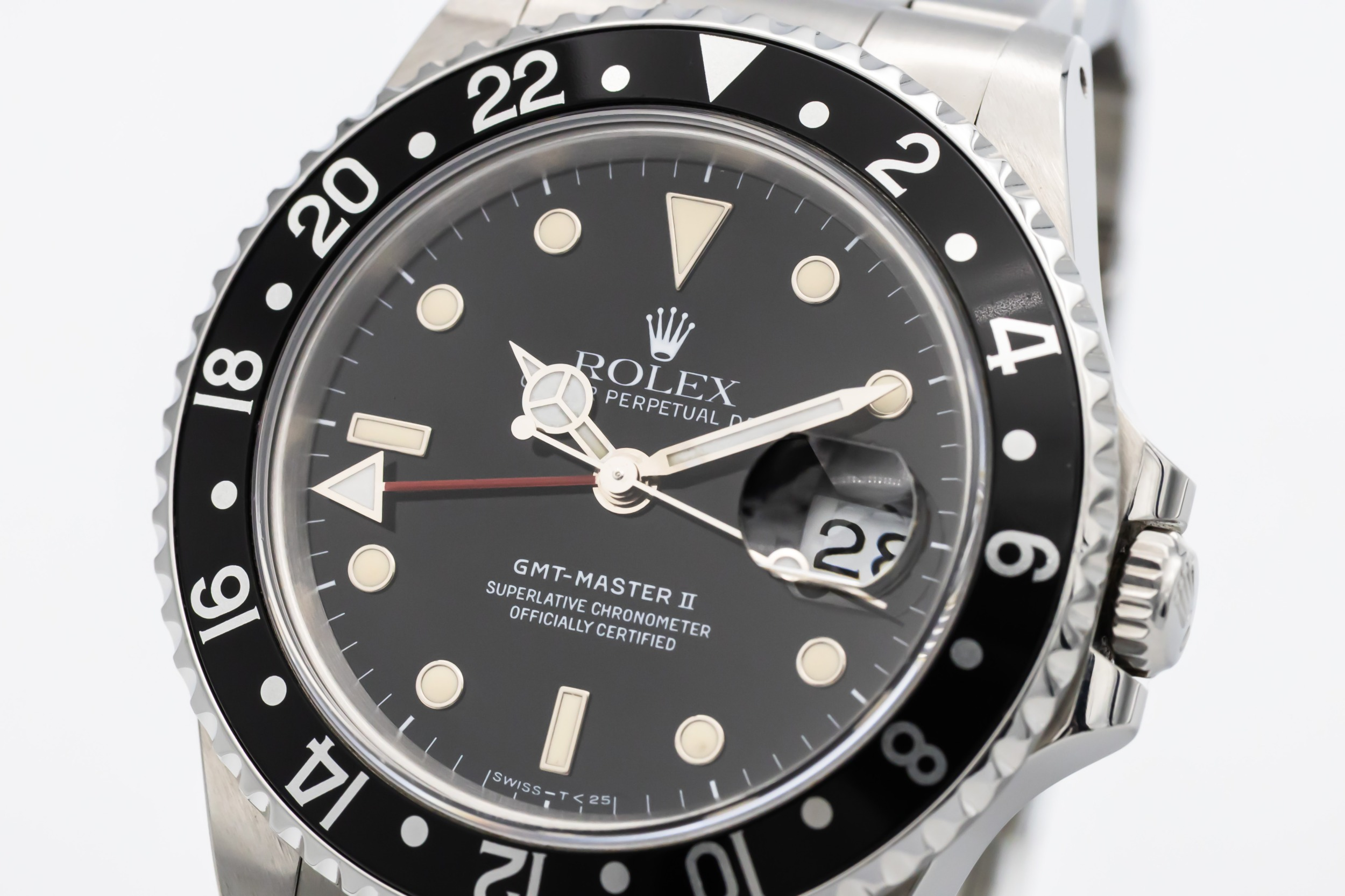
When someone comes in asking about the symbol of Rolex, the crown logo, what year was Rolex founded, or the nickname for Rolex models, they're typically focused on the mythology. The heritage story. How the watch fits into a broader cultural narrative.
These questions point to external perceptions. How the Rolex will be seen by others. How it connects to their idea of prestige and achievement.
But there's a question they're not asking. One that, in my experience across more than twenty years, becomes far more important five years down the line.
"How will this watch fit into my life, and how will I feel about it once the novelty wears off?"
That question rarely gets asked at the outset. But it's what truly matters in the long run.
A Short History of the Rolex Crown Logo
Rolex was founded in 1905 by Hans Wilsdorf and Alfred Davis. From its earliest years, the company focused on precision, reliability and practical innovation rather than status alone. As Rolex grew throughout the twentieth century, the five-point coronet gradually became recognised around the world as a symbol of craftsmanship, achievement and luxury. Today, the Rolex crown is one of the most recognisable brand symbols in watchmaking.
|
Period |
Rolex Crown Development |
|---|---|
|
1905 |
Rolex founded by Hans Wilsdorf and Alfred Davis |
|
Early brand years |
Focus on precision, reliability, and waterproof innovation |
|
Later 20th century |
Crown becomes strongly linked with luxury and achievement |
|
Today |
The coronet is recognised as a global symbol of status and craftsmanship |
What Is the Difference Between the Rolex Crown Logo and the Winding Crown?
The word "crown" can refer to two completely different things when discussing Rolex watches.
The Rolex crown logo is the famous five-point coronet used as the brand's visual identity. It appears on the dial, packaging, documentation and other official Rolex materials, representing craftsmanship, prestige and brand recognition.
The winding crown is the physical screw-down crown on the side of the watch. It allows the wearer to wind the movement, set the time and date, and secure the watch's water resistance.
|
Feature |
Rolex Crown Logo |
Rolex Winding Crown |
|---|---|---|
|
What it is |
The five-point coronet symbol |
The small screw-down crown used to set the time |
|
Where it appears |
Dial, clasp, box, paperwork, sometimes crystal etching |
Side of the watch case |
|
Purpose |
Brand identity and recognition |
Controls time/date setting and supports water resistance |
|
SEO note |
Related to Rolex logo meaning |
Related to crown markings, dots, Twinlock, Triplock |
What Do the Dots or Lines Under a Rolex Crown Mean?
The small dots or lines beneath the physical Rolex winding crown are often misunderstood. On many Rolex watches they indicate the type of crown system or material used, although the markings vary depending on the model and production period. They should never be used on their own to determine whether a Rolex is genuine.
|
Crown Marking |
What It Usually Indicates |
|---|---|
|
Single line |
Often associated with Twinlock crowns on some models |
|
Two dots |
Commonly linked with certain precious metal Twinlock crowns |
|
Three dots |
Often associated with Triplock crowns, especially on professional models |
|
Rolex coronet only |
May appear on some models depending on age and crown type |
Rolex Twinlock vs Triplock Crown: What Buyers Should Know
Twinlock and Triplock are both Rolex screw-down crown systems designed to improve water resistance. Twinlock is commonly found on many classic Rolex models and is perfectly suited to everyday wear. Triplock includes an additional sealed zone and is fitted to many professional sports models, such as the Submariner, where greater water resistance is required.
|
Crown System |
Simple Explanation |
Commonly Seen On |
|---|---|---|
|
Twinlock |
A screw-down crown system with two sealed zones |
Many classic Rolex models |
|
Triplock |
A stronger screw-down crown system with an additional sealed zone |
Many professional/sport Rolex models |
|
Buyer note |
Good for daily wear |
Better suited to water/sport-focused models |
What Separates Daily Wearers from Those Who Store the Rolex Sign Away
Over twenty years, I've noticed distinct patterns in who actually wears their Rolex daily versus who keeps it locked away.
Daily wearers typically bought with a practical purpose in mind. They want a luxury timepiece that also serves as a functional accessory. For them, a Rolex isn't just a symbol of status, it's something they genuinely enjoy wearing.
They love craftsmanship. They appreciate the durability. The watch becomes part of their daily life. They notice details like how much a Rolex watch weighs, the reassuring heft that speaks to quality and substance. They're confident and comfortable with the attention a Rolex might bring, but it's part of who they are.
Safe keepers, on the other hand, often bought the Rolex as a symbol of achievement or status, rather than out of a deep connection to the watch itself. They see it as a milestone marker, something to be displayed on special occasions but not necessarily worn every day.
The difference comes down to one crucial question they asked themselves, or didn't, before buying.
The Question That Predicts Everything—Beyond Any Nickname for Rolex
"Am I buying this watch for who I am, or for who I want to be?"
When you're buying for who you are, the watch becomes a natural extension of yourself. It fits into your daily life and speaks to your values. You might already have a relationship with the Rolex brand, or you see the piece as a reflection of your ongoing journey.
You wear it regularly because it feels authentic. It resonates with your current self.
When you're buying for who you want to be, it's about projection. You're imagining how the Rolex will elevate you in the eyes of others. How it will mark the beginning of a new phase.
These customers envision the Rolex as a status marker that represents something they haven't achieved yet. The connection hasn't formed because it's still seen as something to aspire to, not something that's part of their existing identity.
What Happens Three to Five Years After Learning What Year Was Rolex Founded
When someone buys purely on mythology, without considering the "who I am versus who I want to be" question, a few predictable outcomes tend to emerge.
The watch becomes a "special occasion" piece. It starts as a daily accessory but gradually shifts to something worn sporadically. Important business meetings. Family milestones. Events where they feel the need to make a statement.
The watch goes into the safe or drawer. After a few years, they realise they haven't worn it in months. The symbolic value may still resonate, but they're no longer inclined to wear it because it feels out of place in their current life.
They realise the watch doesn't fit their evolving identity. They find themselves in a more casual environment—a new job, a shift in social circles, a change in personal taste. The formality or flashiness of the Rolex starts to feel out of step with who they're becoming.
Research into luxury consumption reveals a crucial distinction: luxury consumption is a deeply psychological act—one that merges emotion, identity, aspiration, and social signalling. Those primarily intrinsically motivated purchase luxury products for superior quality and self-directed pleasure, whilst those pursuing extrinsic goals are concerned about how they're perceived by others.
The gap between these motivations determines whether the watch becomes a companion or a trophy.
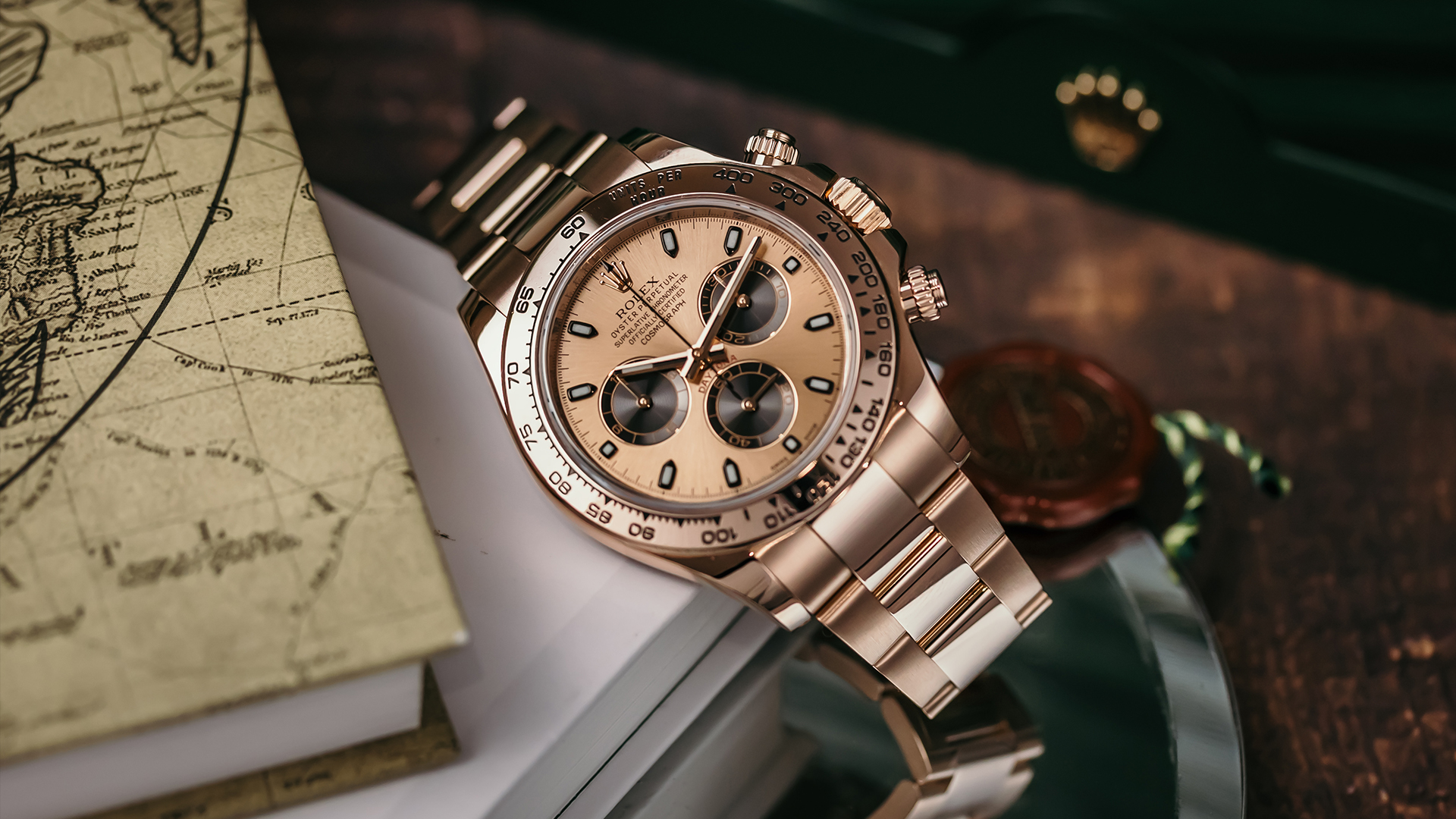
Where Can You Find the Rolex Crown Symbol on a Watch?
You can usually find the Rolex crown symbol in several places:
• On the dial, below the 12 o'clock marker
• On the winding crown at the side of the case
• On the bracelet clasp
• On the rehaut of many modern Rolex watches
• As a tiny laser-etched crown on the sapphire crystal on many modern models
• On boxes, warranty cards, tags and official documentation
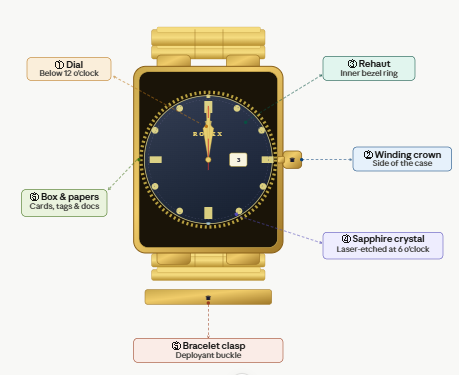
Dial — The most prominent crown, printed in gold below the 12 o'clock marker, directly above the "ROLEX" wordmark. This is the most recognisable placement.
Winding crown — The physical crown at 3 o'clock on the side of the case is itself engraved with the symbol. On genuine Rolexes it is marked with a tiny raised five-pointed crown.
Rehaut — On most modern models, the inner bezel ring (rehaut) is engraved with the crown symbol repeating around its circumference, interspersed with the serial number.
Sapphire crystal — Since around 2002, a tiny crown is laser-etched into the sapphire crystal at the 6 o'clock position. It is nearly invisible to the naked eye but visible under magnification or light.
Bracelet clasp — The deployant buckle or folding clasp carries an engraved or stamped crown, alongside the Rolex name.
Box & papers — The crown also appears on the presentation box, warranty card, hang tags, and all official documentation that accompanies the watch.
What Matters More Than the Crown
If you're considering a Rolex, the logo of Rolex and the heritage story will be part of what draws you in. That's natural. The mythology is powerful, and it's been carefully crafted over more than a century.
But before you buy, it's worth asking yourself that deeper question: "Am I buying this for who I am, or for who I want to be?"
Because the more aligned the watch is with your current self and lifestyle, the more likely it becomes a daily companion. Something worn proudly as a reflection of your identity.
If the purchase is based on aspiration alone, it might end up in the safe. A symbolic trophy. An object you thought you needed but that no longer fits your evolving sense of self. There are practical considerations that matter just as much as the crown. Authenticating a Rolex protects your investment in ways the heritage story never will.
And choosing a reputable Rolex dealer in London matters more than most marketing suggests. Because the relationship you build with the people who care for your watch over decades often determines whether it remains meaningful or becomes a burden.
How to Tell If a Rolex Crown Is Real or Fake
The Rolex crown symbol alone cannot confirm whether a watch is genuine. Modern counterfeit watches are capable of reproducing the Rolex logo, laser-etched crown and other visual details with remarkable accuracy.
Instead, the crown should be considered alongside other indicators such as movement authenticity, dial quality, case finishing, serial numbers and service history.
If you want to understand the full authentication process, read our guide to Authenticating a Rolex before purchasing any pre-owned Rolex watch.
The Watch That Grows With You
The customers I've seen build the deepest connections with their Rolex aren't the ones who bought it as a trophy. They're the ones who bought it as a companion.
They see scratches as part of the story, not a flaw. They wear it through experiences, and every mark adds meaning. The watch stops being about what it represents externally and becomes woven into the fabric of their daily life.
That's when the symbol of Rolex transforms from a declaration of achievement into a quiet acknowledgement of craftsmanship. When the crown becomes less about proving something to the world and more about celebrating your own journey.
Frequently asked questions about Rolex crown
What does the Rolex crown symbol mean?
The Rolex crown symbol represents prestige, achievement, craftsmanship and precision. Over more than a century, it has become one of the world's most recognisable luxury brand logos, reflecting Rolex's reputation for quality, reliability and innovation in watchmaking.
Is the Rolex crown called a coronet?
Yes. The Rolex crown logo is commonly referred to as the Rolex coronet. The term "coronet" describes the five-point crown symbol that appears on Rolex dials, branding, packaging and official documentation.
What do the dots under a Rolex crown mean?
The dots or lines beneath the physical winding crown can indicate the type of crown system and, on some models, the case material. However, the markings vary depending on the model and production period, so they should never be used on their own to authenticate a Rolex.
Does every Rolex have a laser-etched crown?
Many modern Rolex watches feature a tiny laser-etched crown on the sapphire crystal at the 6 o'clock position. However, its visibility and placement can vary depending on the model and production year, so it should always be considered alongside other authenticity checks.
Can a fake Rolex have the crown symbol?
Yes. Counterfeit Rolex watches often copy the crown logo, winding crown markings and even the laser-etched crown on the crystal. The presence of the Rolex crown symbol alone does not prove a watch is genuine. Authentication should always consider the movement, case finishing, dial details, serial numbers and service history as a whole.