




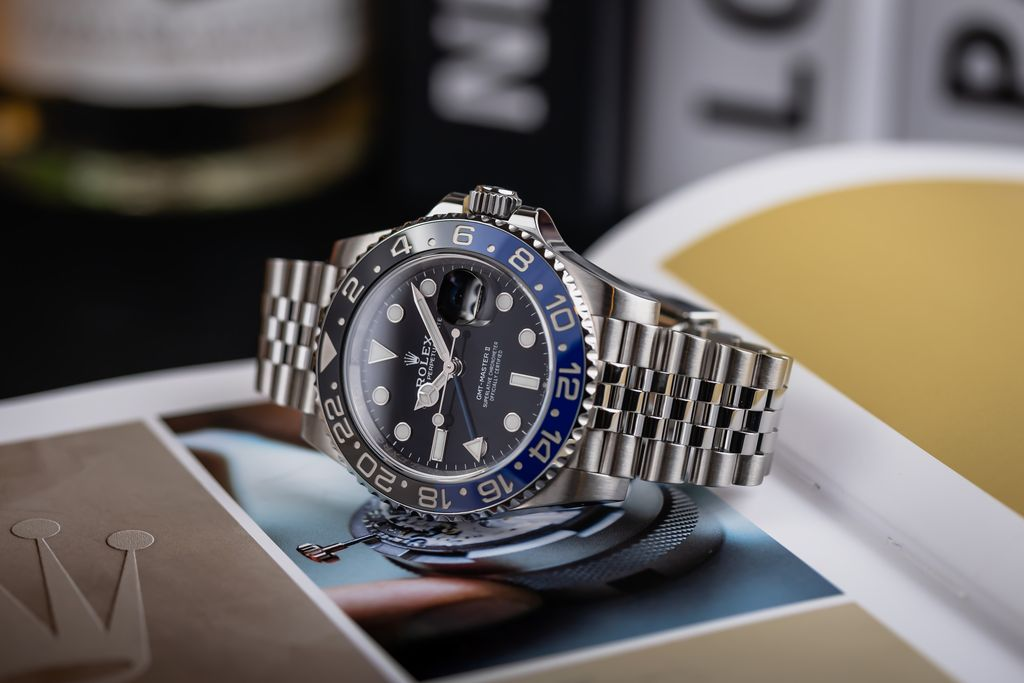
TL;DR: The Rolex Submariner and GMT-Master II both crossed £10,000 in 2026 because of tariffs and material costs, not demand. Wait times dropped from years to 60-90 days. Steel models hold value through supply friction — not appreciation. Neither is an investment. Choose the Submariner for 300m water resistance; choose the GMT-Master II only if you travel across time zones monthly or more.
Core Decision Factors:
-
Submariner: £10,050 starting price, 60-day wait time, 300m water resistance, simpler design
-
GMT-Master II: £11,800 starting price, 90-day wait time, 100m water resistance, dual time zone complication
-
Both hold value through supply constraints, not appreciation
-
Wait times collapsed from 105+ days (Submariner) and 180+ days (GMT) in 2022-2023
-
Function determines value — buy based on actual use, not aspiration
At The Diamond Box, we've watched the Rolex market shift dramatically over the past few years. The waitlists that defined 2021 and 2022 have collapsed. Pricing has crossed psychological thresholds that change how people think about these watches. And the gap between what buyers believe and what we observe daily has widened. For more on how the waitlist situation has evolved, check out our article on why Rolex waitlists still haven’t improved in 2026 .
This isn't speculation. It's pattern recognition across hundreds of conversations and transactions in 2026.
What Do These Watches Actually Cost in 2026?
The Submariner crossed £10,000 in 2026 because of external economic factors. The no-date steel model starts at £10,050, up from £9,500 in 2025.
The GMT-Master II reached £11,800 after a 4.1% increase. These prices reflect Swiss import tariffs, currency fluctuations, and material costs — particularly gold's 64% rally in 2025.
The watches didn't become more desirable. retail pricing increased 5-6% year-over-year because of tariffs and material costs, not demand.
Why this matters: A five-figure steel sports watch changes buyer psychology. The difference between £8,000 and £10,000 affects decision-making when you're committing real money.
Key point: Retail pricing increased 5-6% year-over-year because of tariffs and material costs, not demand.
How Long Do You Actually Wait for These Watches?
The two-year waitlists are gone. This is observable fact, not speculation.
Submariner wait times dropped from 105+ days in 2023 to approximately 60 days in 2026. Some authorised dealers now have stock with minimal wait.
GMT-Master II wait times fell from 180 days in 2022 to approximately 90 days in 2026.
At The Diamond Box, we observe this daily in our transactions. The scarcity narrative that dominated 2021-2023 no longer reflects reality, but buyer perception lags behind market conditions.
What this means: If you believe getting a steel Rolex requires years of relationship-building or grey market premiums, your information is outdated. The market normalised, access improved, and decision timelines shortened. At The Diamond Box, we buy, sell, and part exchange preowned Rolex models — including both the Submariner and GMT-Master II — from our North London shop, with international shipping available.
Key point: Wait times dropped 40-50% since 2023 because market conditions normalised, making both models accessible within 2-3 months through authorised dealers.
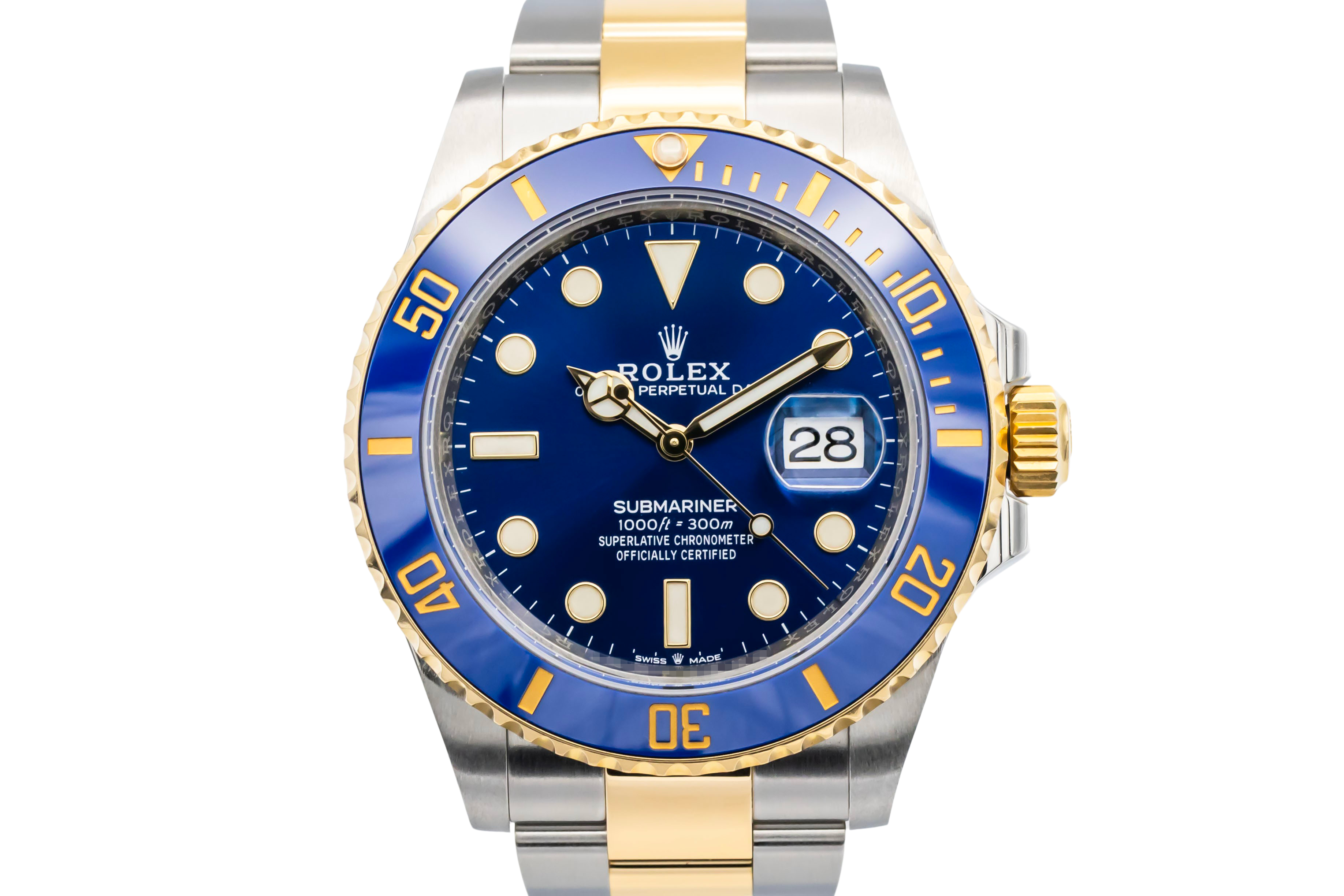 Rolex Submariner 41mm Steel & 18ct Yellow Gold Oyster 126613LB 2021
£12,995.00
Available
Rolex Submariner 41mm Steel & 18ct Yellow Gold Oyster 126613LB 2021
£12,995.00
Available
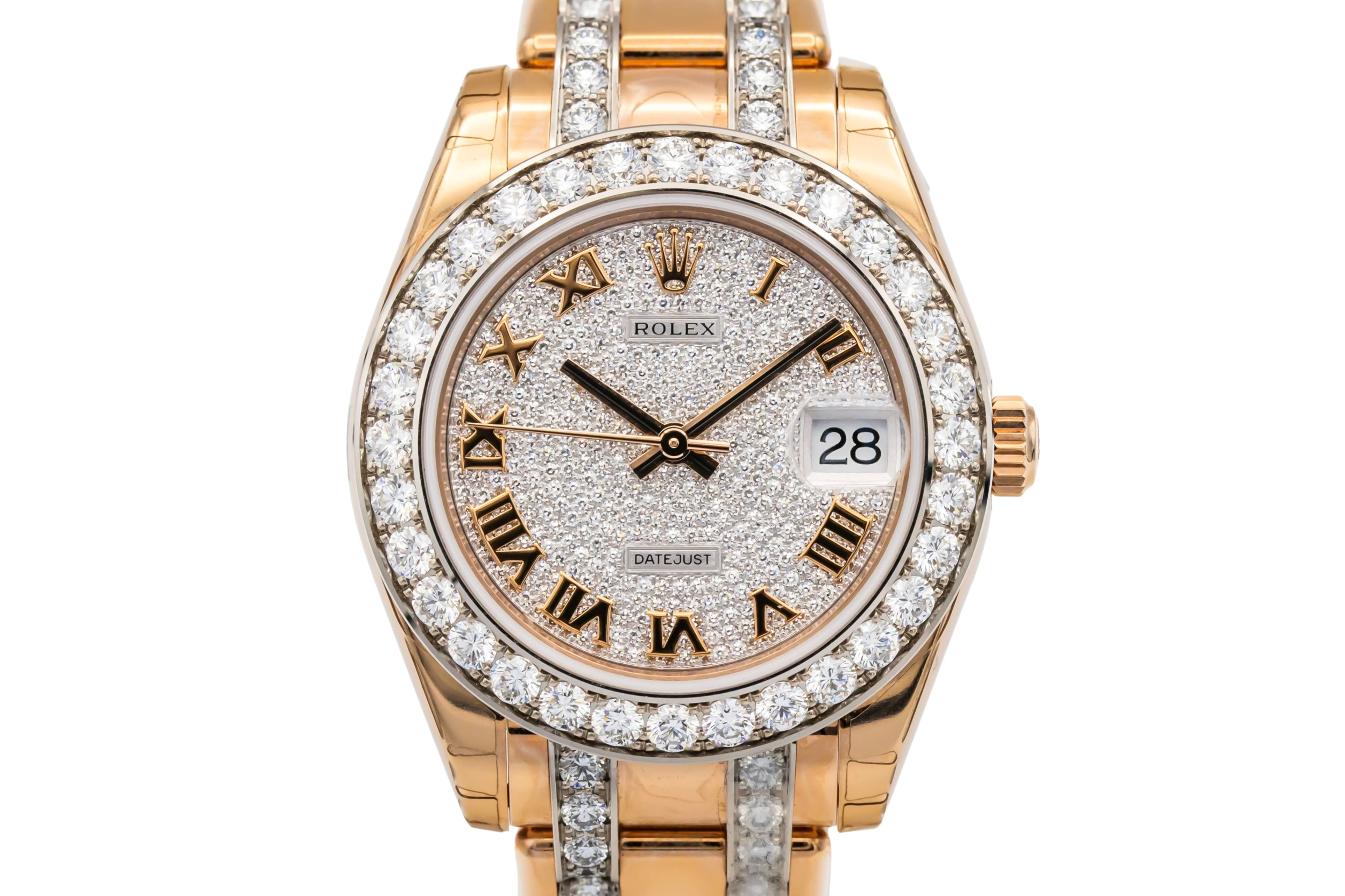 Rolex Pearlmaster 34mm 18ct Rose Gold Pearlmaster 81285 2019 UNWORN
£54,995.00
Available
Rolex Pearlmaster 34mm 18ct Rose Gold Pearlmaster 81285 2019 UNWORN
£54,995.00
Available
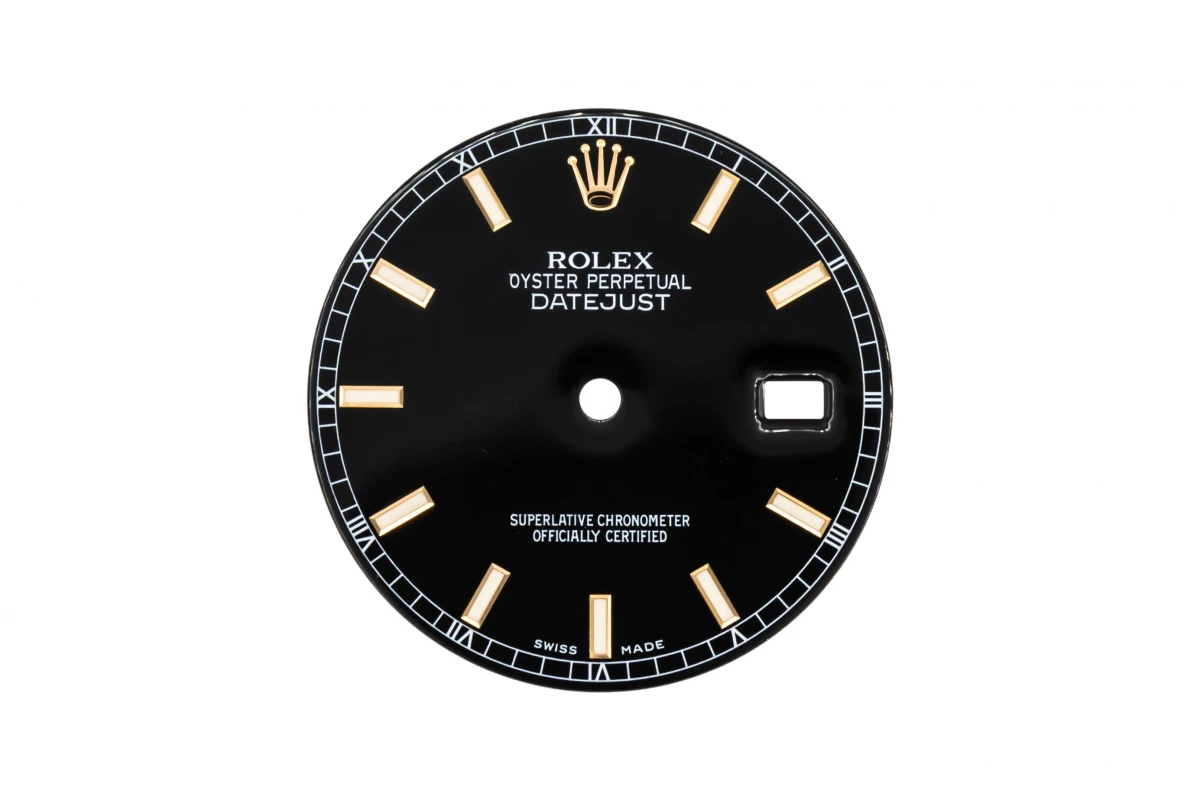 Rolex DateJust 36mm Black Baton Dial
£495.00
Available
Rolex DateJust 36mm Black Baton Dial
£495.00
Available
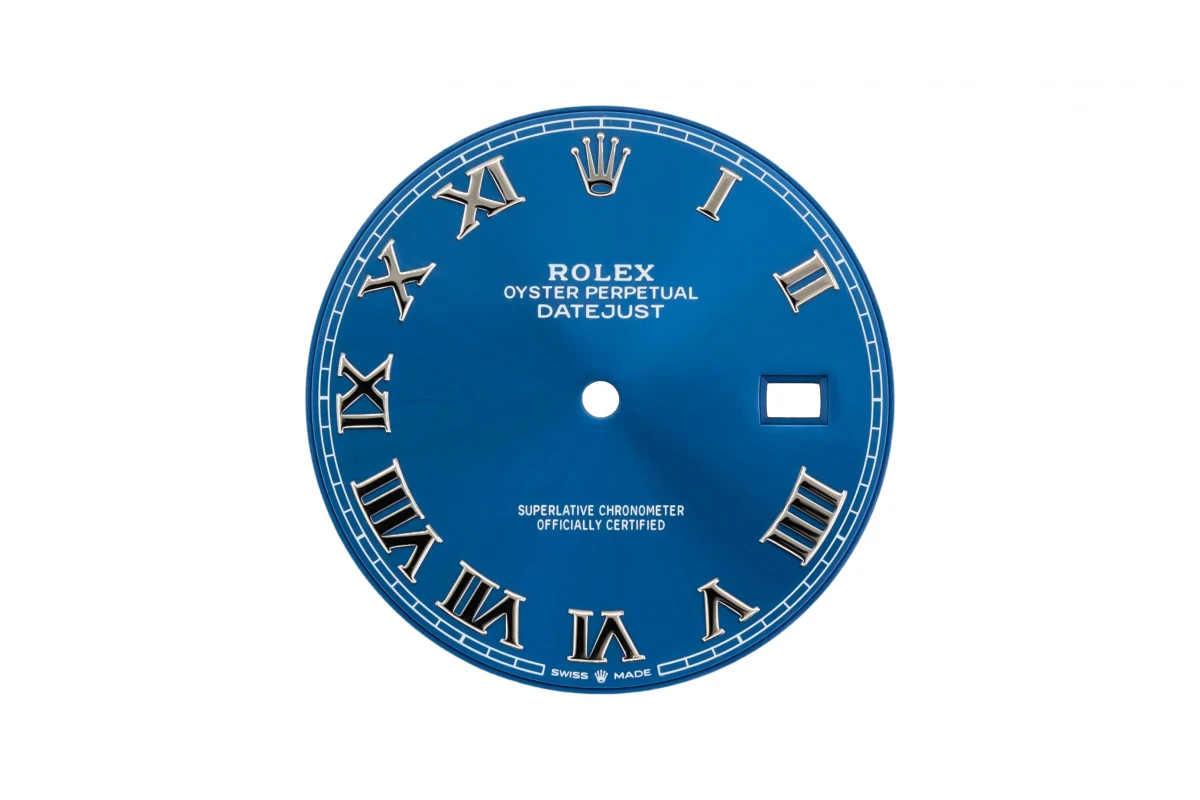 Rolex DateJust 41mm Azzuro Roman Numeral Dial
£795.00
Available
Rolex DateJust 41mm Azzuro Roman Numeral Dial
£795.00
Available
Do These Watches Appreciate in Value?
A GMT-Master II Batman purchased at £11,100 retail in 2024 trades around £13,000-£14,500 in early 2026 because retail moved to £11,800 and inventory remains finite.
This is Supply friction, not investment growth . The watch didn't gain value — the entry point moved upward because of retail price increases.
This distinction is critical for decision-making.
At The Diamond Box, we observe buyers justifying purchases using appreciation logic that doesn't survive examination. Steel sport models maintain value through supply constraints because inventory is finite, not because they function as appreciating assets.
In contrast, the all-gold Submariner "Bluesy" retails for £63,000, but at The Diamond Box we buy the same model around £55,000 because demand favours steel for daily wear. That's a £10,000 loss immediately. Gold rallied 64% in 2025, yet gold Rolex models trade below retail.
The pattern: Steel sport models hold value because supply is constrained. Precious metal versions suffer immediate depreciation because buyers prefer steel for daily wear despite higher material costs.
Key point: Neither watch is an investment because steel models maintain value through supply friction, whilst precious metal models depreciate immediately despite gold price increases.
Which Complications Actually Matter for Your Use?
The GMT-Master II justifies its premium only if you regularly cross time zones.
At The Diamond Box, we ask buyers how often they'll use the GMT complication because most overestimate usage. If you travel internationally for work monthly or more, the GMT function justifies the cost. For occasional travellers (a few trips per year), it's primarily aesthetic.
For water resistance, the GMT-Master II's 100m rating exceeds requirements for swimming and water sports. The difference matters only beyond recreational diving depths, where the Submariner's 300m rating becomes relevant because serious diving requires higher pressure resistance.
Honest assessment: Function should match use case because otherwise you're paying for capability you won't access.
Key point: Buy the GMT-Master II only if you travel across time zones monthly or more; choose the Submariner if you need serious water resistance or prefer simpler functionality.
What Does Market Data Actually Show?
The Rolex Pepsi 126710BLRO has market volatility of 6.2% as of March 2026 because supply constraints stabilise pricing. This is lower than 92% of qualifying watches. It sold in a median of 28 days in February 2026, faster than 93% of watches on the market.
This represents observable market behaviour across 157 recorded sales in one month because WatchCharts tracks actual transaction data, not speculation or hype.
Buyers who rush because they fear missing availability often regret the speed. In contrast, buyers who take time to understand what they're actually buying — not what they think they're buying — report sustained satisfaction years later.
Decision quality correlates directly with process quality. At The Diamond Box, we've observed this pattern across two decades of transactions — working with Rolex, Patek Philippe, Audemars Piguet, and other prestige brands from our North London location.
Key point: Market data shows low volatility and strong liquidity for steel sport models because supply constraints stabilise pricing, but purchase satisfaction depends on process quality, not speed.
How Should You Actually Make This Decision?
Both watches crossed five figures in 2026. Both have accessible wait times compared to 2021-2023. Both hold value better than most luxury purchases.
The decision isn't about which watch is "better" because both serve different functions. Therefore, choose based on which aligns with actual use.
Choose the Submariner if you want maximum water resistance (300m) because it's designed as a diver's tool watch with a design unchanged for decades.
Choose the GMT-Master II if you travel frequently across time zones because you'll use the dual time zone complication in daily life — otherwise, you're paying for aesthetic preference.
What we observe: Buyers who separate function from aspiration make decisions they're comfortable with years later because the watch serves actual needs. In contrast, buyers who rush based on availability or perceived appreciation often return with regret.
Key point: Match the tool to your actual use case because buyers who separate function from aspiration make decisions they're comfortable with years later.
Frequently Asked Questions
Is the Rolex Submariner or GMT-Master II a good investment?
Neither watch functions as an investment because steel sport models maintain value through supply constraints, not appreciation. The GMT-Master II Batman bought at £11,100 retail in 2024 trades around £13,000-£14,500 in 2026 because retail increased to £11,800 — the watch didn't appreciate, the entry point moved. Precious metal versions like the gold Submariner "Bluesy" lose £10,000 immediately because buyers prefer steel for daily wear, despite gold's 64% rally in 2025.
How long is the wait time for a Rolex Submariner in 2026?
Approximately 60 days through authorised dealers as of 2026 because market conditions normalised. This is down from 105+ days in 2023. Some authorised dealers have stock available with minimal wait because demand pressure eased from peak scarcity periods.
How long is the wait time for a Rolex GMT-Master II in 2026?
Approximately 90 days through authorised dealers as of 2026 because supply improved. This is down from 180 days in 2022. Wait times dropped roughly 50% since peak scarcity periods.
What's the price difference between the Submariner and GMT-Master II?
The Submariner no-date steel model starts at £10,050 in 2026. The GMT-Master II starts at £11,800. Therefore, the GMT costs approximately £1,750 more at retail because it includes the additional dual time zone complication.
Which Rolex has better water resistance?
The Submariner offers 300m water resistance versus the GMT-Master II's 100m because it's designed as a professional dive watch. Both handle swimming and water sports comfortably. The difference matters only for serious recreational diving beyond 100m depth because higher pressure requires stronger water resistance.
Do I need a GMT watch if I travel occasionally?
The GMT complication justifies its cost if you travel internationally for work monthly or more because you'll use the function regularly. For occasional travellers (a few trips per year), the GMT function is primarily aesthetic rather than functional because most buyers overestimate how often they'll use the complication.
Why did Rolex prices increase in 2026?
The Submariner increased from £9,500 (2025) to £10,050 (2026) because of Swiss import tariffs, currency fluctuations, and material costs — particularly gold's 64% rally in 2025. The GMT-Master II increased 4.1% for similar reasons. These are external economic factors, not demand-driven increases.
Which Rolex holds value better?
Steel sport models (both Submariner and GMT-Master II) hold value through supply constraints because inventory is finite. The Rolex Pepsi 126710BLRO shows 6.2% market volatility (lower than 92% of watches) and sells in 28 days median (faster than 93% of watches) because demand remains strong. Precious metal versions depreciate immediately — the gold Submariner "Bluesy" loses approximately £10,000 at purchase despite £63,000 retail because buyers prefer steel for daily wear.
Key Takeaways
-
Both the Submariner (£10,050) and GMT-Master II (£11,800) crossed five figures in 2026 due to tariffs, currency shifts, and material costs — not increased desirability
-
Wait times collapsed to 60 days (Submariner) and 90 days (GMT-Master II), down 40-50% from 2022-2023 peaks
-
Steel models maintain value through supply friction, not appreciation — neither watch functions as an investment
-
Precious metal versions depreciate immediately despite gold price increases
-
Choose the Submariner for 300m water resistance and simpler functionality; choose the GMT-Master II only if you cross time zones monthly or more
-
Decision satisfaction correlates with process quality — buyers who match function to actual use report comfort years later, while those who rush based on availability or appreciation logic often return with regret
At The Diamond Box, we buy, sell, part exchange, service, and repair preowned watches on-site in our North London shop. Whether you're looking for a Submariner, GMT-Master II, or exploring Patek Philippe and AP, we ship internationally and handle everything from valuation to after-sales care.