




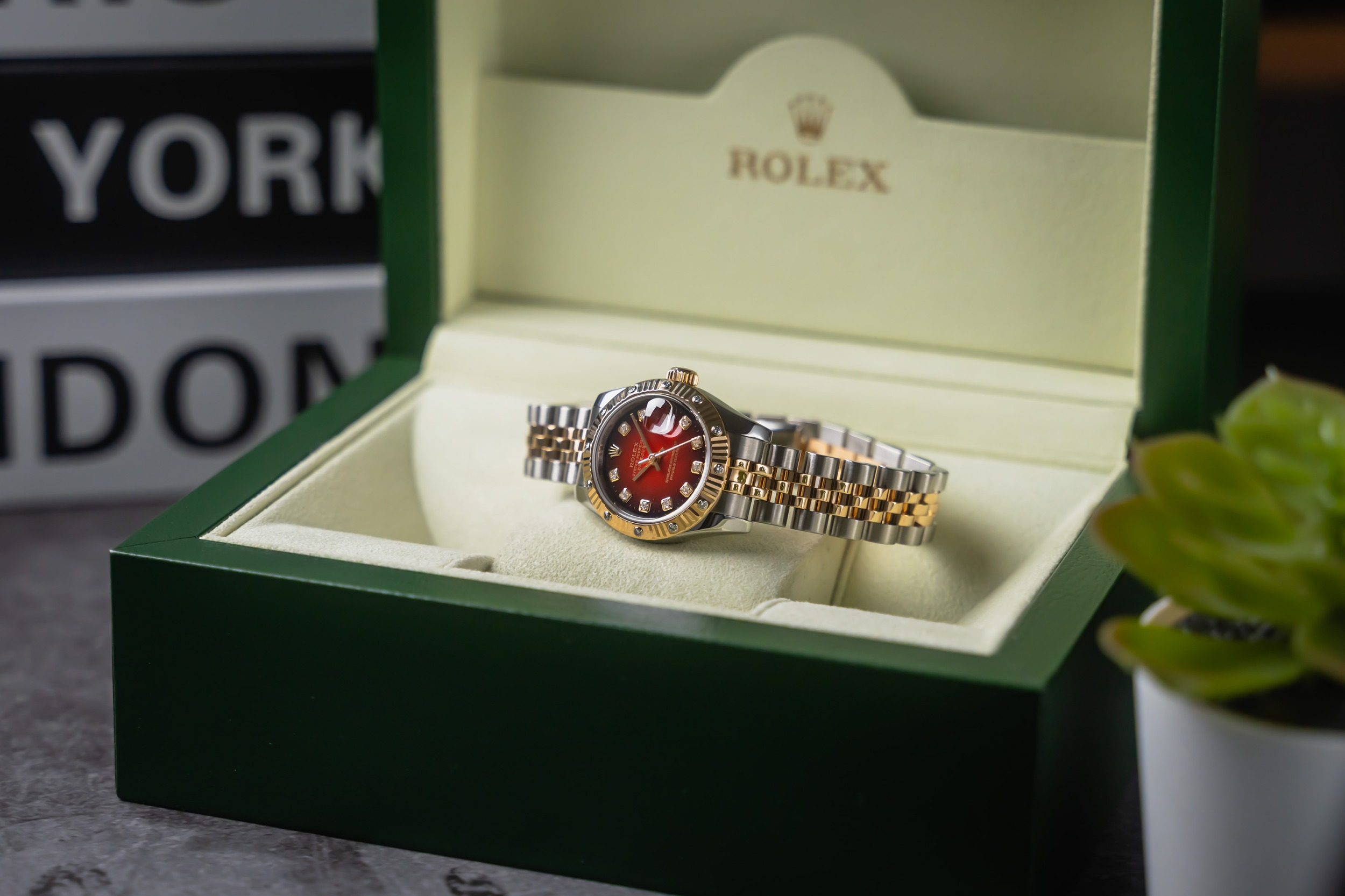
When someone contacts me about buying a preowned Rolex, the first thing I pay attention to has nothing to do with the watch itself.
I look at the seller.
It starts with understanding who you're dealing with and how they behave when you ask questions that matter. The preowned luxury watch market has grown to approximately £24.4 billion globally, with projections to nearly double by 2030. But alongside this growth, estimates suggest that between 30 and 50 million counterfeit watches enter the market each year — whilst Rolex produces only around 1 million genuine pieces annually.
That means there are statistically more fake Rolexes in circulation than authentic ones.
This guide isn't a checklist. It's how I actually think when evaluating a preowned Rolex for sale the layered approach that only develops after years of seeing how decisions play out over time.
Buying a Preowned Rolex: Authentication Begins Before You See the Watch
The seller's behaviour tells you more than any certificate can, because after years of handling thousands of Rolex watches, I've learnt that authenticating a Rolex begins long before you examine serial numbers or inspect movements.
I've watched countless transactions unfold, and the pattern is consistent: when something feels off in the conversation, something usually is off with the watch. It's not about suspicion, it's about recognising what transparency actually looks like.
Pay attention to how sellers respond to detailed questions.
A credible seller welcomes your questions about service history, replacement parts, and provenance. They'll provide close-up photographs of the case back, serial numbers, and movement without hesitation. They understand that buying a preowned Rolex requires this level of scrutiny.
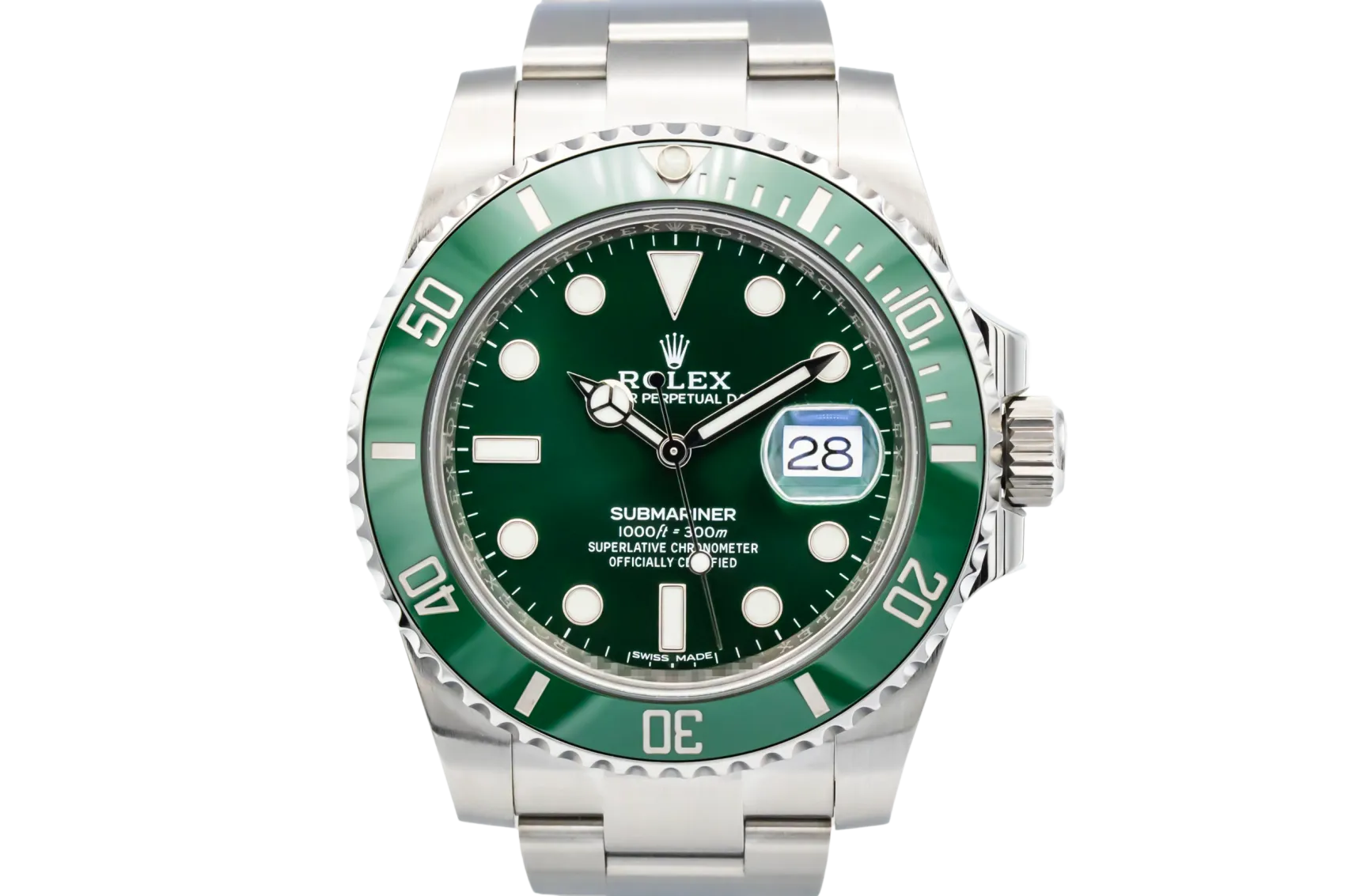
When I asked a seller once for additional photographs of a Submariner's case back and movement details, the response shifted from helpful to defensive within two messages.
"You seem very sceptical. Why don't you trust my word?"
That phrase "trust me" appears consistently when documentation is thin. It's a deflection, not reassurance. A seller with nothing to hide doesn't need you to trust their word alone. They show you the evidence.
Watch for these language patterns:
- "It's a Rolex, it doesn't need verification"
- "I've been selling watches for years" (without providing specifics)
- "I can ship it right away, no need to wait"
- "It's in perfect condition, no need to check further"
These phrases signal a seller who wants to close the transaction before you can examine the details properly.
Choosing a reputable Rolex dealer in London matters more than finding the lowest price. A trusted dealer's reputation is built on transparency, not speed.
The Three Layers of Verification When Buying Preowned Rolex Watches
When I finally get to examine the watch itself, I check things now that I completely overlooked when I first started.
Early in my career, I focused on aesthetics — the dial, the bezel, the overall condition. But the internal components, especially the movement and case back, are what truly determine authenticity and value.
Layer One: The Movement
The Rolex movement is the heart of any watch. Counterfeits often use low-quality movements that don't match Rolex's specifications, and sometimes even genuine Rolex cases contain replacement movements that significantly affect value.
I check the movement serial number and confirm it matches the case number and model specifications. This isn't something most buyers think to verify, but it's essential.
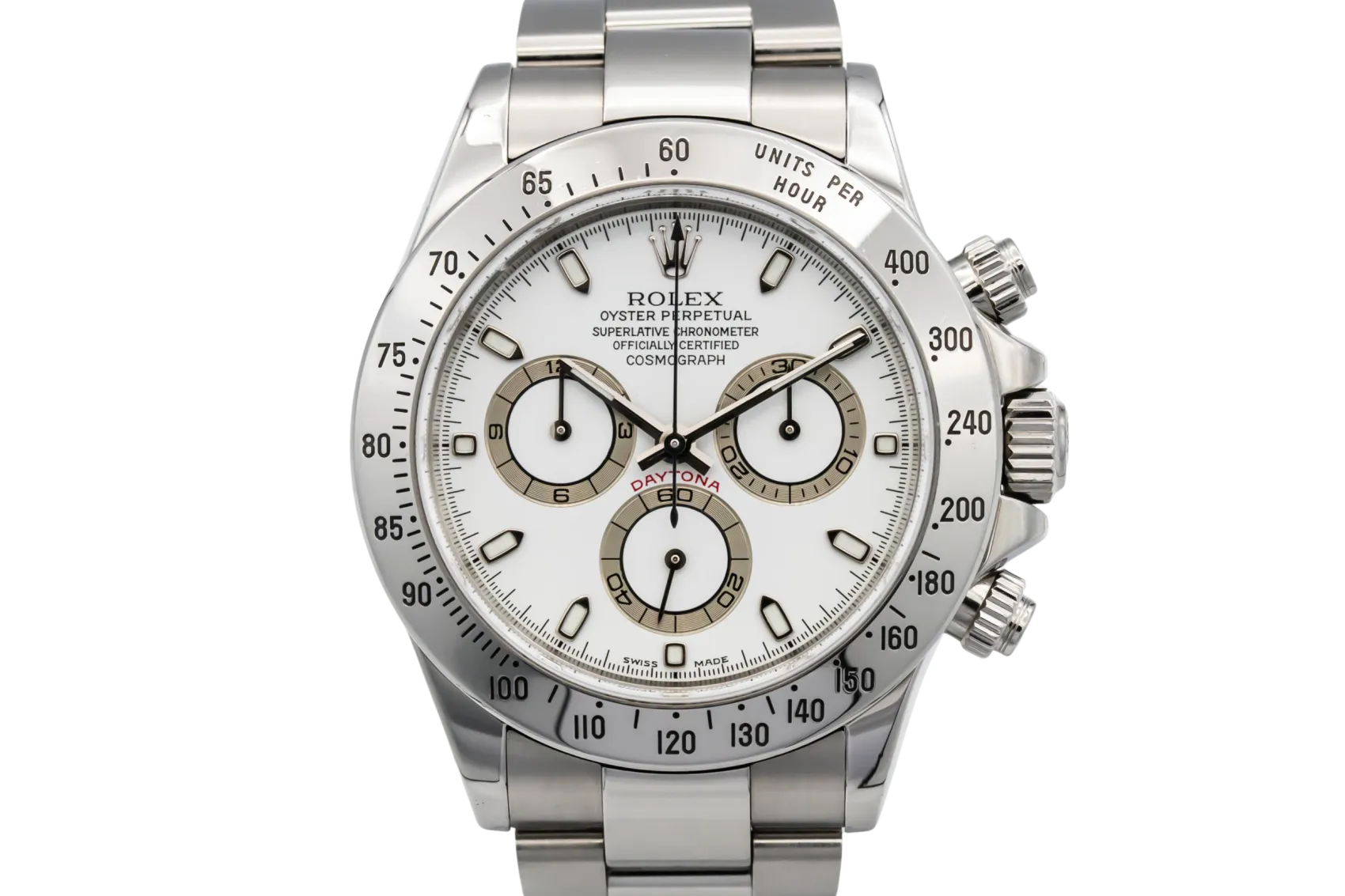
A few years ago, I inspected a Daytona that looked perfect externally — original documentation, no visible wear. When I asked the watchmaker to check the movement serial number, we discovered it didn't match the case number. The movement had been replaced at some point, which drastically impacted the watch's value.
What to look for:
- Movement serial number matching the case serial number
- Correct movement type for the model and year (e.g., Calibre 3135 for certain Submariners)
- Rolex-specific engravings and finishing on the movement
- Smooth, continuous sweep of the second hand (not jerky or stuttering)
Resources can help you understand what genuine movements look like.
Layer Two: The Feel and Sound
When you hold a genuine Rolex, you're listening for a smooth, almost silent sweep of the second hand. There's no "tick-tick-tick" sound. Instead, you hear a soft, consistent hum.
The weight matters too. A genuine Submariner typically weighs around 140-150 grams. I once examined a Submariner Date that felt noticeably lighter, about 20 grams off. When I opened the case back, I found an aftermarket ETA movement instead of the expected Rolex Calibre 3135.
The winding mechanism should feel smooth and precise, with clear, distinct clicks when you pull the crown to different positions. Any roughness, wobbling, or inconsistent resistance signals potential issues.
The hacking mechanism, where the second hand stops immediately when you pull out the crown, should work without delay or stuttering. If it doesn't, the movement likely isn't functioning properly.
Layer Three: The Case Back and Gaskets
The case back reveals whether the watch has been tampered with or over-polished. Rolex uses specific engraving methods that are difficult to replicate accurately. Excessive polishing can damage or obscure these engravings, lowering the watch's value.
I also check the water resistance gaskets around the crown and case back. If these have been replaced with non-genuine parts, it indicates improper servicing, which affects both authenticity and long-term durability.
In Rolex's view, replacing any part with non-approved components technically makes the watch a counterfeit. These "Franken" watches, where genuine parts mix with replica or aftermarket components, are more common than most buyers realise, something years of industry analysis has documented extensively.
What Dealer Behaviour Reveals About Preowned Rolex for Sale
The conversation matters as much as the watch itself.
When I discover something like a mismatched movement, how I approach the seller reveals whether it was an honest mistake or something deliberate.
I start with a neutral, professional tone: "I noticed the movement doesn't seem to match the case's serial number. This can happen if the watch has been serviced. Can you provide details about the movement's history?"
An honest seller responds with transparency.
They might say: "I had this serviced at an authorised centre, and the movement was replaced because the original was damaged. Here's the service record."
They provide documentation. They're willing to cooperate. They understand your concern is legitimate.
A problematic seller becomes defensive.
"I don't see what the big deal is, it's still a genuine Rolex."
"You're the first person to mention this."
"I don't know why you need so much proof."
Defensiveness or refusal to provide documentation signals they're either hiding something or don't fully understand what they're selling. Either way, it's time to walk away.
Given the high Rolex demand, especially for men's preowned Rolex models, sellers know they can find another buyer. But a seller who values their reputation will prioritise your confidence over a quick sale.
Mens Preowned Rolex: Investment Thinking Across Decades, Not Just Years
From August 2018 to January 2023, official industry statistics show that average prices for top Rolex, Patek Philippe, and Audemars Piguet models rose at an annual rate of 20%, compared with 8% for the S&P 500.
Current data shows that 56% of Rolex models sell above their retail prices in the preowned Rolex UK market.
But this investment potential hinges entirely on authenticity. A counterfeit has zero long-term value, and a watch with replaced movements or improper servicing loses significant appreciation potential.
Understanding the Rolex investment guide helps you think beyond the immediate purchase. You're not just buying a watch, you're acquiring an asset that should hold or increase in value over time.
What protects long-term value:
- Complete, verifiable service history
- Original movement matching the case
- Genuine Rolex parts throughout
- Proper maintenance with authorised service centres
- Original box and papers when possible
The relationship between authentication, servicing history, and long-term ownership costs is direct. A watch serviced improperly now will cost you more later, both in repairs and in lost value.
Why Rushing Creates the Conditions That Make Authentication Harder
The hardest part about walking away from a deal is managing the buyer's disappointment when they've already imagined owning the watch.
I've seen buyers invest enormous emotion into the idea of owning a Rolex. It represents a milestone, a reward, a long-held aspiration. When I have to say no to a watch because something doesn't check out, I'm not just declining a transaction, I'm asking them to let go of that vision.
But rushing the process creates exactly the conditions that make authentication harder.
When you feel pressure to decide quickly, you skip steps. You overlook details. You trust documentation without verifying it. You accept vague answers because you want the transaction to work out.
Slowing down protects you.
Take time to handle different models. Visit authorised dealers and feel the weight, the winding mechanism, the movement of genuine pieces. Build a mental benchmark for what authentic quality feels like.
Ask detailed questions about service history. Request additional photographs. Verify serial numbers independently. If the seller becomes impatient or defensive, that tells you everything you need to know.
Exploring options for Rolex watches in UK through reputable channels gives you the time and space to make an informed decision without pressure.
Finding Preowned Rolex UK Dealers: What Reputable Actually Means When Your Money and Trust Are at Stake
After twenty years, I've come to realise that integrity and trust shape not just individual transactions but the entire preowned market.
The first time I walked away from a sale because something felt off, I was nervous about losing a customer. But when that customer returned a year later, having appreciated my honesty, I understood that protecting trust in the long run matters more than any single sale.
Reputation is built on what you don't do as much as what you do.
The sale you don't push can be more valuable than the one you force through. The watch you advise someone to reconsider builds more trust than the one you sell despite reservations.
In the broader preowned market, there's still a significant trust gap. Many sellers are eager to close deals quickly, often omitting crucial details. But transparent sellers who offer detailed documentation and clear communication set themselves apart.
The market rewards trust and transparency. As more buyers demand this level of honesty, the entire landscape shifts towards higher standards.
What "reputable dealer" actually means:
- Willingness to answer detailed questions without defensiveness
- Provision of complete service history and documentation
- Clear return policy and authenticity guarantee
- Professional authentication process you can verify
- Long-term aftercare and servicing support
- Established reputation with verifiable customer feedback
The rise of counterfeit watches in the preowned market has made protecting trust even more important. Ethical sellers who provide verifiable documentation, guarantee authenticity, and educate buyers on what to look for are the ones who will thrive.
The Role of Aftercare in Protecting Value Over Time
Buying the watch is only the beginning of the relationship.
Aftercare protects value more than the original sale. A Rolex retains value because it's cared for properly, not because it was sold quickly.
I always check the condition of water resistance gaskets, especially around the crown and case back. If the watch has been serviced or is a few years old, the gaskets can wear down, affecting water resistance. Non-genuine replacement gaskets indicate improper servicing.
Rolex uses high-quality, durable gaskets. When I inspect them, I check for signs of aging, cracking, or replacement. A watch that hasn't been properly serviced may not have the correct gaskets or could be less water-resistant — something that affects overall value.
Long-term ownership requires:
- Regular servicing every 5-10 years with authorised centres
- Proper storage when not wearing the watch
- Immediate attention to any performance issues
- Documentation of all service work
- Relationship with a trusted watchmaker or dealer
The dealers who provide strong aftercare — offering warranties, clear return policies, and post-sale support — indicate they're focused on building long-term trust, not just closing transactions.
What You Should Understand Before Buying a Preowned Rolex
When someone contacts me about buying their first preowned Rolex, the one thing I hope they understand is this: the value lies in authenticity, not just acquisition.
Before you choose between a Submariner or a Datejust, before you compare prices, understand that you're buying craftsmanship that stands the test of time, not just a brand name.
A well-maintained preowned Rolex with genuine parts and proper servicing is just as durable and reliable as a new one. You're not compromising, you're often getting a watch that's been thoroughly vetted and tested over time.
Take your time. Handle multiple models. Pay attention to weight, movement, and winding resistance. If something feels off, even with perfect paperwork, trust that instinct.