




TL;DR: Rolex bracelet stretch isn't the metal elongating. It's wear inside the bracelet links and pins that creates visible looseness over time. This issue is especially common on older Jubilee and President bracelets made before Rolex improved their solid-link construction. Bracelet condition matters for resale value, collector desirability, wearing comfort, and maintaining originality.
Core answer:
Bracelet looseness comes from worn pins and holes, not stretched metal
Main causes: loose fit on wrist, dirt between links, soft materials like gold
Prevention: wear snug, clean regularly, check during servicing
Solutions range from removing a link (simplest) to full bracelet replacement (£1,000 to £3,000+)
We've handled thousands of Rolex watches over the years, and one question comes up more than almost any other.
"Why does my bracelet feel loose?"
The word people use is "stretch." The bracelet looks fine from a distance, but when you hold it, there's movement. A sag. A sense that something's changed since the watch was new. Understanding rolex bracelet stretch and what causes it helps you protect your investment.
Rolex bracelet stretch isn't the metal physically stretching or elongating. It's wear inside the bracelet that creates visible looseness over time. The extent and speed of this wear varies depending on the Rolex bracelet types and how they're used.
Stretch occurs because:
Bracelet pins wear down from constant friction as the watch moves on your wrist
Link holes widen over time as the metal inside the drilled holes gradually erodes
Friction gradually increases tolerances between moving components, creating small gaps that accumulate across dozens of links
Older hollow-link bracelets tend to show visible sag earlier than modern solid-link bracelets. Five-link Jubilee bracelets generally reveal stretch more visibly because they have more articulation points. Each additional pivot point is another place where wear develops, and the cumulative effect becomes noticeable sooner than on three-link Oyster bracelets.
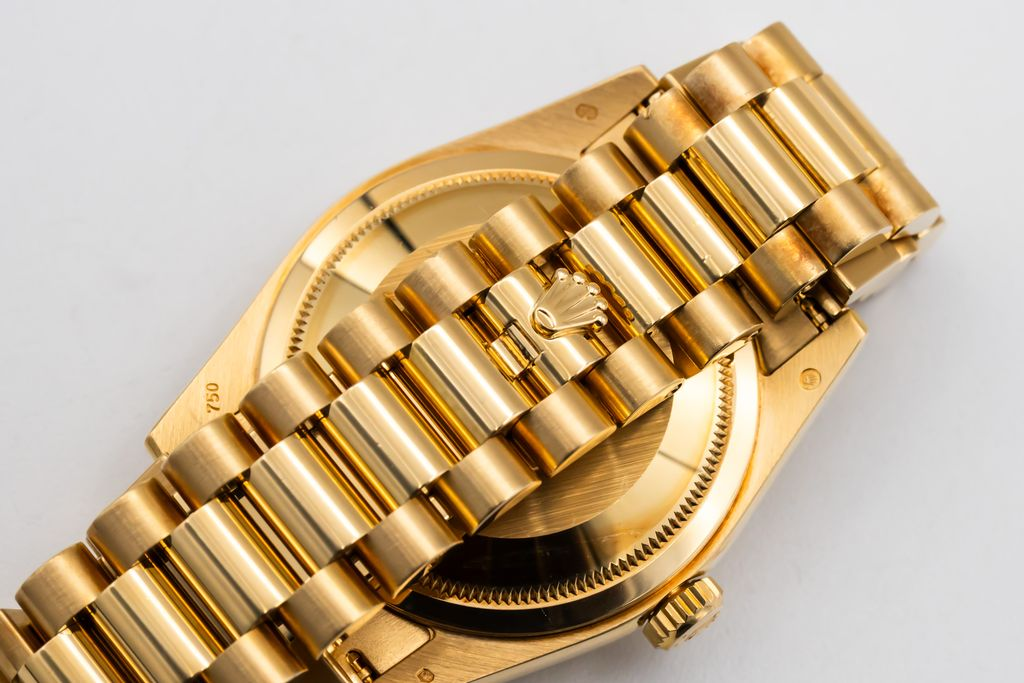
Rolex began transitioning many sports models towards solid end links (SEL) around the late 1990s. Modern Oyster bracelets with solid links are significantly more resistant to stretch than vintage folded-link bracelets from the 1970s through the 1990s. President bracelets in 18k gold wear faster than stainless steel because gold is softer.
Older hollow-link bracelets tend to show visible sag earlier than modern solid-link bracelets. Vintage folded-link bracelets from the 1970s through the 1990s came with some play from the factory and wear faster than contemporary designs.
Five-link Jubilee bracelets generally reveal stretch more visibly because they have more articulation points. Each additional pivot point is another place where wear can develop, and the cumulative effect becomes noticeable sooner than on three-link Oyster bracelets.
President bracelets in 18k gold wear faster than stainless steel because gold is softer. The material itself is more vulnerable to internal erosion, and over time, gold centre links can become worn paper-thin even when they look fine from the outside.
Rolex began transitioning many sports models towards solid end links (SEL) around the late 1990s. This was a significant structural improvement. Modern Oyster bracelets with solid links are significantly more resistant to stretch than vintage folded-link bracelets from earlier decades.
The centre link pins tend to show wear first. They carry the most movement, and when they develop play, the entire bracelet feels noticeably looser.
Bracelet condition affects more than appearance:
Resale value: When we assess a watch, bracelet condition is one of the first things we examine. A heavily stretched bracelet signals years of wear, and buyers notice. It affects the price.
Collector desirability: Collectors prefer original bracelets in good condition. Heavy stretch or non-genuine replacement parts reduce appeal in the secondary market.
Wearing comfort: A loose bracelet moves excessively on your wrist, creating an uncomfortable wearing experience and putting additional stress on the pins.
Originality: Maintaining the original bracelet in good condition preserves the watch's authenticity. Once replaced or restored with aftermarket parts, originality is compromised.
If the wear progresses far enough, pins break. When that happens, the watch falls, and the damage to the case or movement inside will cost far more to repair than addressing the bracelet issue early.
What matters: Bracelet looseness is gradual mechanical wear on pins and holes, not material stretch. Older Jubilee and President bracelets are especially vulnerable. Condition directly impacts value, desirability, comfort, and originality.
Some bracelets last decades with minimal looseness. Others show significant wear within a few years. Understanding what causes rolex bracelet stretch helps you extend the life of your bracelet.
The difference isn't luck. It's how the watch is worn and maintained.
Understanding these differences becomes important when you bring your watch in for Rolex service, as technicians assess bracelet wear differently depending on the design and materials.
This is the single biggest factor we see.
If your bracelet moves around freely on your wrist, the watch case is constantly pulling on the links. That weight creates strain every time your arm moves, and the pins take the force.
A snug fit keeps the watch centred. The bracelet moves as one unit with your wrist, rather than sliding and tugging independently. That reduces the internal stress on the pins and adds years to the bracelet's working life.
This one surprises people.
Dirt trapped between bracelet links doesn't sit there quietly. It acts as an abrasive, functioning like sandpaper between the metal components. Every movement grinds those particles against the pins and link holes, accelerating wear far beyond what would happen with clean metal-on-metal contact.
Regular cleaning isn't about appearance. It's about preventing structural damage that builds up invisibly over time.
Not all Rolex bracelets wear at the same rate.
18k gold is softer than stainless steel. Gold centre links, particularly on two-tone models, are more vulnerable to internal wear. The links look fine from the outside, but once disassembled, some are worn paper-thin internally. You don't see it until someone opens the bracelet and examines each component under magnification.
Vintage bracelets with hollow or folded links also wear faster than modern solid-link designs. Older models came with some play from the factory. Modern bracelets have zero movement when new, and they're engineered not to develop anywhere near the same degree of looseness over the same timeframe.
Rolex has also introduced ceramic inlays in recent years, placed where pins meet links to reduce friction. It's a significant improvement, though it only applies to newer references.
What matters: Loose fit, dirt accumulation, and softer materials (gold, vintage hollow links) speed up bracelet wear. Modern solid-link designs with ceramic inlays last longer.
When collectors compare bracelets, the question of durability comes up often. Oyster bracelets are generally more robust because of their design.
The Oyster bracelet was introduced in the late 1930s and designed initially for tool and sports watches. It features:
Larger links that distribute stress more evenly across the bracelet
Simpler construction with fewer components that can wear
Fewer moving parts, which means fewer articulation points where play develops
Jubilee bracelets prioritise comfort and flexibility over structural rigidity. Introduced in 1945 for the Datejust, the five-link design wraps more naturally around the wrist and feels lighter. The trade-off is that each additional link creates another pivot point where wear occurs. Over time, those small increments of movement accumulate, and the bracelet shows looseness earlier than an Oyster would under similar conditions.
President bracelets often enter this comparison because collectors weigh all three. Introduced in 1956 for the Day-Date, the President bracelet is exclusive to precious metal models. The semi-circular three-piece link design looks elegant, but 18k gold wears faster than stainless steel. The material itself is softer, and the internal components erode more quickly under the same use patterns.
We've seen Oyster bracelets last decades with minimal visible wear when maintained properly. Jubilee bracelets from the same era often show noticeable looseness within a shorter timeframe. President bracelets, especially on watches worn daily, develop play faster still.
It's not a flaw in any of these designs. Each bracelet was built for a different purpose. The Oyster for durability in demanding conditions. The Jubilee for comfort and refinement. The President for luxury and presence. Understanding the trade-offs helps you set realistic expectations for how each bracelet ages.
What matters: Oyster bracelets wear more slowly due to larger links, simpler construction, and fewer moving parts. Jubilee bracelets prioritise comfort over rigidity and show stretch sooner. President bracelets in gold wear fastest because the material is softer.
| Bracelet Type | Link Structure | Stretch Resistance | Common Models |
| Jubilee | Five-piece links | Medium- Low | Datejust, GMT- Master II |
| Oyster | Three- piece links | High | Submariner, Explorer |
| President | Semi- circular links | Medium | Day- Date |
Professional restoration is often possible, depending on the severity of the wear. The question isn't whether a bracelet can be fixed, but which approach makes sense for your situation.
Collectors usually prefer Rolex bracelet restoration over replacement because originality affects value. A watch with its original bracelet, even one showing some wear, often commands more respect in the secondary market than one with a factory replacement that erases the watch's history.
There are three main approaches to addressing bracelet looseness, each suited to different levels of wear:
Cosmetic tightening: Removing a link or adjusting the clasp creates a snugger fit. This stops further wear but doesn't reverse existing looseness. It's the simplest option when play is minor.
Structural rebuilding: Restoration often involves replacing worn pins and tubes. On precious metal bracelets, laser welding may be used to repair or reinforce damaged areas. This restores some of the original tightness and extends the bracelet's working life significantly.
Full bracelet replacement: Severe stretch may require replacement of heavily worn links or the entire bracelet. When pins have failed or link holes have expanded beyond what new pins can address, replacement becomes the only viable option.
The work is often excellent when done by skilled specialists, but there's a trade-off. Once a bracelet has been restored with aftermarket components, it's no longer classified as entirely original. Some collectors accept this. Others prefer visible wear to non-genuine parts.
We've guided people through both paths. What matters is understanding how each choice affects the watch's value and authenticity before you commit to one approach or the other.
What matters: Professional restoration is often possible depending on wear severity. Collectors prefer originality, so restoration is usually chosen over replacement. Options include cosmetic tightening, structural rebuilding with new pins and tubes, or full replacement for severe cases.
When considering how to fix rolex bracelet stretch properly, professional repair isn't a job for DIY attempts. The work requires specialised tools, technical knowledge, and experience that comes from handling hundreds of bracelets over years.
We've seen enough well-intentioned home repairs go wrong to know where the problems start. Working with Rolex watches in the UK for over two decades, we've observed that improper repair can damage link geometry, reduce collector value, and weaken bracelet integrity in ways that aren't visible until the damage is done.
Experienced watchmakers use precision equipment to rebuild bracelets while maintaining original proportions. The process isn't rushed, and each step follows a careful sequence.
When you bring a bracelet in for proper assessment and repair, the work typically follows this sequence:
Ultrasonic cleaning: The bracelet is cleaned ultrasonically before assessment. Dirt and residue are removed so the technician sees the actual condition of the metal, not layers of grime masking the wear.
Pin and tube replacement: Worn pins and tubes are replaced with precision-matched components. The tolerances matter here. Pins that are slightly too small leave play. Pins that are too large distort the link holes and create new problems.
Laser welding: On precious metal bracelets, laser welding repairs or reinforces damaged areas without affecting surrounding components. This technique preserves the original material while restoring structural integrity.
Link rebuilding: Severely worn links are rebuilt or replaced. The geometry needs to match exactly, or the bracelet won't articulate properly.
Clasp assessment: The clasp is inspected separately. Worn springs, damaged catches, or loose hinges are addressed. A tight bracelet with a failing clasp doesn't solve anything.
Rolex doesn't "tighten" bracelets at service centres. Their standard approach is replacement if wear is excessive. For some people, this makes sense. For others, especially those with vintage pieces, it erases part of the watch's history.
Independent specialists sometimes preserve original vintage bracelets better than replacement-focused servicing. They're working with the goal of maintaining originality rather than returning the watch to factory-new condition. The trade-off is that restored bracelets aren't classified as entirely original once non-genuine parts are introduced.
Both approaches have merit. What matters is knowing which path aligns with your priorities before the work begins.
What matters: DIY bracelet repair risks damaging link geometry, value, and structural integrity. Professional restoration involves ultrasonic cleaning, pin/tube replacement, laser welding, link rebuilding, and clasp assessment. Rolex recommends replacement over tightening. Independent specialists sometimes preserve vintage originality better.
When looking at rolex bracelet stretch repair cost, prices vary widely depending on what needs doing. There's no single price that fits every situation, and anyone quoting you a figure without examining the bracelet first is guessing.
The cost depends on several factors:
Metal type: Stainless steel repairs are generally less expensive than gold or platinum work. The materials cost more, and working with precious metals requires different techniques.
Bracelet complexity: A three-link Oyster bracelet is simpler to restore than a five-link Jubilee or semi-circular President bracelet. More links mean more labour, more components, and higher costs.
Availability of parts: Sourcing genuine Rolex replacement pins, tubes, or links takes time. Some parts are readily available. Others require longer lead times or aren't available at all without buying from the secondary market.
Vintage rarity: Vintage folded-link bracelet repairs often require highly specialised labour. The techniques are different, and fewer watchmakers have experience working with these older designs. That specialisation comes at a premium.
| Repair Type | Estimated UK Cost |
| Deep cleaning | £80–£150 |
| Pin/ tube replacement | £250–£700 |
| Vintage restoration | £700–£2,500+ |
| Full replacment bracelet | £1,500–£6,000+ |
Steel Oyster repairs are generally less expensive than gold President bracelet restoration. For a straightforward pin replacement on a stainless steel Oyster bracelet, you're looking at a few hundred pounds. For more extensive work involving multiple links or structural rebuilding, costs rise accordingly.
Gold President bracelet restoration costs more because the material is softer, wears faster, and requires laser welding or other precious metal techniques. Depending on the extent of wear, restoration can range from £500 to over £1,500.
Modern Rolex replacement bracelets can cost several thousand pounds. A factory stainless steel Oyster bracelet exceeds £1,000. Two-tone models with gold centre links run over £3,000. Full gold bracelets cost significantly more again. These aren't aftermarket prices. These are the figures you'll encounter when sourcing directly through authorised dealers. For significant expenses like these, some people explore Rolex finance options to spread the cost.
Vintage bracelets present their own challenges. Finding correct-era replacement links or pins means searching the secondary market, and prices depend entirely on what's available at the time. Rarity drives cost, and some vintage bracelet components are harder to source than the watches themselves.
Beyond the bracelet work itself, there are other factors that affect total cost. If you're sending the watch away for repair, shipping and insurance add to the expense. Some specialists charge assessment fees separately from the repair itself. Others include the assessment in their quoted price.
Turnaround time matters as well. Rushed work costs more, and in some cases, waiting for the right parts takes weeks or months. Planning ahead reduces pressure and often results in better pricing.
What matters: Repair costs depend on metal type, bracelet complexity, parts availability, and vintage rarity. Steel Oyster repairs cost less than gold President restoration. Modern Rolex replacement bracelets run from £1,000 for steel to £3,000+ for two-tone models. Vintage folded-link repairs require specialised labour at premium rates.
You can't eliminate bracelet wear entirely, but learning how to prevent rolex bracelet stretch through proper maintenance habits protects the internal components significantly.
The bracelet should sit comfortably on your wrist without sliding around. Wearing a bracelet too loose increases unnecessary movement and wear. If the watch moves more than an inch in either direction, it's too loose.
Tightening the fit by a single link makes a noticeable difference to how long the bracelet lasts. The watch stays centred on your wrist, and the bracelet moves as one unit rather than sliding independently and pulling on the pins with every movement.
Regular rinsing with lukewarm water helps reduce abrasive buildup between the links. Soft toothbrush cleaning is commonly recommended for Oystersteel bracelets. The bristles reach between the links and dislodge dirt particles that would otherwise grind against the pins.
If you wear the watch daily, cleaning it every few weeks protects the internal components far more effectively than most people realise. It's not about making the bracelet look polished. It's about removing the particles that accelerate invisible wear.
While Rolex watches are water-resistant, moisture trapped between bracelet links creates conditions where dirt becomes more abrasive. After swimming or washing your hands, dry the bracelet with a soft cloth. This simple step prevents residue from hardening between the links.
Sweat and moisture also carry salts and minerals that corrode metal over time. Rinsing after exposure to seawater or perspiration keeps these corrosive elements from building up where you don't see them.
When you're not wearing the watch, store it flat or in a watch box where the bracelet isn't under tension. Hanging a watch vertically for extended periods puts unnecessary strain on the pins nearest the clasp.
Proper storage also keeps the watch away from environments where dust and grime settle onto the bracelet. A closed case or drawer protects against airborne particles that work their way into the links over time.
When your watch goes in for a service, ask the technician to inspect the bracelet. They identify early signs of wear that aren't yet visible and advise whether any pins need replacing before the problem becomes more serious.
Catching wear early means addressing it with simple pin replacement rather than waiting until link holes have expanded and more invasive work is required. Early intervention saves money and preserves more of the bracelet's original components.
Polishing removes metal from the bracelet's surface. Each time a bracelet is polished, the links lose material, and over time, this affects their structural integrity. Edges become rounded, and the bracelet's original shape deteriorates.
Some collectors prefer the patina and minor scratches that develop naturally. These marks tell the watch's story without compromising its function. Polishing should be reserved for significant damage, not routine maintenance.
What matters: Wear your watch snug (not sliding more than an inch), rinse with lukewarm water and use a soft toothbrush every few weeks, dry after moisture exposure, store flat when not wearing, have technicians inspect during servicing, and avoid unnecessary polishing that removes metal.
Identifying bracelet wear early makes the difference between simple maintenance and expensive repairs. Some looseness is normal on older bracelets, especially vintage pieces from the 1970s through the 1990s. They often came with some play from the factory. Excessive sag, though, indicates internal wear that needs addressing.
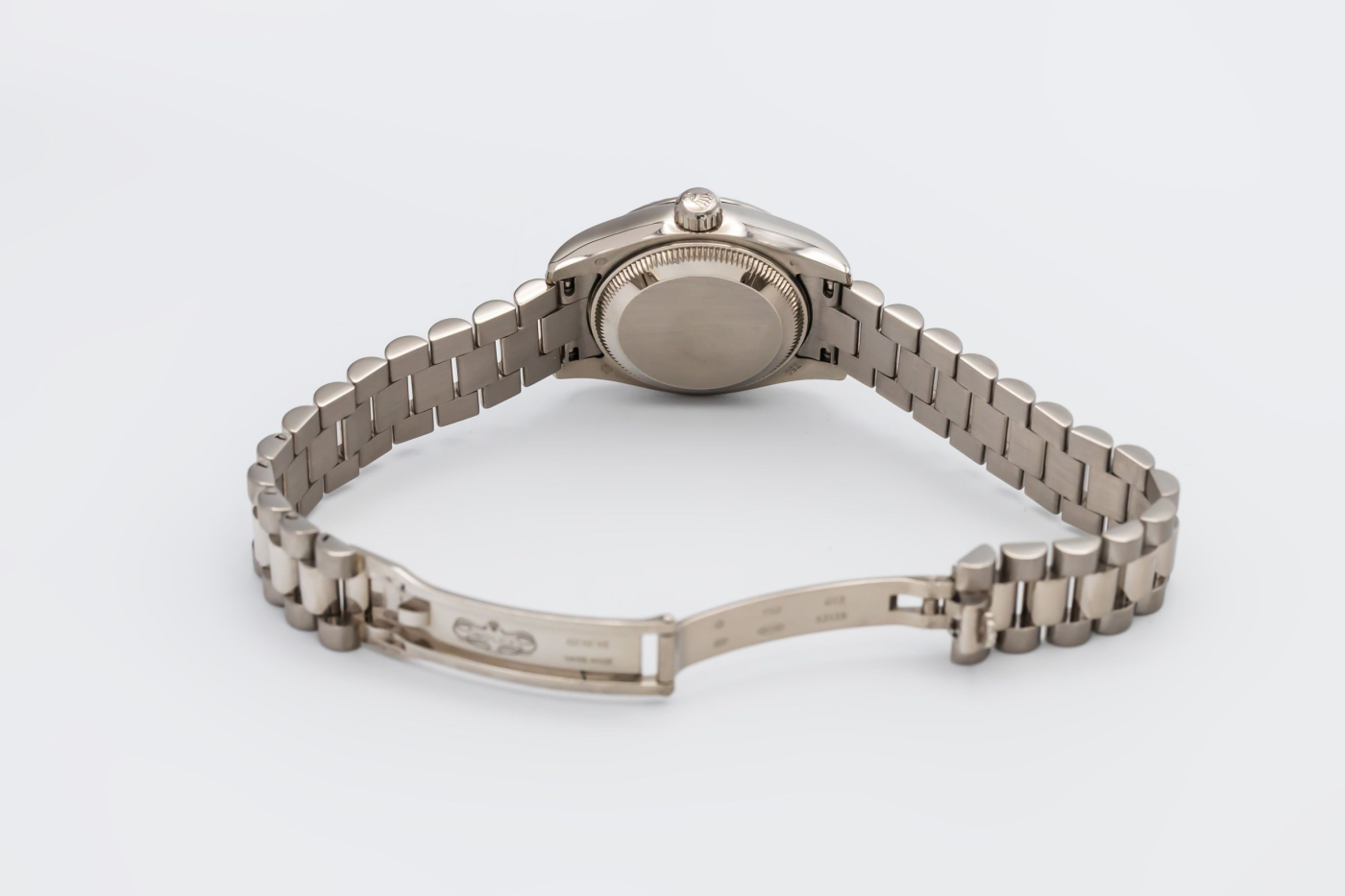
Hold your watch horizontally by the clasp with the case hanging down. A bracelet in good condition forms a gentle curve. The links drape naturally, and the watch case hangs at a moderate angle.
A severely stretched bracelet may hang almost vertically when held horizontally. The links sag noticeably, and there's visible play when you move the bracelet side to side. This level of looseness means the pins and link holes have worn significantly, and the internal tolerances have expanded far beyond what Rolex intended.
You're looking at how much the bracelet droops. A tight bracelet holds its shape. A worn bracelet collapses into an almost straight line.
When you wear the watch, pay attention to how much it moves on your wrist. A properly fitted bracelet with minimal wear stays relatively centred. You'll feel the watch shift slightly when you move your arm, but it shouldn't slide several inches up or down your wrist with normal movement.
Excessive movement means the bracelet is either too loose for your wrist size or the internal wear has created enough play that even a correct fit feels unstable. This constant sliding accelerates wear further because the watch's weight pulls on the pins with every motion.
Run your fingers along the bracelet while it's off your wrist. The links should move smoothly and uniformly. If certain sections feel stiff while others move freely, that's uneven articulation. It suggests some pins are binding while others have excessive play.
This uneven wear often develops when a few links carry more stress than others. Centre links near the clasp tend to show this first because they bear the most movement. When you notice it, those specific links need attention before the problem spreads.
The clasp experiences its own wear pattern. Check the folding mechanism for side-to-side play. Open and close the clasp a few times. It should engage firmly with a crisp click. If the clasp feels loose, wobbles when closed, or doesn't snap shut cleanly, the internal springs or catches are wearing.
A loose clasp combined with bracelet stretch creates a compounding problem. Even if you address the bracelet links, a failing clasp means the watch isn't secure on your wrist.
Look closely at the bracelet edges where the links meet. Original factory finishing has crisp, defined lines. If the edges look sharp or feel rough to the touch, this can indicate aggressive polishing. Each polish removes metal, and over time, the bracelet loses its original geometry.
Conversely, edges that appear excessively rounded or soft suggest the bracelet has been polished multiple times. While this isn't stretch in the mechanical sense, it weakens the bracelet's structural integrity and affects its appearance. Collectors notice these details, and they influence value.
A well-maintained bracelet moves quietly. When you shake your wrist gently, you shouldn't hear rattling or clicking sounds. Audible noise from the bracelet indicates the pins have enough play that they're moving inside the link holes.
This sound is the pins knocking against the sides of the drilled holes. It's metal hitting metal repeatedly, and each impact wears the components slightly more. If your bracelet has started making noise, the wear has progressed beyond the earliest stage.
What matters: Hold the bracelet horizontally to check for severe vertical sag. Watch for excessive movement on your wrist, uneven articulation between links, loose clasp components, sharp edges from aggressive polishing, and audible rattling noises. Some looseness is normal on vintage pieces, but these signs indicate wear that needs professional assessment.
| Symptom | Possible Cause |
| Excessive sag | Pin and link wear |
| Loose clasp | Clasp spring wear |
| Uneven movement | Internal link damage |
| Sharp edges | Over-polishing |
Over more than two decades, we've assessed thousands of Rolex bracelets. The condition of the bracelet tells us as much about a watch as the movement or case. When someone brings a piece in, bracelet wear is one of the first things we examine because it reveals how the watch has been used and maintained over time.
For vintage Rolex models, bracelet condition is a major consideration when evaluating originality and value. A 1970s Submariner with its original folded-link bracelet, even showing moderate wear, often carries more weight with collectors than the same reference with a modern replacement. The bracelet's age and patina form part of the watch's history. Once replaced, that connection is lost.
When evaluating a pre-owned Rolex, we look at several bracelet details that most people miss. The end links should match the case lugs precisely. Aftermarket or incorrect-era bracelets leave visible gaps or sit at the wrong angle. The clasp code should align with the watch's production period. Mismatched codes suggest the bracelet has been swapped at some point.
Stretch alone doesn't disqualify a bracelet from being original. What matters is whether the components are genuine Rolex parts from the correct era. A stretched original bracelet holds more collector value than a tight aftermarket replacement. We guide people through this distinction because it affects both authenticity and resale potential.
When you're considering a vintage Rolex purchase, bracelet condition should factor into your decision as much as the dial or movement. A watch with excessive bracelet wear may need immediate attention, and restoration costs can add significantly to your total investment.
Working with reputable Rolex dealers in London who understand these nuances makes the difference between buying with confidence and discovering issues after the fact. We've seen people purchase watches thinking the bracelet is easily fixable, only to learn that sourcing correct-era replacement links for a 1960s Jubilee bracelet costs more than expected and takes months to complete.
Before committing to a purchase, ask whether the bracelet is original to the watch. If it's been restored, find out which components were replaced and whether genuine Rolex parts were used. If the seller doesn't know or can't provide clear answers, that's a signal to proceed carefully.
When inspecting a watch in person, perform the horizontal hold test. A bracelet showing severe sag needs immediate work. Factor that into your offer or walk away if the cost of restoration exceeds what the watch is worth to you.
Check the clasp for excessive play. A failing clasp combined with stretched links means you're looking at comprehensive bracelet work, not simple pin replacement. Listen for audible rattling when you move the bracelet. Noise indicates advanced wear, and the repair will involve more than cosmetic tightening.
These assessments take seconds, but they protect you from surprises. We've guided buyers through these checks countless times, and the ones who take bracelet condition seriously end up with watches that hold their value better over time.
Bracelet authentication is part of the broader evaluation process for vintage Rolex models. Aftermarket bracelets are common in the secondary market, and some reproductions are convincing at first glance. The devil is in the details.
Genuine Rolex bracelets have specific stampings, clasp codes, and link construction that vary by era. A 1980s Datejust shouldn't have a bracelet with 2000s-era hallmarks. These inconsistencies signal that the bracelet has been replaced or isn't genuine. For serious collectors, these details matter as much as dial authenticity.
We've seen watches sold as "all original" that turn out to have aftermarket bracelets. In some cases, the seller didn't know. In others, the misrepresentation was intentional. Either way, the result is the same: the watch is worth less than represented, and the buyer loses money.
Expert guidance protects you from these situations. When you work with people who have handled thousands of Rolex watches across decades, you benefit from pattern recognition that only comes with experience. We spot inconsistencies that others miss because we've seen the correct versions enough times to know when something's wrong.
Buying a Rolex with a well-maintained or properly restored bracelet gives you confidence that the watch will serve you well for years. You're not inheriting someone else's deferred maintenance. You're starting with a solid foundation.
When bracelet condition is addressed early, either through careful selection at purchase or timely restoration after acquisition, the watch retains more value over time. Collectors and future buyers notice the difference between a watch that's been looked after and one that's been neglected.
We've worked with families who pass Rolex watches across generations. The pieces that last are the ones where bracelet condition was taken seriously from the beginning. Proper care, timely maintenance, and expert evaluation when needed preserve both function and value across decades.
If you're considering a vintage or modern Rolex purchase and want guidance on bracelet condition, originality, or restoration options, we're here to help. Our role isn't to push you towards a sale. It's to make sure you understand what you're looking at and what it means for long-term ownership.
What matters: Bracelet condition reveals how a watch has been used and maintained. Original bracelets, even with moderate wear, often hold more collector value than replacements. Assess originality by checking end link fit, clasp codes, and era-correct stampings. Work with experienced dealers who understand vintage authentication. Proper evaluation before purchase protects long-term value and ownership confidence.
After more than two decades of working with Rolex watches in the UK, we've noticed a pattern.
The customers who get the most life out of their bracelets are the ones who treat maintenance as an ongoing process rather than a repair triggered by a problem.
They wear the watch snug. They clean it regularly. They have it checked during servicing. When they notice early signs of looseness, they address it before it becomes structural.
It's not complicated, but it does require paying attention and acting before the wear becomes irreversible.
Bracelet stretch isn't inevitable. It's the result of use over time, and how you manage that use determines how long the bracelet lasts.
[products brand="Rolex" attribute_watches="18ct White Gold,18ct Yellow Gold,18ct Yellow Gold and Diamond,36mm,40mm,41mm,42mm" limit="4"]
No. Rolex bracelet stretch is mechanical wear on pins and holes. Once the wear happens, it doesn't reverse without intervention (link removal, pin replacement, or bracelet replacement).
How long it takes for rolex bracelet stretch to develop varies based on fit, cleaning habits, and materials. Some bracelets show minimal looseness after decades. Others develop noticeable play within a few years if worn loose or not cleaned regularly.
Removing a link doesn't reverse existing looseness, but it stops further wear by creating a snugger fit. This often adds years to the bracelet's usable life.
Costs range from £0 (removing a link) to moderate fees for pin replacement, up to £1,000+ for stainless steel bracelet replacement and £3,000+ for two-tone models through Rolex.
Yes. Modern solid-link designs with ceramic inlays where pins meet links wear more slowly than vintage hollow or folded-link bracelets.
Yes. Bracelet condition is one of the first things dealers assess. Heavy stretch signals years of use and affects resale pricing.
If you're keeping the watch long-term, restoration (using aftermarket parts) costs less and works well. If you're selling soon, an original stretched bracelet sometimes holds more value than one restored with non-genuine parts.
If you wear it daily, cleaning between the links with warm water and a soft brush every few weeks removes abrasive dirt that accelerates wear.
Rolex bracelet "stretch" is mechanical wear on pins and link holes, not metal elongation.
Wearing your watch too loose is the biggest cause of accelerated bracelet wear.
Regular cleaning removes abrasive dirt that speeds up pin and hole erosion.
Gold components and vintage hollow-link bracelets wear faster than modern stainless steel solid-link designs.
Severe bracelet looseness risks pin failure, which leads to expensive case or movement damage.
Solutions range from removing a link (free) to full bracelet replacement (£1,000 to £3,000+).
Aftermarket restoration costs less but affects originality and potentially resale value.
Does that sound right for you, or is there something about your bracelet that doesn't quite fit this pattern?
Visit us in store for great service and to see our amazing collection.
114 Ballards Lane, N3 2DN, London 020 8838 3655