





Over twenty years of opening watch cases, I've noticed something. The watches that come in looking pristine often hide the same problems as the ones that don't. Dried lubricants. Degraded gaskets. Wear patterns that developed so slowly the owner never noticed, until the day the movement stops, or moisture appears under the crystal.
Rolex care isn't mysterious. But the industry has a habit of making it feel that way. What you actually need to know is straightforward: when your watch needs attention, what proper Rolex service involves, how much it should cost, and what you can safely do yourself.
This guide draws on real patterns I've seen across thousands of watches. The kind that comes from watching what happens when care is done properly, and what it costs when it isn't.
Why Regular Rolex Service Matters More Than Most Owners Realise
The most common misconception I encounter is this: "I'll service it when something goes wrong." By the time something feels wrong, the damage has often progressed beyond what simple maintenance would have prevented.
Modern Rolex movements benefit from advances in lubricant technology that earlier models never had. Synthetic lubricants and improved movement designs mean contemporary watches can run longer between services, often up to ten years, without compromising performance. Older models, particularly those produced before the early 2000s, generally need attention every four to five years.
But here's what actually happens inside the movement during that time. Lubricants don't just disappear, they break down. As they degrade, friction increases. That friction causes wear on delicate components like the escapement, gears, and balance wheel. The watch might still keep time reasonably well for months, even years. But the internal damage accumulates silently.
The repair cost £1,500. A full movement overhaul, mainspring replacement, and gasket renewal. If the watch had been serviced every five to ten years as Rolex recommends, each service would have cost around £500-700. Regular maintenance would have prevented the failure entirely and saved more than double the cost. This principle applies to all tangible assets where proper maintenance preserves value over time.
What Actually Happens During a Proper Rolex Service
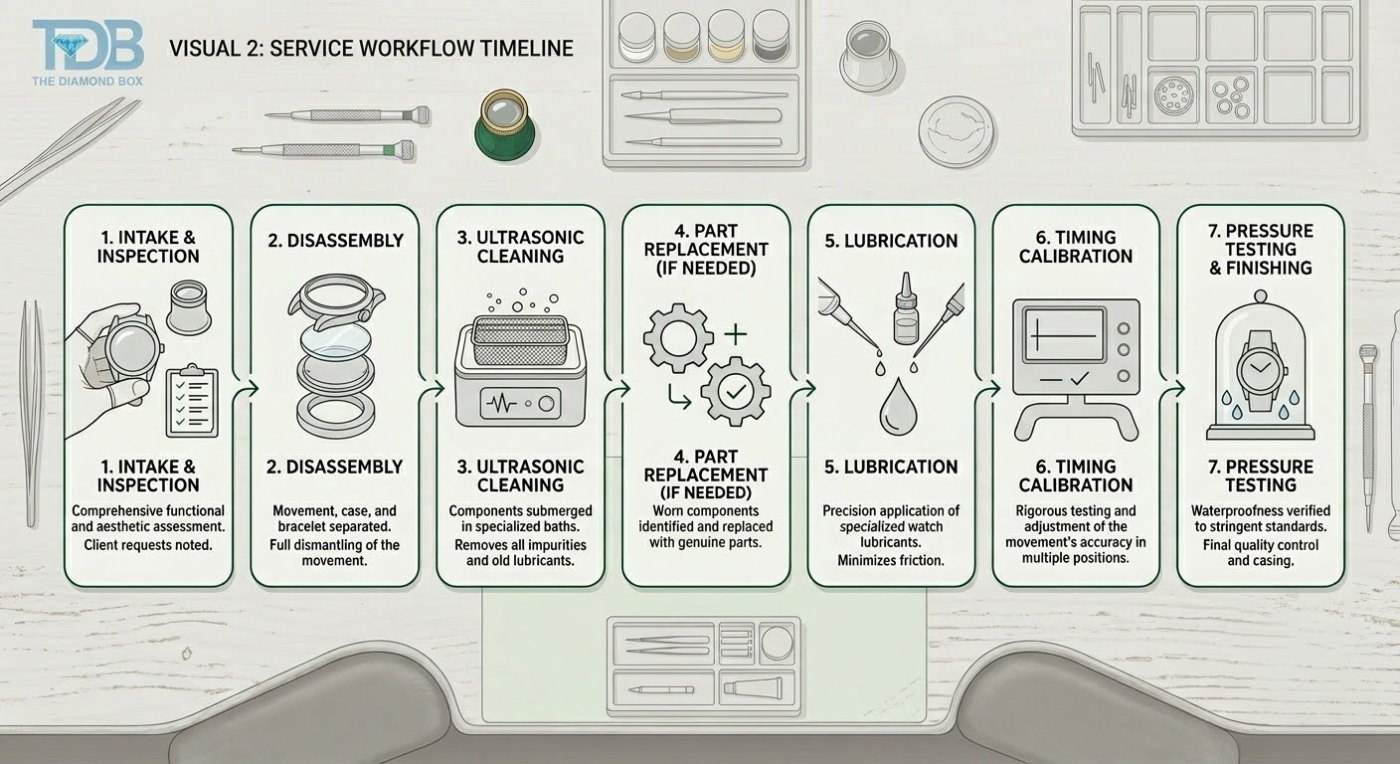
When you hand your watch to a qualified technician, the process is more involved than most people expect. This isn't a quick clean and oil change, it's a complete assessment and restoration of mechanical function.
The watch is fully disassembled. Both case and movement. Depending on the model, a mechanical Rolex contains well over a hundred individual components. Some complex pieces contain more than a thousand. Proper disassembly requires specialised tools — attempting it without them will damage the watch.
Every component is ultrasonically cleaned. Old lubricants are removed. Dirt, dust, and microscopic debris are cleared away. Each part is inspected for wear, corrosion, or damage.
Worn parts are replaced with genuine Rolex components. Gaskets and seals are renewed regardless of visible condition — these degrade over time even without obvious signs. The movement is then lubricated with fresh oils, reassembled, and regulated to meet strict accuracy standards.
The case and bracelet are refinished unless you specifically request otherwise. Water resistance is tested. The watch is checked for durability and performance under controlled conditions.
A full Rolex service isn't just maintenance. It's preventative care that extends the functional life of a mechanical instrument designed to last decades.
Full Rolex Service Breakdown (Step-by-Step Process)
A professional Rolex service follows a structured process designed to restore the watch's performance while preserving its long-term reliability and value.
- Initial inspection – The watch is examined for visible wear, accuracy issues, water resistance concerns and any signs of previous repairs.
- Complete disassembly – The movement, case, bracelet and individual components are carefully dismantled using specialist tools.
- Ultrasonic cleaning – Every reusable component is thoroughly cleaned to remove old lubricants, dirt and microscopic debris.
- Component inspection – Each part is inspected for wear, corrosion or damage, with worn components replaced using genuine Rolex parts where appropriate.
- Lubrication and reassembly – Fresh lubricants are applied to critical friction points before the movement is carefully reassembled.
- Regulation and timing – The movement is regulated to achieve optimal accuracy across multiple positions.
- Case and bracelet refinishing – If requested, the case and bracelet are professionally refinished while preserving the watch's original lines and proportions.
- Water resistance testing – New seals are fitted and the watch is pressure-tested to confirm water resistance.
- Final quality control – The completed watch undergoes final performance testing before being returned to the owner.
How Much Does It Cost to Service a Rolex — and What Influences the Price
When people ask how much it costs to service a Rolex, there is no fixed price that applies across all models. Rolex service pricing is determined case by case and confirmed after inspection through authorised Rolex service centres or official retailers.
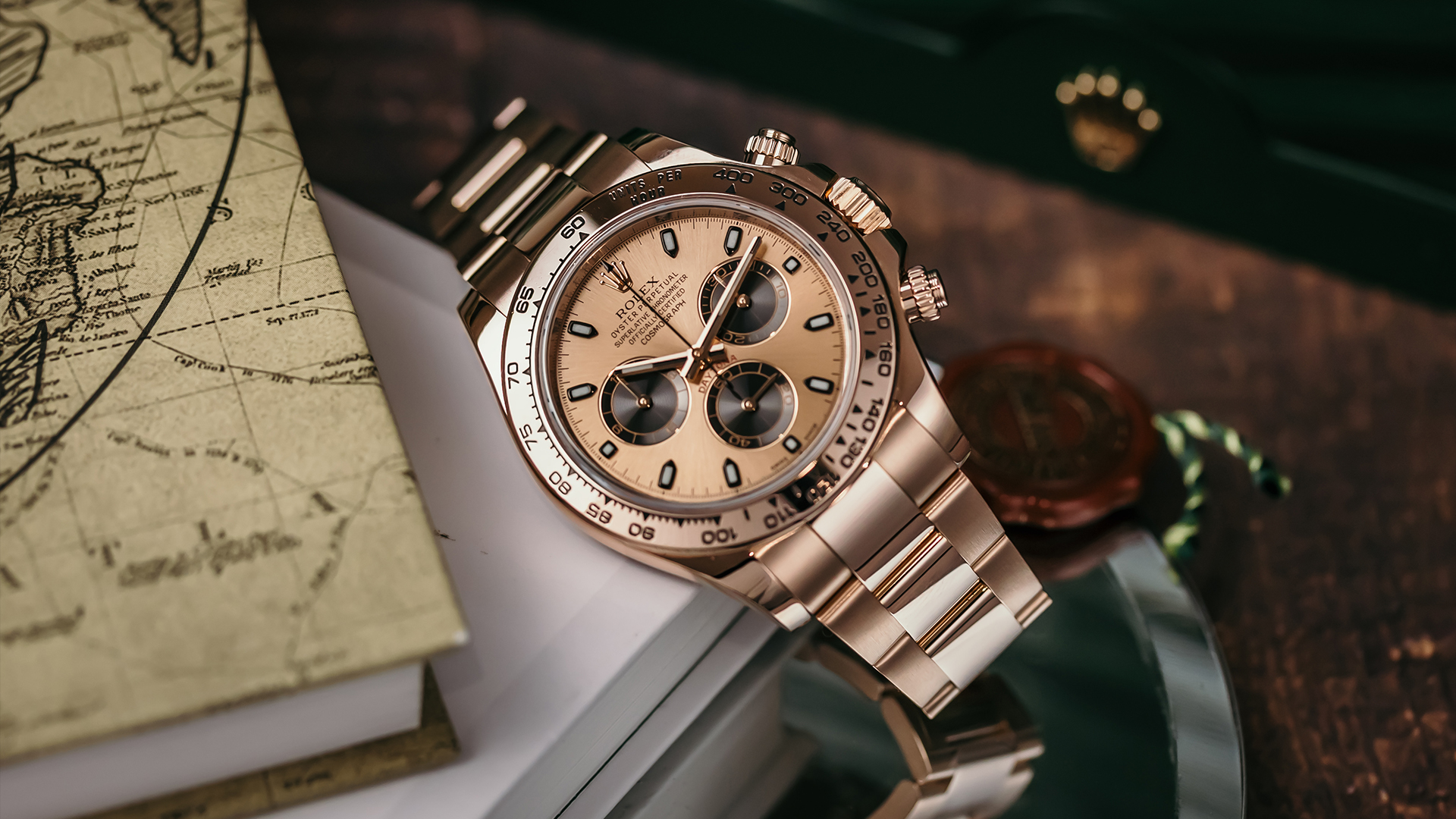
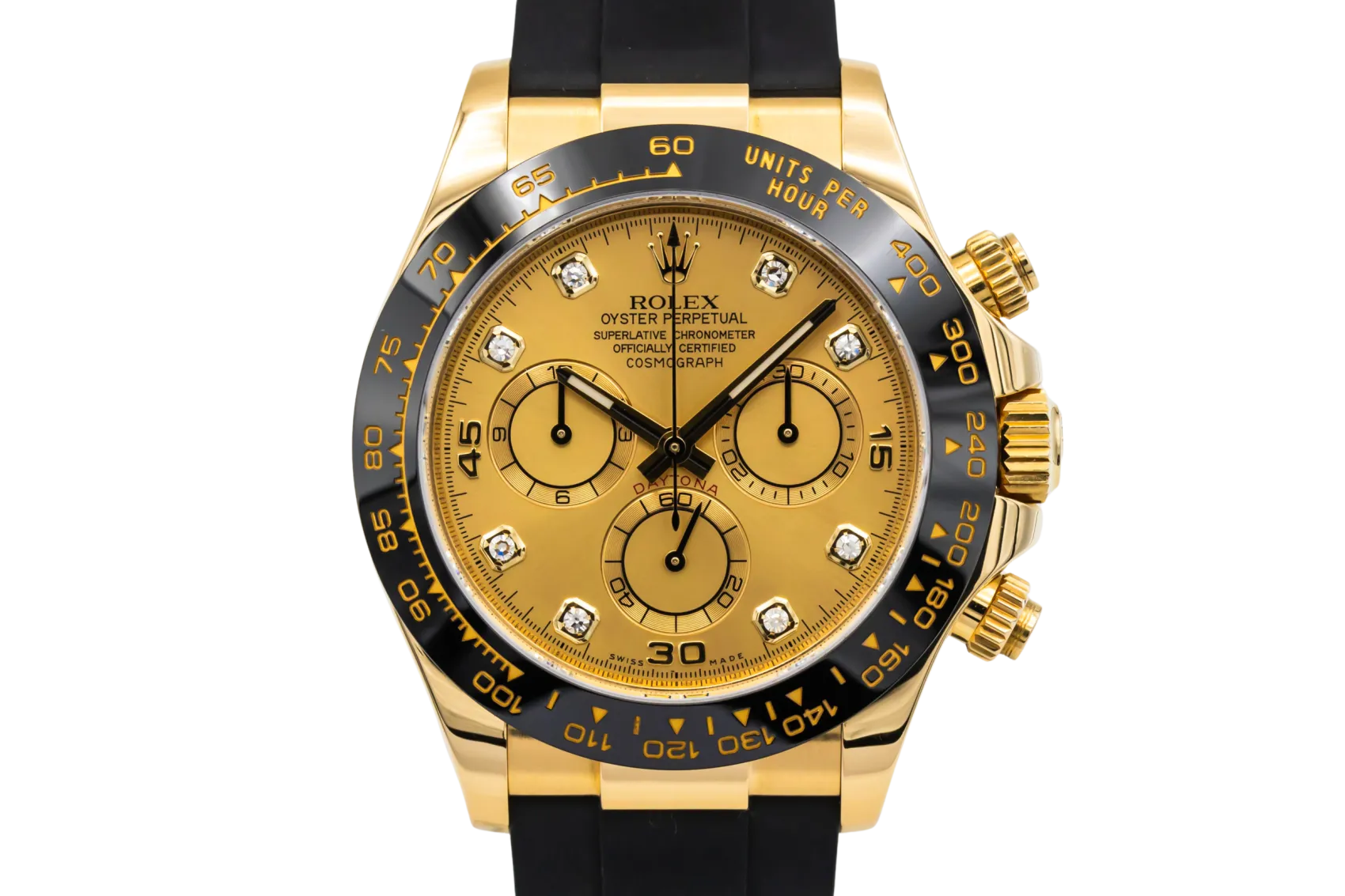
As a general guide, servicing costs in the UK typically fall within a broad range depending on model complexity and condition. Simple time-only Rolex models such as the Oyster Perpetual generally sit at the lower end of the range, while more complex models such as the Rolex Daytona fall higher due to additional chronograph components and more extensive calibration requirements.
In most cases, a standard Rolex service in the UK will typically range from approximately £500 to £900, depending on the model and condition. More complex watches or those requiring additional parts or restoration work can exceed this range, particularly if extra repairs are required beyond standard servicing.
Rolex itself assesses each watch individually before confirming the final service price, based on condition, required work, and replacement parts needed. This ensures the final quote reflects the actual mechanical condition rather than a fixed price list.
Condition plays a major role in the final cost. A watch that has been regularly serviced will generally require only standard maintenance, while a watch that has been neglected for many years may need additional work such as gasket replacement, deep cleaning, or worn component replacement — all of which increase the final service estimate.
Where the service is carried out also affects pricing and value. Authorised Rolex service centres follow strict factory standards and use official parts, and the service includes a warranty and documented service history. Independent watchmakers may offer lower entry pricing, but the trade-off is usually in warranty coverage and official certification.
What is often overlooked is that servicing is not just a repair cost — it is a preventative cost structure. Rolex service pricing is designed around preserving long-term movement integrity, meaning delays in servicing typically result in higher future service requirements rather than lower total spend.
In practical terms, the cost of servicing a Rolex is not a single figure — it is the cost of restoring factory-level performance based on the watch’s actual condition at the time of inspection.
Standard Rolex service in London ranges from depending on model, condition, and complexity. Vintage watches or models with complications may cost more. If the watch requires extensive repairs — water damage, movement replacement, dial restoration — costs can reach £1,600 or higher.
Age and condition affect pricing. Older Rolexes that haven't been serviced in years often need additional work beyond basic maintenance. Part replacements. Gasket renewals. Cleaning corrosion. The older the watch and the longer it's been neglected, the more likely it is that parts will need replacing.
Where you have the work done influences cost and outcome. Authorised Rolex service centres use certified parts and Rolex-specific equipment. They typically charge more — but the work comes with a two-year warranty and maintains documented service history, which protects resale value. Independent watchmakers often offer lower pricing and faster turnaround, but you sacrifice warranty coverage and official documentation.
The conversation most service providers skip is this: what does your watch actually need, and what happens if you don't address it? Ignoring a sticky movement or a cracked gasket might not cause immediate visible problems. But over time, that small issue damages other parts of the watch, requiring more expensive repairs later.
Rolex service is preventative care for your investment. When you skip it, you're not saving money — you're deferring a larger bill. Understanding how much does it cost to service a Rolex means also understanding what that cost prevents — far more expensive repairs down the line.
What Factors Influence Rolex Servicing Cost
Several factors determine the final cost of servicing a Rolex:
- Model complexity – Chronographs such as the Daytona contain significantly more components than a time-only Oyster Perpetual, increasing labour time.
- Age of the watch – Older models often require additional inspection, replacement parts and more extensive servicing.
- Previous servicing history – Watches left unserviced for long periods typically develop additional wear that increases repair costs.
- Replacement components – Genuine replacement parts such as crowns, mainsprings, crystals or gaskets add to the overall cost.
- Water damage or corrosion – Moisture entering the movement can dramatically increase servicing costs due to component replacement.
- Service provider – Authorised Rolex Service Centres and experienced independent specialists often differ in pricing, turnaround times and warranty coverage.
How to Clean a Rolex Safely at Home
I've seen hundreds of Rolexes damaged by well-meaning owners trying to clean them at home. Understanding how to clean a Rolex properly prevents the kind of damage patterns, that's predictable and entirely avoidable once you know what actually causes it.
Scratched crystals are the most common issue when people attempt to clean a Rolex without proper knowledge. People use abrasive cloths, paper towels, or tissues to remove fingerprints or smudges. These materials are too rough for sapphire crystal and introduce fine scratches that become noticeable under certain lighting. The fix is simple: use a microfiber cloth. Nothing else. Wipe gently. Don't apply pressure.
Case damage from improper polishing happens when owners try to restore shine using metal polish or toothpaste. These abrasive compounds strip away the finish, soften sharp edges, and remove the brushed textures that define the watch's appearance. When learning how to clean a Rolex, it's critical to understand that polishing requires professional expertise. Once those signature edges are gone, they can't be fully restored. If your watch needs polishing, take it to a professional. DIY polishing causes irreversible damage.
Water damage from incorrect cleaning is more serious than cosmetic issues. Even though Rolex watches are water-resistant, improper sealing during cleaning allows moisture to enter. If the crown isn't tightly screwed down, or if gaskets are compromised, water can get inside. Fogging or condensation on the inside of the crystal means water has entered the case, and the watch needs servicing immediately to prevent long-term damage.
The safe approach to how to clean a Rolex:
Cleaning your Rolex correctly helps preserve its appearance without risking unnecessary damage. Before cleaning, always ensure the winding crown is fully screwed down to maintain water resistance. Using gentle cleaning methods and the correct materials will help keep your watch looking its best between professional services.
Use a microfiber cloth for the crystal and case. Wipe gently. No pressure.
- Clean the bracelet with a soft brush (a toothbrush works well) using mild soap and warm water. Don't immerse the entire watch, just the bracelet, whilst ensuring the crown is tightly screwed down.
- Avoid harsh chemicals entirely. Household cleaners and solvents can discolour metal, dull finishes, or cause pitting.
- Never attempt to polish the watch yourself. If the finish looks worn, take it to a professional.
A Rolex watch cleaning kit isn't complicated. Microfiber cloths and a soft brush cover most needs. If you're assembling your own Rolex watch cleaning kit, stick to these basics: premium microfiber cloths, a soft-bristled brush, and mild soap. Anything beyond that requires professional tools and expertise.
Understanding Rolex Bracelet Repair and When It's Worth Doing
Bracelet wear is one of those issues people dismiss as purely cosmetic. It's not. Over time, internal wear occurs where bracelet links rub against each other and where the clasp mechanism operates. Dirt and oils accumulate in these areas. Understanding when Rolex bracelet repair becomes necessary protects both function and value. If left unaddressed, the bracelet can stretch, links can loosen, and the clasp can lose its ability to hold securely.
The exterior might still look fine. But the internal mechanisms degrade. A loose bracelet could cause the watch to slip off your wrist. Broken links affect comfort and flexibility. In some cases, the bracelet starts pinching because it no longer moves smoothly.
Minor Rolex bracelet repair — tightening links, adjusting the clasp, cleaning accumulated debris — is straightforward and inexpensive. Most reputable dealers or watchmakers can handle these adjustments quickly. Regular Rolex bracelet repair, even for minor issues, prevents larger problems from developing.
Full bracelet replacement becomes necessary when stretch is significant or links are damaged beyond repair. Replacement costs vary depending on the model, but it's worth doing if the watch is valuable or if you plan to keep it long-term. A worn bracelet reduces both comfort and resale value.
Proper bracelet care, regular cleaning, timely adjustments, professional Rolex bracelet repair when needed, protects both function and value.
Polishing vs Restoring a Rolex Bracelet
Many owners assume polishing and bracelet restoration are the same service, but they achieve very different outcomes.
Polishing focuses on improving the cosmetic appearance by removing light surface scratches and refreshing the finish. Restoration is a far more comprehensive process that addresses structural wear, bracelet stretch and long-term mechanical deterioration.
For vintage Rolex watches, excessive polishing can reduce collector value by softening the original case geometry. Professional restoration, however, aims to preserve originality while improving structural integrity where necessary.
|
Factor |
Polishing |
Restoration |
|---|---|---|
|
Purpose |
Improves surface appearance and removes light scratches |
Repairs deeper wear, stretch, or structural issues |
|
Depth of work |
Light surface-level finishing |
Full corrective refurbishment of bracelet and sometimes case |
|
Impact on originality |
May slightly reduce original factory sharpness if overdone |
Aims to bring components back closer to original condition |
|
Effect on value |
Can reduce value if over-polished, especially on vintage models |
Can maintain or improve value if done correctly on heavily worn pieces |
|
When it’s appropriate |
Light scratches, cosmetic wear, occasional refresh before resale |
Loose bracelet links, significant stretch, long-term wear damage |
|
Risk level |
Moderate (over-polishing is irreversible) |
Higher complexity but more corrective in nature |
|
Collector preference |
Often avoided on vintage watches |
Preferred when structural integrity is compromised |
When to Service Your Rolex and How to Recognise the Signs
Many Rolex owners wait until their watch develops a noticeable fault before considering a service. In reality, preventative servicing helps identify wear long before it leads to costly repairs or permanent damage.
Common signs that servicing is due include:
- Poor timekeeping.
- Reduced power reserve.
- Moisture beneath the crystal.
- Difficulty winding or setting the watch.
- Increased rotor noise.
- Loss of water resistance.
- Service history exceeding five to ten years.
Addressing these issues early usually prevents significantly more expensive repairs later.
Rolex recommends servicing at least every ten years to guarantee optimal performance. But that's a baseline, not a rule. Your specific watch might need attention sooner, or it might safely wait longer, depending on how you use it and what signs it's showing.
Listen to the movement. Rolex movements run smoothly and quietly. If you hear irregular ticking, grinding noises, or rough sounds when winding, that's an immediate sign of a lubrication issue or worn gears. The watch needs attention before further damage occurs.
If the second hand skips rather than moving smoothly, or if the watch stops unexpectedly, the movement likely has dirt build-up or dried lubricant impeding the gears. Don't wait for it to fail completely.
Monitor timekeeping accuracy. A Rolex should deviate no more than 10-15 seconds per day. If your watch is losing or gaining significantly more than that, say, a minute over a few days, the movement would benefit from servicing. Old lubricants or wear in the movement affect the balance wheel and escapement, causing the watch to run inaccurately.
Check for moisture or condensation. Any fogging under the crystal after temperature changes is an immediate concern. Even slight moisture can lead to corrosion of the movement and damage to the dial or hands. Water doesn't wait — the damage progresses quickly once it's inside.
Saltwater accelerates corrosion and rust. Even brief exposure can cause permanent damage within hours. Freshwater is less damaging but still affects internal parts within days if not addressed. If you suspect moisture has entered your watch, take it to a professional immediately. Don't try to dry it out yourself.
Inspect gaskets and seals visually. Over time, gaskets around the crown, pushers, and caseback can appear compressed, cracked, or brittle. If the seals look worn, the watch isn't properly sealed. Moisture, dirt, or dust will eventually enter. Gasket replacement maintains the manufacturer's stated water resistance, without functioning seals, that rating is no longer reliable.
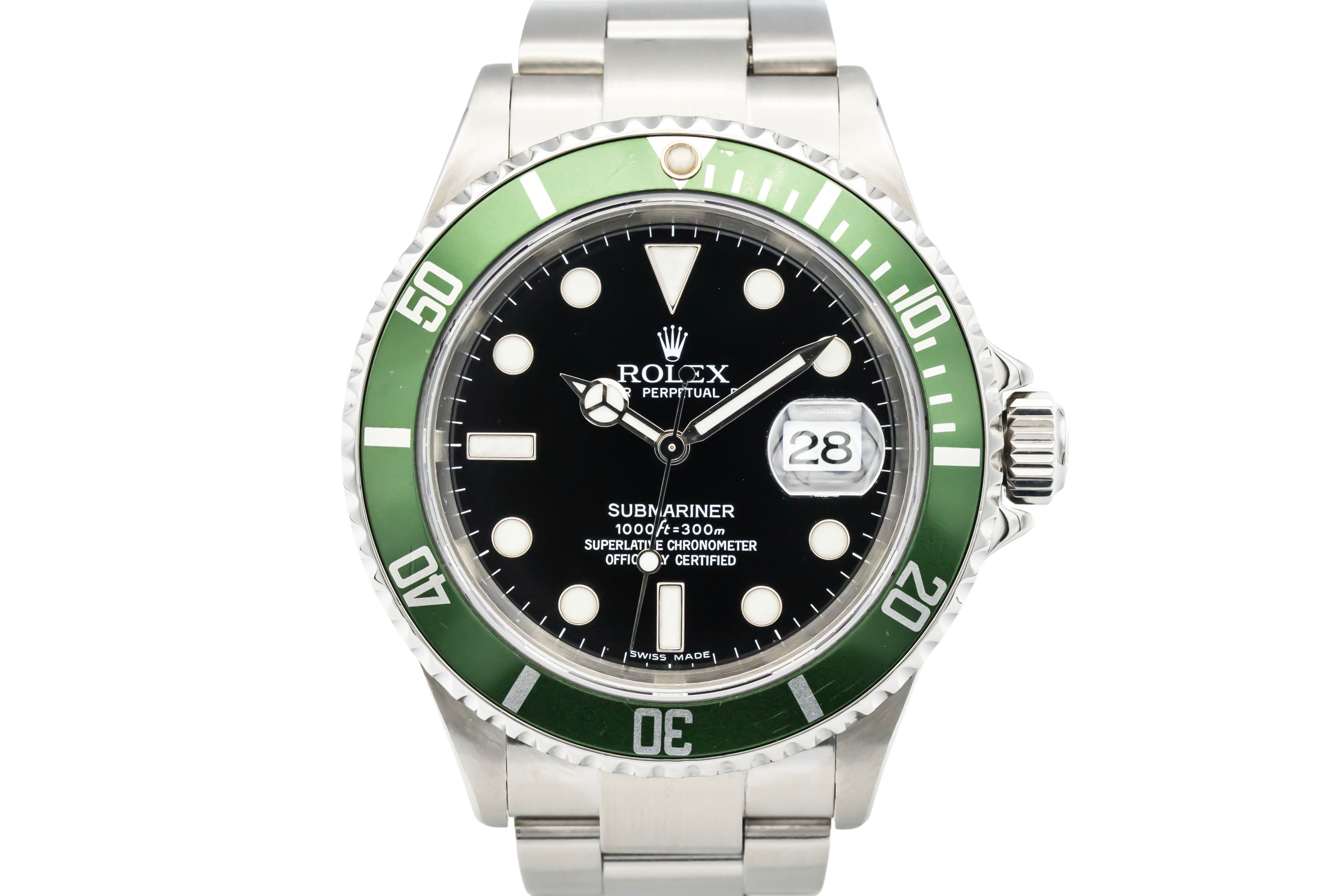
Consider your usage patterns. If you wear your Rolex daily in varied conditions — exposure to water, dust, extreme temperatures, it may need servicing more frequently than a dress watch worn only on formal occasions. Professional dive models like the Submariner or Sea-Dweller, especially if used in saltwater, benefit from annual water resistance testing and servicing every five to six years.
Chronographs like the Daytona have more internal moving parts than time-only models. If you regularly use the timing functions, servicing every five to seven years prevents functional issues from developing in the chronograph mechanism.
If the watch is keeping time well, there's no visible moisture, and the external condition is solid, it can usually wait another year. But if you're approaching the 5-10 year mark since the last service, or if you notice any irregularities in performance or appearance, it's time to have it checked.
Rolex Service vs Watch Repair — What's the Difference?
Although the terms are often used interchangeably, a Rolex service and a Rolex repair are not the same thing. A service is preventative maintenance designed to keep the watch operating correctly, while a repair addresses an existing fault or damage that has already occurred.
Understanding the difference helps owners make informed decisions and often prevents relatively minor servicing needs from becoming expensive repairs.
|
Factor |
Rolex Service |
Rolex Watch Repair |
|---|---|---|
|
Purpose |
Preventative maintenance to keep the movement running correctly |
Fixing an existing fault, damage, or malfunction |
|
Trigger point |
Scheduled maintenance (before issues appear) |
When something is already wrong (stop, damage, failure) |
|
Scope of work |
Full inspection, cleaning, lubrication, recalibration |
Targeted correction of specific problems |
|
Condition of watch |
Fully functional but aging or due for maintenance |
Partially or fully malfunctioning |
|
Timing |
Planned and periodic |
Urgent or reactive |
|
Common examples |
Routine servicing every several years, accuracy adjustment |
Water damage repair, movement failure, broken crown or hands |
|
Risk level if ignored |
Gradual wear and reduced performance over time |
Complete failure or costly internal damage |
|
Outcome goal |
Preserve accuracy, longevity, and value |
Restore functionality and stop damage progression |
What Most People Don't Expect to Hear About Rolex Care
Many owners believe keeping a Rolex looking immaculate is the most important aspect of ownership. In reality, mechanical condition is often far more important than cosmetic appearance.
A watch with a few light scratches but a well-maintained movement will usually outperform a polished watch that has been neglected internally. Over-polishing can permanently soften the original case lines, particularly on vintage Rolex models, while missed servicing intervals allow unnecessary wear to develop inside the movement.
The best long-term care combines regular servicing, careful cleaning and preserving as much originality as possible. Treating small issues early almost always results in lower servicing costs and better long-term collectability.
Choosing Where to Have Your Rolex Serviced
The decision between an authorised Rolex service centre and an independent watchmaker depends on your specific situation, the watch's value, the issue at hand, your priorities around warranty and documentation, and how quickly you need the work done.
For valuable collector's pieces or vintage models, I recommend authorised service centres. Originality and authenticity matter significantly in the vintage market. Rolex has proprietary parts, and using non-genuine components diminishes value. Servicing outside an authorised centre can result in irreversible changes to the watch's character, which reduces collector appeal.
If the watch has significant sentimental value, a family heirloom, something worn daily, authorised service ensures the work is done to Rolex's exact standards. That preserves both function and the integrity of the piece.
For minor or cosmetic issues — bracelet adjustments, crystal cleaning, light scratches, an independent watchmaker may be appropriate if cost is a factor. Independent specialists often have more pricing flexibility and faster turnaround times. They can be more accessible in terms of location and availability.
For movement issues, water damage, or major internal repairs, authorised centres are the better choice. Rolex-certified technicians have access to the necessary tools, parts, and training to perform in-depth repairs without compromising precision or performance.
Authorised service centres tend to be slower because of higher volume and parts availability. Turnaround can take several weeks or more depending on complexity. Independent watchmakers often complete work faster, especially for non-vintage models, because they have fewer clients and aren't bound by the same supply constraints.
Cost considerations are real. Authorised centres charge more due to genuine parts and specialised labour. But that cost may be justified if you're concerned with warranty coverage and maintaining documented service history — both of which protect resale value. Independent watchmakers are often less expensive and may offer customised approaches, but you sacrifice warranty and official documentation.
If your Rolex is still under warranty, take it to an authorised centre. Independent servicing voids the warranty. For modern Rolexes Submariner, Datejust, GMT-Master II, a reputable independent watchmaker can provide excellent service. Rolex parts are widely available, and the technology is standardised enough that experienced independents handle them well.
For someone thinking of reselling or keeping the watch as an investment, authorised servicing is the best choice for value retention. Rolex maintains meticulous records of repairs and services. Having a documented history with an authorised dealer boosts value when you decide to sell. An independent watchmaker might not have access to those records, which can negatively affect resale price.
The key is understanding the trade-offs. Value preservation, convenience, cost efficiency, you need to decide which matters most for your specific watch and situation. If you're uncertain, get a second opinion from a reputable Rolex dealer in London before committing to expensive repairs.
The Hidden Wear Patterns That Develop Even in Pristine-Looking Watches
Some of the most serious issues I see develop in watches that look flawless on the outside. Owners don't notice the degradation because it happens slowly, invisibly, over years.
Worn gaskets and seals are the most common hidden problem. Rolex designs watches with high-quality seals to keep moisture, dust, and dirt out. But those seals degrade from normal wear, temperature changes, and ageing. Even if the watch looks pristine, compromised gaskets make it vulnerable to water damage and dust ingress.
Dry and hardened lubricants cause friction and uneven wear on delicate components. Owners don't notice until the watch starts running inaccurately or stops altogether. By that time, internal friction has already caused damage. If lubricants aren't refreshed during regular servicing, the cost to repair the movement can become significant.
Crystal scratches accumulate invisibly over time. Small, almost imperceptible scratches on sapphire crystal may not be noticeable in everyday use. But as they build up, they increase glare and reduce dial legibility, especially under bright lighting. In some cases, deep scratches compromise structural integrity, making cracks more likely or allowing moisture to seep in.
Bracelet and clasp wear happens internally where links rub together and where the clasp operates. The exterior may still look shiny, but internal mechanisms degrade. The clasp loses its ability to hold securely. Links wear unevenly, causing gaps. If unaddressed, this results in a loose bracelet that could slip off your wrist, or broken links that affect comfort.
Regular servicing addresses these hidden issues before they become real problems.
What Most People Don't Expect to Hear About Rolex Care
The watch is built to last, but it's not indestructible.
This surprises people because Rolex markets durability. And the watches are durable. But they're still mechanical instruments affected by shocks, impacts, and minor accidents that owners don't think twice about.
The crown is one of the most vulnerable parts. It needs to be screwed down properly to maintain water resistance. Improper handling or dropping the watch can damage the crown and stem, leading to water ingress or mechanical failure. Always ensure the crown is tightly secured, especially when you're active or swimming.
Extreme impacts affect the movement. Many owners wear their Rolex during physical activities, exercising, working with tools, cooking. The watch is durable, but knocking it against hard surfaces can cause the movement to lose accuracy, misalign hands, or damage internal parts. Be careful in environments where the watch might get knocked around.
Another aspect that surprises people: automatic watches still need manual winding if you're not wearing them regularly. Most Rolexes are self-winding through wrist movement. But if the watch isn't worn for a few days, it stops. If it sits unworn for weeks or months, the oils inside the movement can settle and harden.
When you wind it again after a long period, that creates friction and resistance. Over time, this causes wear on gears or irregular timekeeping, potentially requiring servicing earlier than it would otherwise. Wind your Rolex at least once a week if you're not wearing it daily. About 30-40 rotations clockwise keeps lubricants evenly distributed and the movement in good condition.
Finally, avoid over-polishing. Rolex uses specific finishing techniques to give each model its distinctive look. Once those finishes are removed through excessive polishing, the character can't be fully restored. Over-polishing softens edges, reduces depth in the finish, and wears down metal faster. Clean the watch gently and have it polished only when necessary. The more original the condition, the more value it retains if you ever decide to sell.
Rolex watches are built to last. But small, regular steps, proper winding, gentle care, timely servicing, go a long way in ensuring they stay in excellent condition for decades.
Final Thoughts on Rolex Care
Caring for a Rolex isn't complicated once you understand what actually matters. Regular servicing prevents expensive repairs. Proper cleaning protects the finish without causing damage. Recognising when your watch needs attention, through sound, timekeeping, or physical signs, allows you to act before problems escalate.
If you're unsure about anything related to your watch, whether it needs servicing, how to clean it safely, or where to have work done, the right approach is to ask someone with real experience. Not just credentials. Experience that comes from opening thousands of cases and seeing how decisions play out over years.
Understanding how to authenticate a Rolex and knowing how much a Rolex watch weighs are part of that broader knowledge. If you're looking at Rolex watches in the UK, take time to find someone who prioritises clarity over urgency.
Understanding how to authenticate a Rolex and knowing how much a Rolex watch weighs are part of that broader knowledge. If you're looking at Rolex watches in the UK, take time to find someone who prioritises clarity over urgency.