




The Rolex serial number is a unique code engraved on every genuine Rolex watch. People check the serial number to help establish the watch's production period, verify whether the paperwork matches the watch, and confirm the watch's identity. The serial number is useful for dating a watch and cross-referencing with documentation, but the number alone is not enough to prove authenticity. Proper authentication requires checking the full watch, including the movement, dial, case finishing, and engraving quality.
How Do I Check a Rolex Serial Number?
Checking a Rolex serial number involves several steps. First, you'll need to locate the serial number on the watch itself. The location depends on when the watch was made. Pre-2005 models have the number engraved between the lugs at 6 o'clock, whilst post-2005 watches show the number on the inner rehaut. Once you've found the number, compare the serial number with any paperwork that came with the watch. Check whether the number on the watch matches the warranty card. For older watches with sequential or letter prefix serial numbers (pre-2010), you'll use a lookup chart to estimate the production year. For watches made from 2010 onwards, Rolex uses random serial numbers, so dating requires the warranty card or service records. Finally, inspect the full watch for signs of authenticity, including engraving quality, movement finishing, and dial details. For a full check beyond the serial number, read our guide on authenticating a Rolex.
Where to Find Rolex Serial Number on Your Watch
Where to find Rolex serial number depends on when your watch was made. The location of the serial number has changed over time. Rolex adjusted where they placed the number as both technology and security concerns evolved. Removing the bracelet to access the serial number on older models requires proper tools and care. Scratching the case during removal happens often when the work is done incorrectly or in a hurry. Serial placement varies slightly depending on the model and case structure, so our Rolex watch size chart may help if you're comparing different Rolex models.
Pre-2005 Watches: Between the Lugs at 6 O'Clock
For watches made before 2005, the serial number is engraved on the case between the lugs at the 6 o'clock position. You'll need to remove the bracelet to see the number. This requires proper tools and care. Scratching the case during removal happens often when the work is done in a hurry. If you're not comfortable doing this yourself, have someone with experience handle the task.
The engraving should be clean, precise, and evenly spaced. Rolex used high-quality engraving methods, so the numbers will be sharp and consistent.
Post-2005 Watches: On the Inner Rehaut
Rolex began engraving the serial number on the inner rehaut around 2005. The rehaut is the sloped ring between the dial and the crystal at the 6 o'clock position. This change made the serial number visible without removing the bracelet.
You'll need good lighting and often a loupe to read the number clearly. The engraving is small. Visibility depends on the angle and the condition of the crystal.
2010 Onwards: Random Serial Numbers
From around 2010 onwards, Rolex moved to a random serial number system. These serial numbers don't follow a sequential pattern. They don't directly correlate to a specific production year in the way earlier numbers did.
The serial number is engraved on the rehaut at 6 o'clock. Dating these watches requires cross-referencing with other details like the warranty card or service records.
Key point: Serial number location changed from between the lugs (pre-2005) to the rehaut (post-2005), with random numbering introduced in 2010.
| Rolex type / period | Serial number location |
|---|---|
| Older Rolex watches | Between the lugs at 6 o’clock |
| Transitional models | Between the lugs and/or on the rehaut |
| Modern Rolex watches | On the inner rehaut |
Rolex Serial Number Lookup: What It Can and Cannot Tell You
A Rolex serial number lookup helps you estimate the production year for older watches, but the information you'll get depends on which numbering system your watch uses. For watches made before 2010, lookup charts link serial numbers to specific production periods. These charts work because Rolex used sequential numbers or letter prefixes during those years. You'll find the serial number, check the reference chart, and get an approximate manufacturing date.
| Serial number type | What it can tell you |
|---|---|
| Older Rolex serial number | Approximate production year |
| Random Rolex serial number | Cannot confirm exact year |
| Warranty card seria | Should match the watch |
| Rehaut serial | Helps identify the watch, but does not prove authenticity |
For watches made from 2010 onwards, Rolex serial number lookup charts won't help. Rolex moved to a randomised alphanumeric system, so the serial number doesn't correspond to a production year. You'll need the warranty card or service records to date these watches. The serial number still confirms the watch's identity and supports authentication, but the lookup method no longer applies to modern Rolex watches.
-
Date the watch accurately: Rolex serial numbers follow a system corresponding to production periods
-
Verify authenticity: Counterfeit watches often have incorrect, repeated, or poorly engraved serial numbers
-
Trace service history: Rolex keeps records linked to serial numbers, which are referenced during servicing
-
Establish provenance: A verifiable serial number supports the watch's documented history
The serial number won't tell you everything. You won't know whether a watch has been modified or serviced poorly over the years. But the number is the foundation for understanding what you're looking at.
Key point: Your Rolex serial number provides the starting point for authentication, dating, and tracing your watch's documented history.
Rolex Serial Number vs Reference Number: What's the Difference?
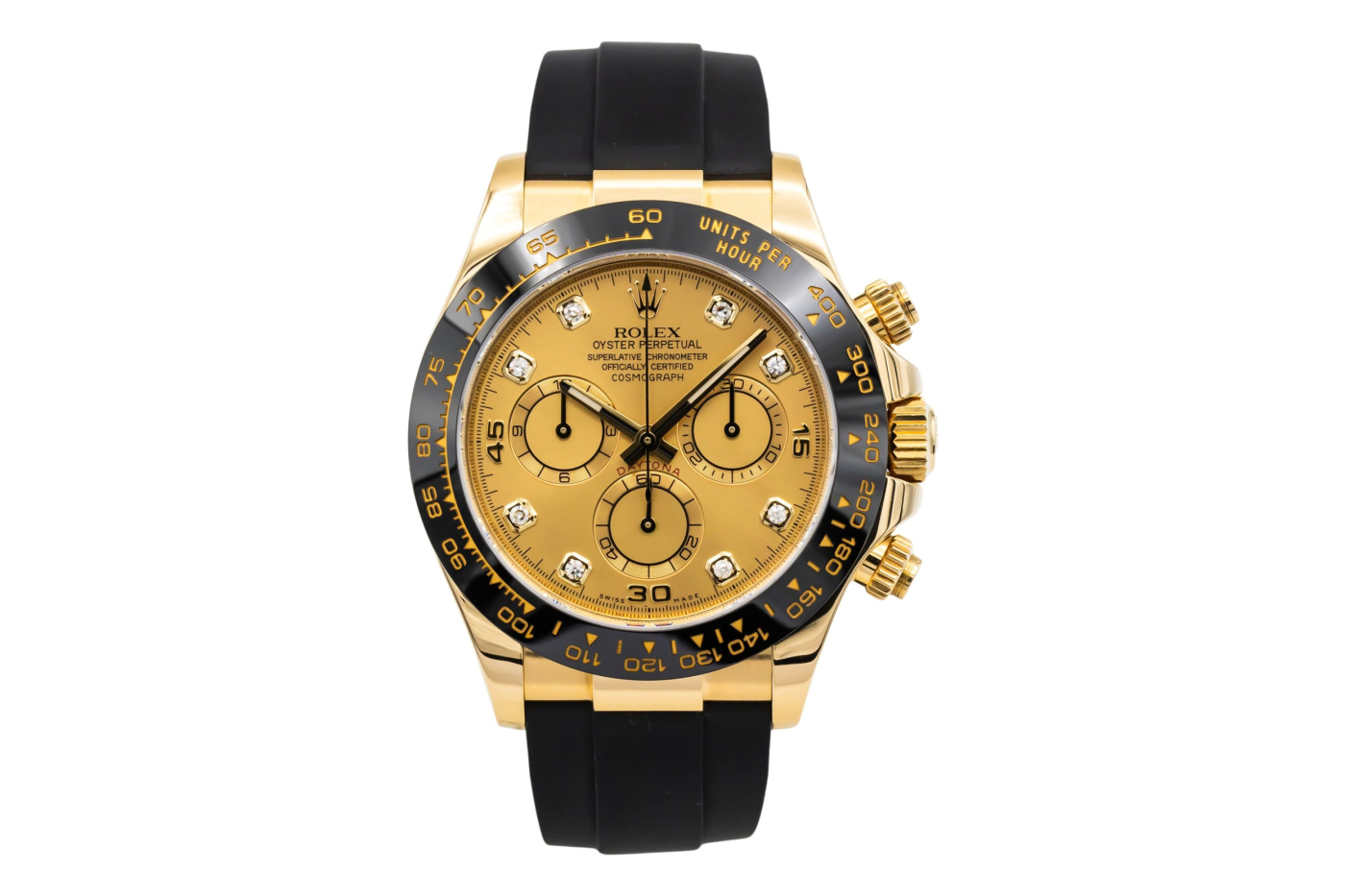
The serial number identifies your individual watch. The reference number identifies the model and version. These are two different things, and both matter when you're checking a Rolex.
Your serial number is unique to your watch. No two Rolex watches share the same serial number. This number tracks the specific timepiece you own, links to its service history, and helps establish when the watch was made.
The reference number tells you what model you're looking at. The reference number describes the watch's specifications: the case size, the material, the movement type, and other defining features. Multiple watches share the same reference number if they're the same model and configuration.
The reference number helps you identify model features, including the case style, material, and sometimes bezel configuration. You'll learn more in our Rolex Bezel guide.
| Number type | Meaning | Why it matters |
|---|---|---|
| Rolex serial number | Unique number for one watch | Helps identify and check the watch |
| Rolex reference number | Model/specification numbe | Shows model, metal, bezel, bracelet, and generation |
Key point: Serial numbers identify individual watches whilst reference numbers identify models and specifications.
How to Check Rolex Serial Number Against the Warranty Card and Papers
When you check Rolex serial number against documentation, you're looking for consistency across everything that came with the watch. The serial number engraved on the watch should match the warranty card, any service papers, the original invoice if available, and other documentation tied to the watch's history.
Start with the warranty card. The serial number printed on the card must match the serial number on the watch. If these don't align, you're looking at a problem. Check the service documentation next. Rolex service centres record the serial number when work is carried out. Those records should show the same number you see on the watch.
If you have the original invoice, cross-reference the serial number listed there. The invoice, warranty card, and watch itself should all tell the same story. When they don't, you need to understand why before proceeding.
We've seen several issues arise over the years when checking serial numbers against papers. Sometimes the watch comes with papers from a different Rolex entirely. The seller might have mixed documentation from multiple watches, or the papers were deliberately paired with the wrong watch to make the piece seem more complete. Replacement card confusion happens too. Someone might have requested a replacement warranty card at some point, and now there's confusion about which card is correct or whether the serial numbers still align properly.
Assembled or altered watches present another concern. Someone might have taken parts from different watches and built a single piece. The serial number on the case might belong to one watch whilst the movement serial number points to another. This creates documentation mismatches that are difficult to resolve. Incorrect seller information comes up when the person selling the watch doesn't have accurate records or has been given wrong details by a previous owner. Sometimes this is an honest mistake. Other times the confusion is intentional.
Fake paperwork appears more often than people expect. Counterfeit warranty cards, service documents, and invoices are made to look legitimate. The serial number on the fake paperwork might match the watch, but the documentation itself isn't genuine. This is why the quality of the paperwork matters, not only the numbers printed on those documents.
Key point: The serial number on the watch must match all documentation. Mismatches indicate wrong papers, replacement confusion, assembled watches, incorrect information, or fake paperwork.
Can You Verify Rolex Serial Number to Prove Authenticity?
When you verify a Rolex serial number, you're checking one important piece of evidence, but the serial number alone doesn't prove the watch is genuine. A correct serial number supports authenticity, but counterfeiters copy real serial numbers from genuine watches. They engrave these copied numbers onto fake watches to make the pieces appear legitimate.
The serial number helps verification when combined with other checks. You'll look at the engraving quality first. Rolex engraving is precise and consistent. Fake watches often show rough or uneven engraving. The depth, spacing, and sharpness of the numbers reveal whether the work meets Rolex manufacturing standards.
You'll cross-reference the serial number with documentation next. The number on the watch should match the warranty card and service records. If the paperwork is genuine and the numbers align, you're building a stronger case for authenticity. If the numbers don't match or the paperwork looks questionable, you're seeing warning signs.
Professional inspection goes beyond the serial number. Someone experienced with Rolex will open the case and check the movement. Rolex movements have specific finishing, markings, and construction details that are difficult to replicate. The movement often reveals what the serial number alone won't tell you.
A proper inspection should also look at condition, movement performance, bracelet wear, and service history. Our Rolex service guide explains what matters when maintaining a Rolex.
The serial number is a starting point, not a conclusion. Verification requires looking at the full watch, checking documentation, and seeking professional assessment when you're unsure. Relying only on the serial number leaves room for mistakes that become expensive over time.
Key point: Verifying Rolex serial number helps authentication, but the number alone doesn't prove authenticity because fake watches copy real serial numbers.
Red Flags When Checking a Rolex Serial Number
We've seen patterns emerge over the years when checking thousands of watches. These warning signs appear often enough that they're worth recognising early. If you spot any of these issues, slow down and seek professional assessment before proceeding.
-
Serial number is missing: Every genuine Rolex has a serial number. If there's no number at all, the watch isn't genuine.
-
Engraving looks rough or uneven: Rolex engraving is precise and consistent. Rough, shallow, or misaligned numbers suggest poor quality work that doesn't meet Rolex standards.
-
Serial does not match the warranty card: The number on the watch must match the warranty card exactly. Mismatches indicate mixed documentation, fake papers, or assembled watches.
-
Papers look newer than the watch: If the warranty card appears too fresh for a watch that's supposedly decades old, the paperwork might not belong to the watch.
-
Seller avoids close-up photos: When someone won't provide clear photos of the serial number, they're often hiding poor engraving or other problems.
-
Serial format does not match the claimed production period: If the seller claims a 2005 watch but the serial number format suggests 1995, something doesn't align.
-
Price looks suspiciously low: When the price seems too good to be true, there's often a reason. Genuine Rolex watches hold value.
-
Watch has no clear ownership history: A watch with no documentation, no service records, and no story about previous ownership raises questions about where the piece came from.
Key point: Missing serial numbers, poor engraving, documentation mismatches, suspiciously low prices, and unclear ownership history are warning signs that require professional assessment.
Is It Safe to Share a Rolex Serial Number Online?
Sharing your full Rolex serial number publicly isn't something we'd recommend. The serial number is a unique identifier tied to your specific watch. When you post the complete number on forums, social media, or public listings, you're giving others access to information that belongs to your watch's identity.
Someone with the full serial number could create fake documentation using your number. They could list counterfeit watches with serial numbers that match genuine warranty cards or service records. This creates confusion when the watch's history is checked later, and the trail leads back to two different watches with the same number.
If you're selling online or seeking advice in forums, obscure part of the serial number. You'll show enough detail to demonstrate the watch is genuine and allow people to help verify the format or production period, but you're not publishing the complete identifier. Partial numbers work well for authentication discussions without exposing the full code.
When you're dealing with a serious buyer or working with someone for authentication, sharing the full serial number privately makes sense. The difference is context and trust. Public forums and open listings don't require the full number. Private conversations with verified professionals do.
Key point: Avoid posting full serial numbers publicly. Obscure part of the number in online listings and forums to protect against fake documentation and misuse.
Can You Check If a Rolex Is Stolen by Serial Number?
There isn't a simple public database where you check whether a Rolex is stolen using the serial number. Rolex doesn't maintain an openly accessible stolen watch registry. Some insurance companies and law enforcement agencies keep records of reported stolen watches, but these databases aren't available to the general public.
When you're buying a pre-owned Rolex, you're relying on the seller's honesty and the documentation they provide. A professional dealer will help by checking the paperwork carefully, asking questions about the watch's history, and looking for warning signs that suggest something isn't right. This is one reason why working with a reputable Rolex Dealer in London matters, especially when buying a pre-owned Rolex.
We've seen situations over the years where watches had unclear provenance. Sometimes the seller doesn't have complete records. Other times the story about where the watch came from doesn't align with the condition or the paperwork. These situations require careful assessment before proceeding.
If you're concerned about whether a watch might be stolen, ask for as much documentation as possible. Request the original warranty card, service records, purchase receipts, and any other paperwork that establishes the watch's history. A legitimate seller will be able to provide this information or explain why certain documents aren't available.
You'll also look at how the seller responds to questions. Someone selling a legitimate watch will be open about its history. If the seller is evasive, if the story changes, or if there's reluctance to provide documentation, these are warning signs worth recognising.
Key point: No simple public database confirms stolen Rolex watches. Professional dealers help by checking paperwork, seller details, provenance, and recognising warning signs before purchase.
When Should You Get a Rolex Serial Number Checked by a Professional?
Professional checking becomes valuable in several situations. We've seen these scenarios appear repeatedly over the years, and each one benefits from someone with experience looking at the watch carefully before you commit.
When you're buying a pre-owned Rolex, professional inspection protects your purchase. Someone experienced will check the serial number, verify the engraving quality, cross-reference the documentation, and inspect the movement. This assessment helps you understand what you're buying before money changes hands.
If you're selling a Rolex, having the serial number and watch professionally verified adds confidence for the buyer. You'll be able to provide documentation that supports the watch's authenticity, condition, and history. This makes the sale process smoother and often leads to better outcomes.
Buying without box and papers requires extra care. When a watch has no documentation, the serial number becomes more important, but also more difficult to verify. A professional will inspect the watch thoroughly, check the serial number format against known references, and assess whether the watch shows signs of authenticity beyond the number itself.
Inheriting a Rolex often means you're receiving a watch with limited history. You might not know when the watch was purchased, where it's been serviced, or whether any work was done over the years. Professional inspection establishes what you have and helps you understand how to care for the piece moving forward.
When paperwork doesn't match the watch, professional assessment becomes essential. Mismatched serial numbers, incorrect reference numbers, or documentation that doesn't align with the watch's features are warning signs that need proper investigation before you proceed.
If you're comparing market value, knowing the serial number alone won't give you a complete picture. A professional will check condition, service history, originality, and market trends. If you are comparing verified pre-owned Rolex watches in UK, always check the serial number, reference number, condition, paperwork, and seller reputation together.
Checking condition before purchase matters when you're investing in a watch you plan to keep for years. Professional inspection reveals wear patterns, service needs, and any modifications that might affect long-term value or performance.
Key point: Professional checking is valuable when buying pre-owned, selling, buying without papers, inheriting, checking mismatched paperwork, comparing market value, or assessing condition before purchase.
Frequently Asked Questions
Check and Verify Your Rolex with The Diamond Box
We've spent over 20 years working with people who are buying, selling, or simply trying to understand what they own. The serial number matters, but the number is only one part of what you need to look at.
When you're working with us, we'll check the serial number alongside everything else that tells the story of the watch. We'll review the model reference to confirm what you're looking at matches the documentation. We'll go through the paperwork carefully, checking whether the warranty card, service records, and any other documentation align with the watch itself.
Condition matters too. We'll assess the case, the bracelet, the dial, and the movement. How the watch has been cared for over the years affects its value and its future. We'll look at market value based on current conditions and comparable sales. What something is worth depends on more than the serial number or the reference number alone.
Authenticity indicators go beyond the serial number engraving. We'll check the movement finishing, the dial printing, the case construction, and other details that reveal whether a watch meets Rolex standards. These checks take time, but they're necessary when the stakes are high.
Whether you're buying your first Rolex, selling a watch you've owned for years, or trying to understand what you've inherited, we're here to help you make sense of what you have. The process doesn't need to feel rushed or uncertain. We'll walk through each step with you, answer your questions, and make sure you're comfortable with what you're doing.
Key point: The Diamond Box helps buyers and sellers look beyond the serial number by reviewing model reference, paperwork, condition, market value, and authenticity indicators together.
Frequently Asked Questions
Do two Rolex watches ever have the same serial number?
No. Each serial number is unique to one watch. If you come across two watches with the same serial number, at least one of them isn't genuine.
What happens if the serial number has been polished away or is hard to read?
Heavy polishing wears down engravings over time, especially on older watches. If the serial number is faint but still partially visible, verification sometimes happens through other means like the warranty card or service records. If the number is completely gone, authentication becomes more difficult.
Do all Rolex watches have serial numbers?
Yes. Every Rolex produced since the 1920s has a serial number. If a watch claiming to be a Rolex doesn't have one, the watch isn't genuine.
Is there a way to look up a Rolex serial number online?
Reference charts are available that link serial numbers to approximate production years. Rolex doesn't provide a public database where you verify individual serial numbers. Authentication still requires physical inspection and cross-referencing with documentation.
Where do I find the model reference number on a Rolex?
On older models, the model reference number is engraved between the lugs at the 12 o'clock position (opposite the serial number). On newer models, you'll find this information on the warranty card.
What should I do if the serial number on my watch doesn't match the warranty card?
Stop. This is a serious red flag. The serial number on the watch must match the warranty card. If they're different, seek professional assessment before proceeding with any purchase or transaction.
How long does Rolex keep service records linked to serial numbers?
Rolex maintains service records for watches serviced through authorised centres. The length of time records are kept varies. When you bring a watch to an authorised service centre, they'll be able to access historical service information if records exist.
Are there serial numbers I should avoid when buying a pre-owned Rolex?
Some serial number ranges are known to be commonly replicated on counterfeit watches. If you're working with someone experienced in pre-owned Rolex, they'll recognise patterns that appear frequently on counterfeits. This is one reason why bringing someone knowledgeable into the process helps protect your purchase.
Key Takeaways
-
Every Rolex has a unique serial number that helps you date the watch, verify authenticity, and trace service history
-
Serial number location changed over time: pre-2005 models have numbers between the lugs at 6 o'clock, whilst post-2005 watches show numbers on the inner rehaut
-
Rolex used sequential numbers until 1987, letter prefixes from 1987 to 2010, then random alphanumeric codes from 2010 onwards
-
Verification involves checking engraving quality, matching documentation, comparing against reference charts, and seeking professional inspection when needed
-
The serial number must match the warranty card. If these don't align, something is wrong
-
When serial numbers raise questions, ask for documentation, request professional assessment, and be willing to walk away if clarity isn't provided
-
Serial numbers support not only authentication but also service tracking, resale confidence, and family provenance across generations